Finding the Right Hardscape Installers Without Losing Your Marbles
Why Finding the Right Hardscape Installers Near Me Can Make or Break Your Outdoor Space
If you’re searching for hardscape installers near me, here’s how to find and hire the right one fast:
| Step | What to Do |
|---|---|
| 1 | Search for licensed, bonded, and insured local contractors |
| 2 | Check reviews and ask for a portfolio of completed projects |
| 3 | Get at least 3 written estimates before committing |
| 4 | Confirm they have experience with your specific project type |
| 5 | Ask about warranties on both materials and workmanship |
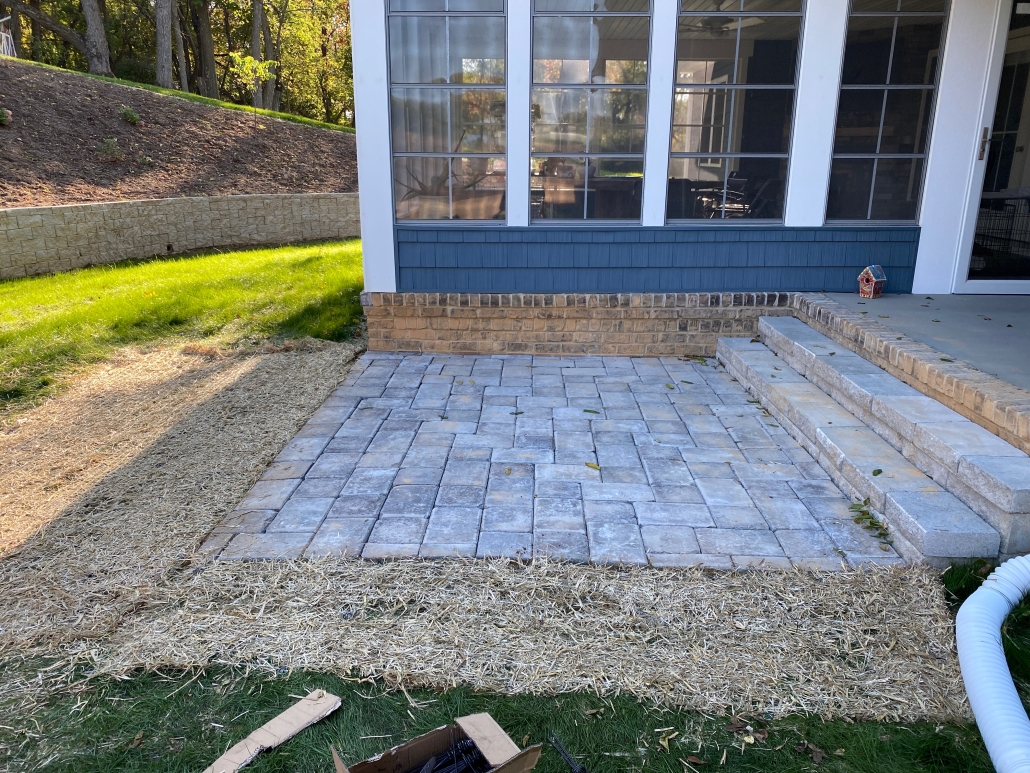
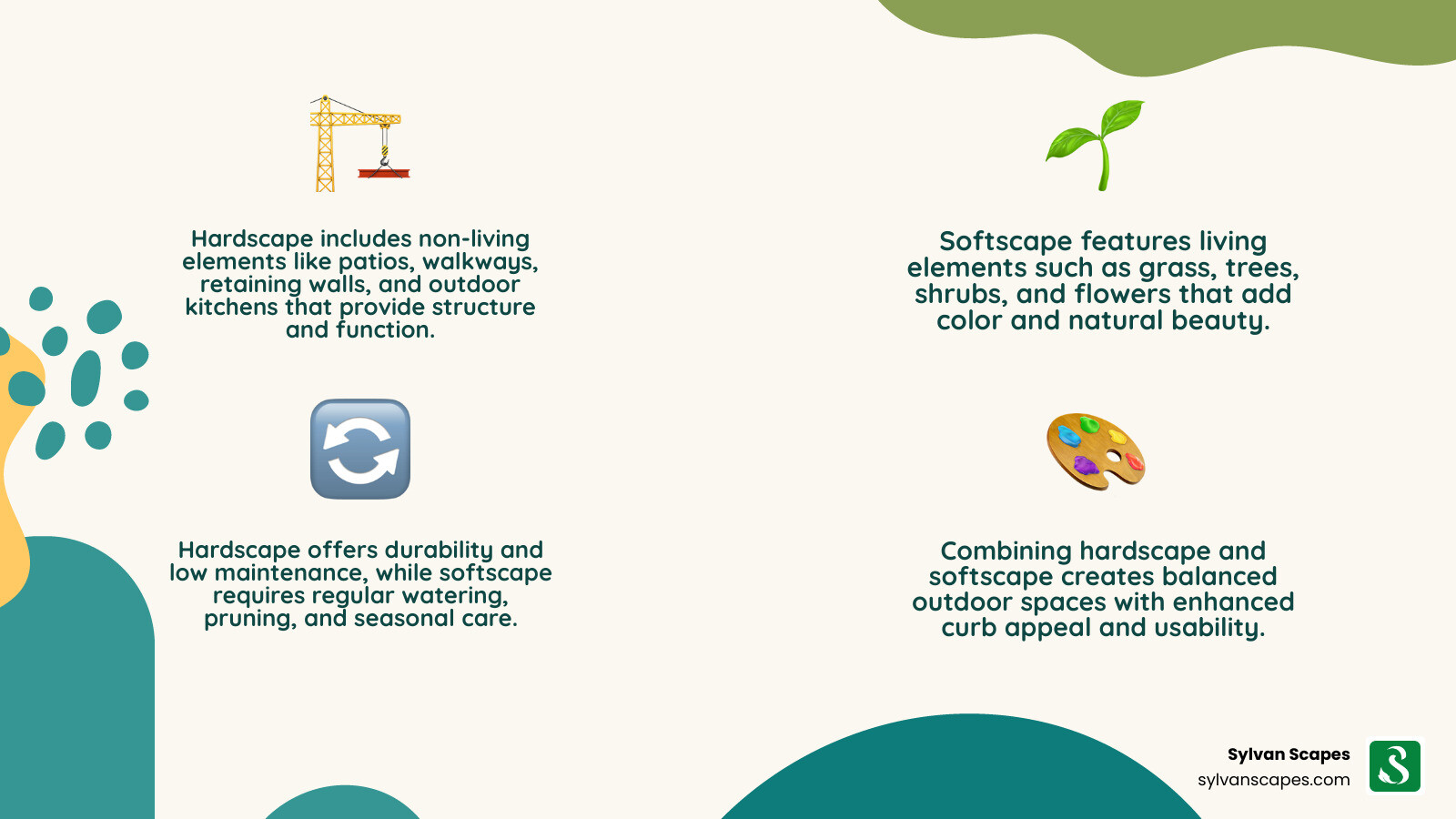
Hardscaping is the non-living side of your outdoor space — think patios, walkways, retaining walls, driveways, and outdoor kitchens. It’s what gives a yard structure, function, and lasting curb appeal.
Done right, it adds real value to your property. Done wrong, it cracks, shifts, floods, and costs twice as much to fix.
That’s the problem most homeowners run into. There are a lot of crews out there with a truck and a pallet of pavers. Far fewer have the engineering knowledge, proper licensing, and design experience to build something that actually lasts.
This guide walks you through exactly what to look for — and what to avoid — so you don’t waste your time or your money.
I’m Kevin Thompson, founder of Sylvan Scapes and an ISA Certified Arborist with over two decades of hands-on experience in outdoor construction and grounds care across Augusta, Albemarle, and Rockingham Counties — including hardscape projects for homeowners throughout the Shenandoah Valley who needed more than just someone to lay stones. Whether you’re already deep in the research phase or just starting to look for hardscape installers near me, the tips ahead will help you hire with confidence.
What to Look for in Hardscape Installers Near Me
When you start typing hardscape installers near me into your search bar, you’re going to be met with a flood of results. It’s easy to get overwhelmed, but separating the pros from the “weekend warriors” comes down to a few non-negotiable credentials.
First and foremost, any contractor you let onto your property must be licensed, bonded, and insured. In Virginia, this isn’t just a suggestion; it’s your protection. If a worker gets hurt or a machine clips your home’s foundation, you don’t want to be the one left holding the bill. Beyond the legalities, look for industry-specific certifications. For example, an ICPI (Interlocking Concrete Pavement Institute) accreditation means the installer understands the science of base compaction and drainage—the two things that keep your patio from looking like a roller coaster after one winter.
You should also dive deep into their Portfolio Entries Hardscapes. A reputable installer will be proud to show off their work. Look for variety: Have they done Walnut Creek style modern designs or more traditional Shenandoah Valley stonework? Finally, ask about workmanship guarantees. A company that stands by its work for several years is a company that knows they did it right the first time.
Finding Reliable Hardscape Installers Near Me
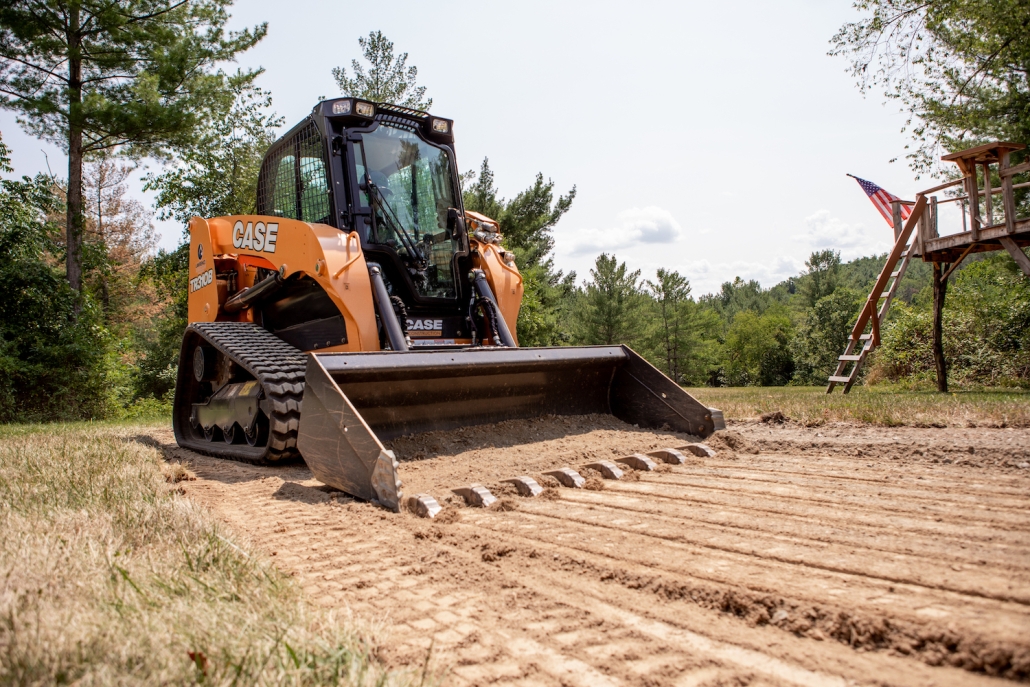
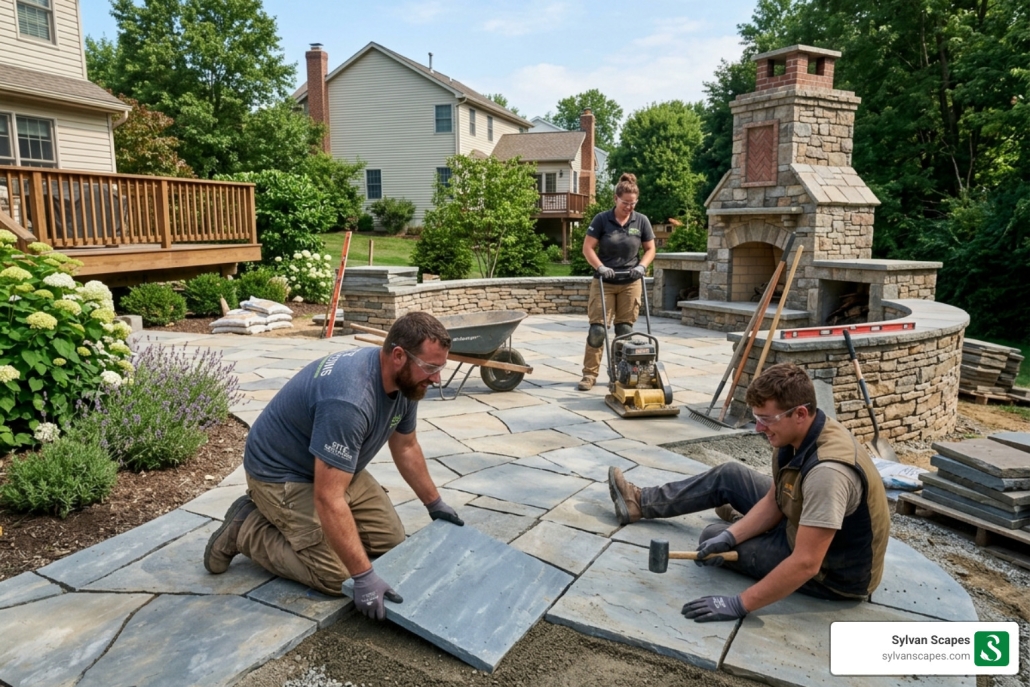
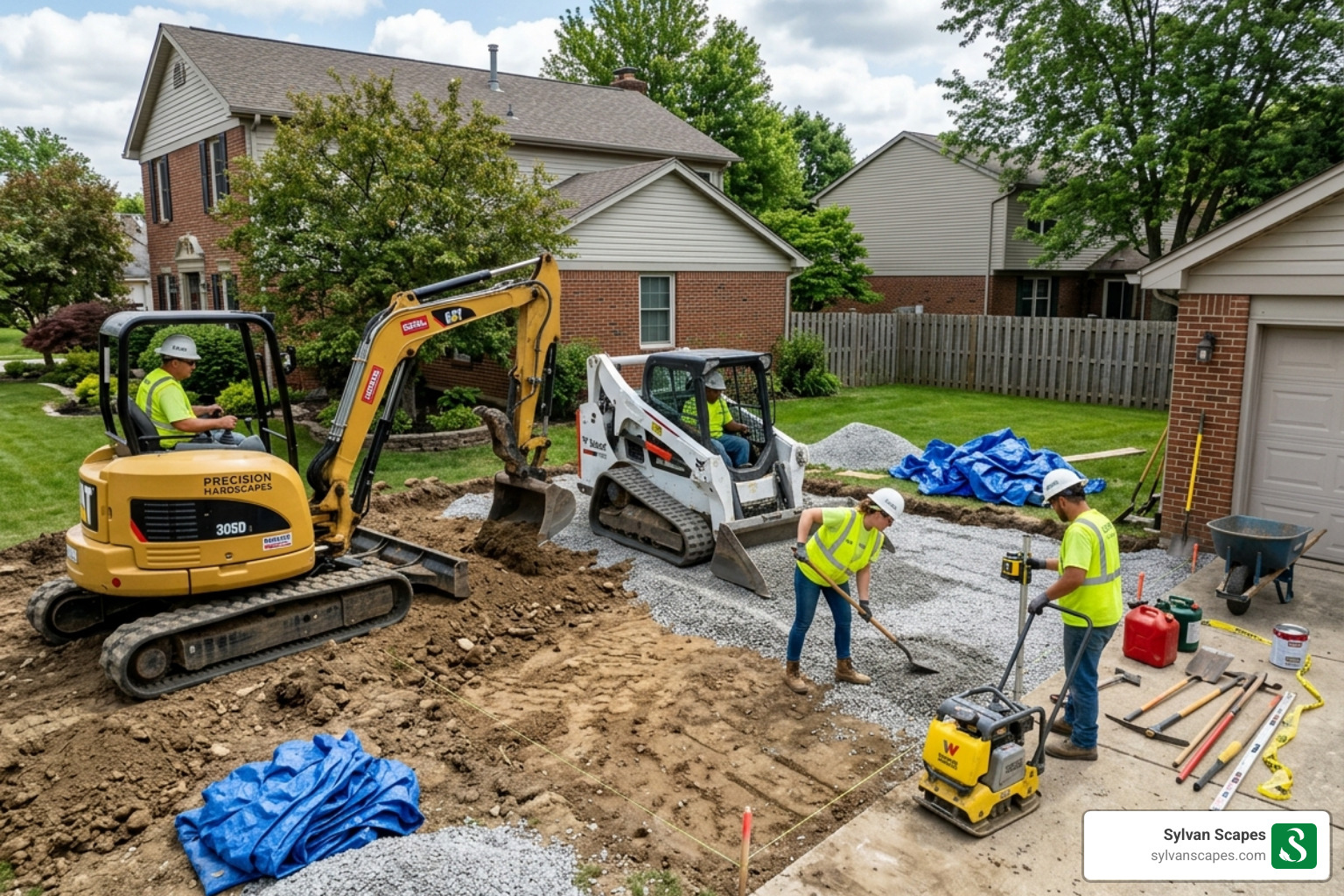
Reliability isn’t just about showing up on time; it’s about the technical depth the team brings to the table. Hardscaping is essentially “outdoor engineering.” It requires specialized equipment—like plate compactors, skid steers, and laser levels—and the knowledge of how to use them.
A reliable installer will focus heavily on site preparation. If a contractor says they can start laying stones the same afternoon they arrive, run the other way. True pros spend the majority of the project time digging, grading, and compacting the “invisible” layers. This engineering knowledge ensures that your retaining wall doesn’t lean and your walkway doesn’t become a stream during a summer thunderstorm.
Red Flags When Vetting Contractors
We’ve seen it all in the Staunton and Charlottesville areas, and there are a few warning signs that should make you pause:
- Vague Estimates: If the quote is just a number scribbled on a napkin without a breakdown of materials and labor, you’re headed for “hidden fee” territory.
- Lack of Portfolio: “I forgot my camera” is not an excuse in the age of smartphones.
- No Physical Office: While many great contractors work from the field, a complete lack of a local presence can make it hard to find them if a warranty issue arises.
- Pressure Tactics: If they say the “special price” is only good if you sign right this second, they’re trying to stop you from doing your homework.
- Missing Insurance: Always ask for a COI (Certificate of Insurance) sent directly from their agent.
Essential Hardscape Services and Materials
Hardscaping is a broad term, but for most homeowners in our neck of the woods, it boils down to a few key features that transform a backyard into an “outdoor room.”
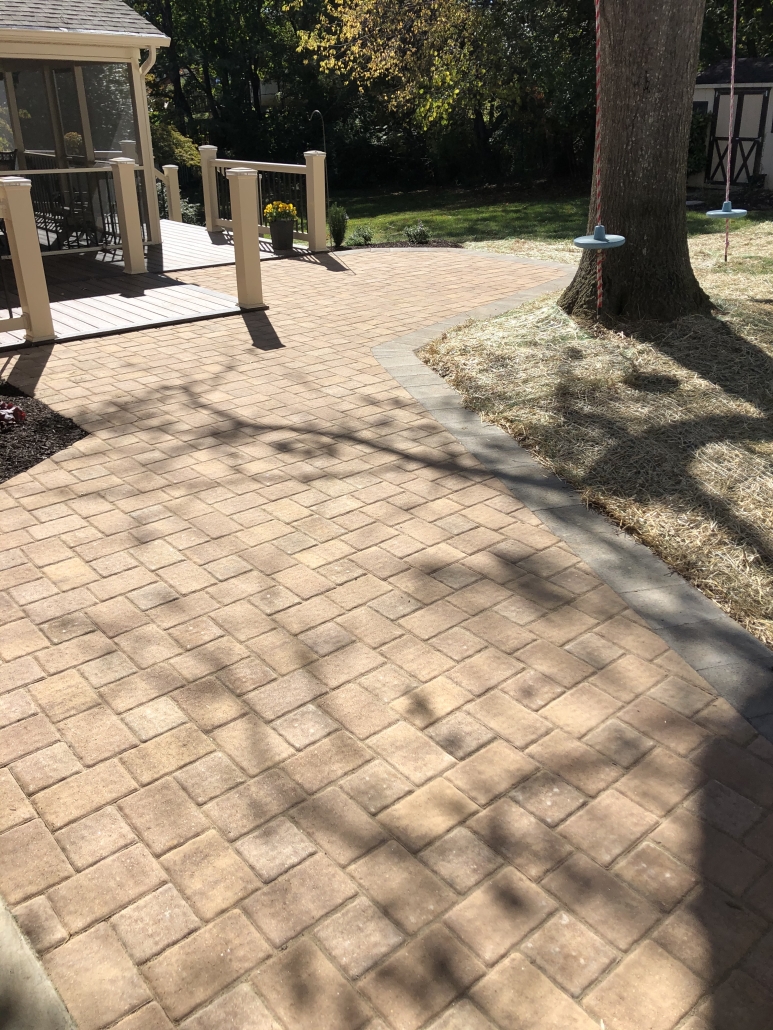
Patios are the foundation of outdoor living, providing a level spot for grills and furniture. Walkways guide guests safely through the property, while retaining walls solve the sloping yard issues common in the Shenandoah Valley. Many homeowners are now opting for full outdoor kitchens, complete with natural stone veneers and built-in appliances.
The materials you choose will dictate both the look and the maintenance level of your project:
- Concrete Pavers: Incredibly durable and available in hundreds of colors and patterns.
- Natural Stone: Flagstone, slate, or granite offer a timeless, high-end look.
- Brick: Perfect for traditional or colonial-style homes in Charlottesville.
- Permeable Pavers: These allow water to flow through the joints, reducing runoff and protecting the environment.
- Porcelain Tiles: A newer trend offering a sleek, modern look that is surprisingly slip-resistant.
- Stamped Concrete: A cost-effective way to mimic stone or brick, though it lacks the flexibility of individual pavers.
Choosing Materials for Your Climate
In Virginia, our hardscapes have to be tough. We deal with intense summer heat and frequent freeze-thaw cycles in the winter. This is where your choice of hardscape installers near me really matters.
Materials like natural stone and high-quality concrete pavers are excellent for our climate because they handle temperature shifts without cracking. You also want to consider heat retention—darker stones can get scorching hot in the July sun—and slip resistance for those rainy spring days. Expert designers will help you pick a material that won’t fade under UV rays or become a skating rink when wet.
Hiring Hardscape Installers Near Me for Longevity
Longevity is all about what’s underneath. We always tell our clients that a patio is only as good as the hole it’s sitting in. Professional installers prioritize:
- Structural Integrity: Ensuring the soil can support the weight.
- Base Compaction: Using the right gravel and sand layers, compacted to specific densities.
- Edge Restraints: These act like a “picture frame,” holding the pavers in place so they don’t migrate into your lawn.
- Joint Sand: Using polymeric sand that hardens to keep weeds out and stones in.
- Sealing: While not always required, sealing can protect your investment from oil stains and salt damage.
The Real Cost of Professional Hardscaping
Let’s talk numbers. While every project is custom, having a ballpark figure helps you plan. On average, a 280-square-foot paver patio costs about $3,800, but that range can swing from $2,400 to over $7,000 depending on the materials and the complexity of the site.
| Material | Estimated Cost per Sq. Ft. (Installed) | Durability |
|---|---|---|
| Poured Concrete | $8 – $15 | Medium (Prone to cracking) |
| Concrete Pavers | $15 – $30 | High (Flexible/Easy to repair) |
| Natural Stone | $25 – $50+ | Very High (Timeless beauty) |
Factors That Influence Your Final Quote
Why does one 10×10 patio cost more than another? It usually comes down to the “unseen” work.
- Drainage Solutions: If we have to install French drains or regrade the yard to move water away from your foundation, that adds to the labor.
- Slope Correction: Building a level patio on a hill requires more excavation and often a retaining wall.
- Site Accessibility: Can we get a skid steer into the backyard, or do we have to move 10 tons of gravel by wheelbarrow?
- Custom Masonry: Intricate patterns, fire pits, and seating walls require more time and precision.
Return on Investment and Property Value
Hardscaping isn’t just an expense; it’s an investment. High-quality outdoor living spaces can significantly increase your property’s resale value. Buyers in the Staunton and Charlottesville markets love seeing “usable square footage” outdoors. A well-designed patio or outdoor kitchen acts as an extension of the home, making the property more attractive and often leading to a faster sale at a higher price point.
Why Professional Installation Beats DIY Every Time
We love a good DIY project as much as anyone, but hardscaping is one area where “doing it yourself” often leads to “doing it twice.”
Professional installers have access to heavy machinery that makes the job possible. More importantly, they understand soil stabilization and erosion control. If you don’t account for the way water moves across your land, your beautiful new DIY patio could end up flooding your basement or washing away your neighbor’s topsoil.
When you hire a Staunton Hardscape Company, you’re paying for precision leveling and a drainage plan that protects your entire property.
The Installation Process from Design to Completion
What should you expect once you’ve picked your hardscape installers near me?
- Consultation: We discuss your vision, budget, and how you plan to use the space.
- Design/Rendering: Seeing a 3D model helps you visualize the final product before a single shovel hits the dirt.
- Excavation: Removing the grass and soil to the proper depth.
- Base Installation: Laying and compacting the gravel and bedding sand.
- Stone Laying: The fun part where the pattern comes to life.
- Finishing: Adding joint sand, edge restraints, and cleaning the site.
Sustainable and Eco-Friendly Hardscaping
You don’t have to sacrifice the environment for a beautiful yard. Many modern hardscaping options are eco-friendly. Permeable surfaces allow rainwater to soak back into the ground rather than running off into storm drains. We also look for opportunities to use locally sourced stone, which reduces the carbon footprint of transportation, and recycled concrete aggregates for base layers.
Frequently Asked Questions about Hardscaping
How long does a typical hardscape project take?
A standard paver patio usually takes 3 to 5 days from start to finish. Larger projects involving outdoor kitchens, multiple levels, or extensive retaining walls can take 2 to 3 weeks. Of course, the Virginia weather always has a vote—heavy rain can delay excavation or sand installation.
What maintenance is required for pavers and stone?
Hardscapes are low maintenance, but not no maintenance. We recommend a leaf blower to keep debris off the surface, an occasional wash with a garden hose, and checking the joint sand every few years. If the sand has washed away, it’s easy to sweep in a fresh batch of polymeric sand to keep weeds from taking root.
Can hardscaping help with yard drainage issues?
Absolutely. In fact, it’s one of the best ways to solve them. By using retaining walls, strategic grading, and French drains, we can redirect water away from low spots or your home’s foundation. Permeable pavers are also a fantastic tool for managing runoff in areas with heavy rainfall.
Conclusion
Finding the right hardscape installers near me doesn’t have to be a headache. By focusing on licensing, experience, and a solid portfolio, you can ensure your outdoor transformation is a success. Whether you’re dreaming of a quiet spot for your morning coffee or a grand outdoor kitchen for summer BBQs, the right foundation makes all the difference.
At Sylvan Scapes, we’ve been serving the Shenandoah Valley since 2003. As an ISA Certified Arborist and CTSP-certified company, we don’t just look at the stones; we look at the health of your entire landscape, including your trees and soil. From Staunton to Charlottesville and everywhere in between, we’re here to help you build an outdoor space that lasts a lifetime.
Ready to start your project? Contact our Staunton Hardscape Company today for a consultation.