What the Rutgers Turf Management Program Offers — and Which Path Is Right for You
The Rutgers turf management program is one of the most respected turfgrass education systems in the world, offering multiple pathways depending on your experience level, schedule, and career goals.
Here’s a quick overview of your options:
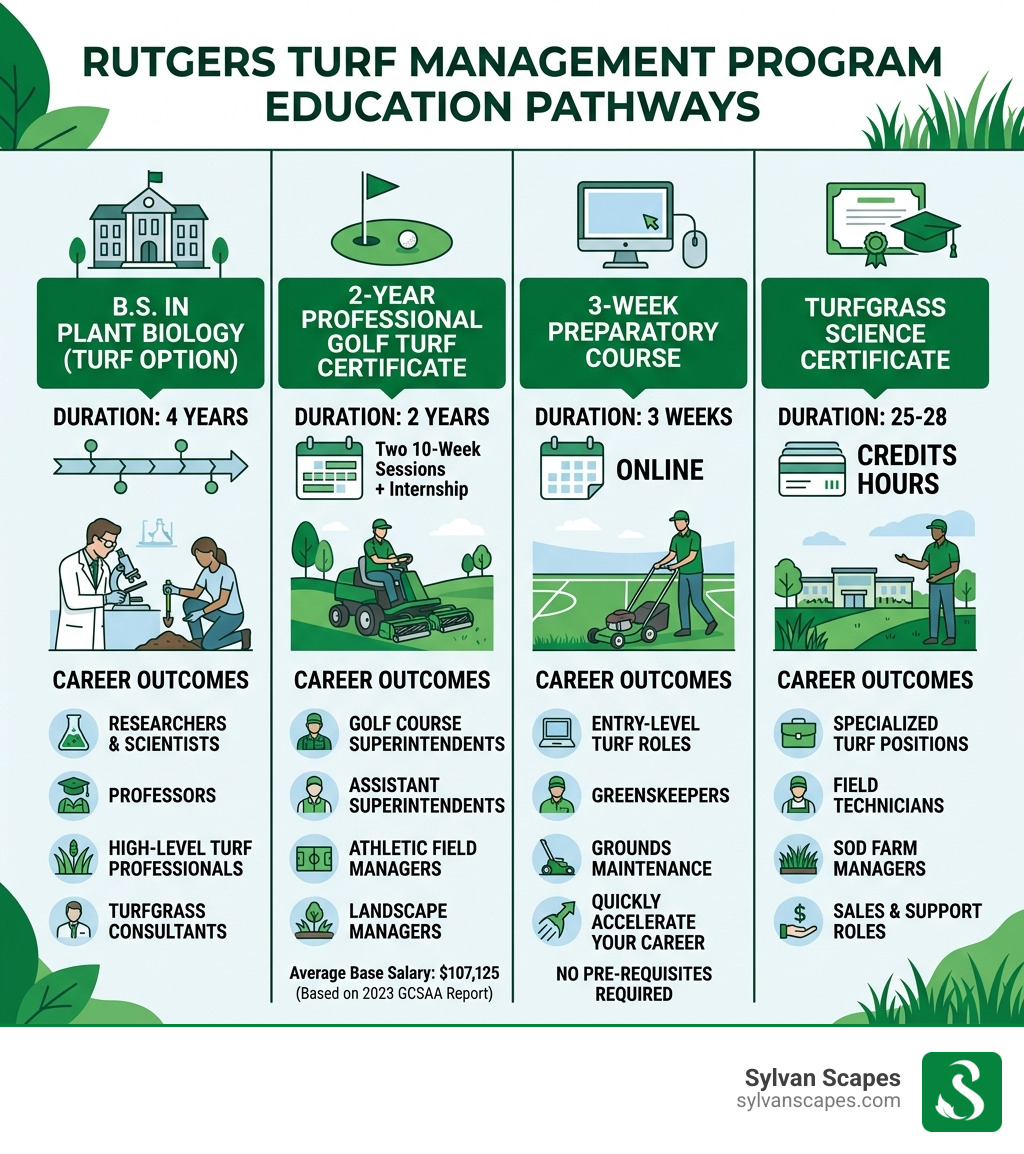
| Program | Duration | Best For |
|---|---|---|
| B.S. in Plant Biology (Turf Option) | 4 years | Full degree seekers, research careers |
| 2-Year Professional Golf Turf Certificate | 2 years (two 10-week sessions + internship) | Working greenskeepers seeking advancement |
| 3-Week Preparatory Course | 3 weeks (online) | Newcomers, no prerequisites required |
| Turfgrass Science Certificate | 25–28 credits | Students wanting specialized academic training |
Since 1962, more than 4,800 turf professionals from all 50 states and over 20 countries have come through the two-year certificate program alone. Over 730 alumni currently work as golf course superintendents — and the average base salary for certificate holders sits at $107,125 according to the 2023 GCSAA Compensation and Benefits Report.
Whether you’re just starting out or have 20 years in the field, there’s a Rutgers program built for where you are right now.
I’m Kevin Thompson, founder of Sylvan Scapes and an ISA Certified Arborist with decades of hands-on experience managing turf and grounds across Virginia — the same principles of soil health, plant science, and sustainable management that define the rutgers turf management program are ones I apply every day in the field. Let’s break down exactly what each program involves, what it costs, and how to choose the right one.
Overview of the Rutgers Turf Management Program Options
When we talk about the rutgers turf management program, we aren’t just talking about one single classroom. We are talking about a massive educational ecosystem at the Horticulture/Turfgrass Management Option – Center for Turfgrass Science . Rutgers University provides a variety of programs tailored to different career goals, ranging from academic research to hands-on golf course maintenance.
The “green industry” has exploded over the last decade. Because of this growth, there is a massive demand for professionals who understand the science behind the grass. Whether you are looking for the academic rigor of a four-year degree or the fast-track intensity of a professional certificate, Rutgers is widely considered the “Gold Standard.” In fact, many in the industry refer to Rutgers as the “Yankees of turf” because of their dominant reputation.
To see how high-level turf care translates to real-world results, you can see How Top Turf Lawn Care And Pest Control Beats The Competition in our own local service approach.
The 4-Year Undergraduate Degree in Plant Biology
For students who want a traditional college experience combined with world-class science, the Bachelor of Science (B.S.) in Plant Biology is the premier choice. Within this major, students typically choose the Horticulture and Turf Industry Option.
This program is designed for those who want to become leaders in the industry or pursue graduate-level research. The curriculum covers everything from genetics and physiology to soil management and pest science. Students spend their time in Foran Hall and at the various research farms, learning from more than two dozen faculty members who are leaders in their respective fields. Admissions are handled through the School of Environmental and Biological Sciences (SEBS).
The 2-Year Professional Golf Turf Management Certificate
This is perhaps the most famous wing of the Professional Golf Turf Management Program – Rutgers NJAES Office of Continuing Professional Education . It is specifically designed for working professionals. If you are already working as a greenskeeper or an assistant superintendent and want to move up the ladder without spending four years in a classroom, this is for you.
The program consists of two 10-week intensive sessions held during the winter months when golf courses are less busy. It combines classroom theory with heavy hands-on training. It doesn’t grant college credits, but in the eyes of a golf course owner, this certificate often carries as much weight as a four-year degree.
The 3-Week Preparatory Course for Quick Entry
Are you new to the industry? Or perhaps you are a sales representative for a turf company and need to know what your customers are talking about? The 3-Week Preparatory Course is a fully online, live Zoom-based program.
There are no prerequisites for this course. It covers the absolute essentials of turfgrass management in a short window, giving students a massive confidence boost and a solid foundation. It is an excellent “foot in the door” for those who aren’t ready to commit to a multi-year program but want to learn from the best instructors in the world.
The Turfgrass Science Certificate for Specialized Study
The Turfgrass Science Certificate Home | Department of Plant Biology is an academic certificate requiring 25–28 credits. It is aimed at students interested in the highly technical side of the industry—think plant pathology, entomology (bugs!), and breeding.
This program focuses on sustainable strategies and integrated pest management (IPM). It’s perfect for someone who wants to specialize in the “why” and “how” of grass health, focusing on environmentally sound practices that keep landscapes beautiful without over-relying on chemicals.
Deep Dive: The 2-Year Professional Golf Turf Management Certificate
The 2-Year Certificate is the “bread and butter” of the Rutgers Professional Golf Turf Management School. The Two-Year Certificate Program Schedule and Location: Professional Golf Turf Management School – Rutgers NJAES Office of Continuing Professional Education is unique because it respects the schedule of a turf professional.
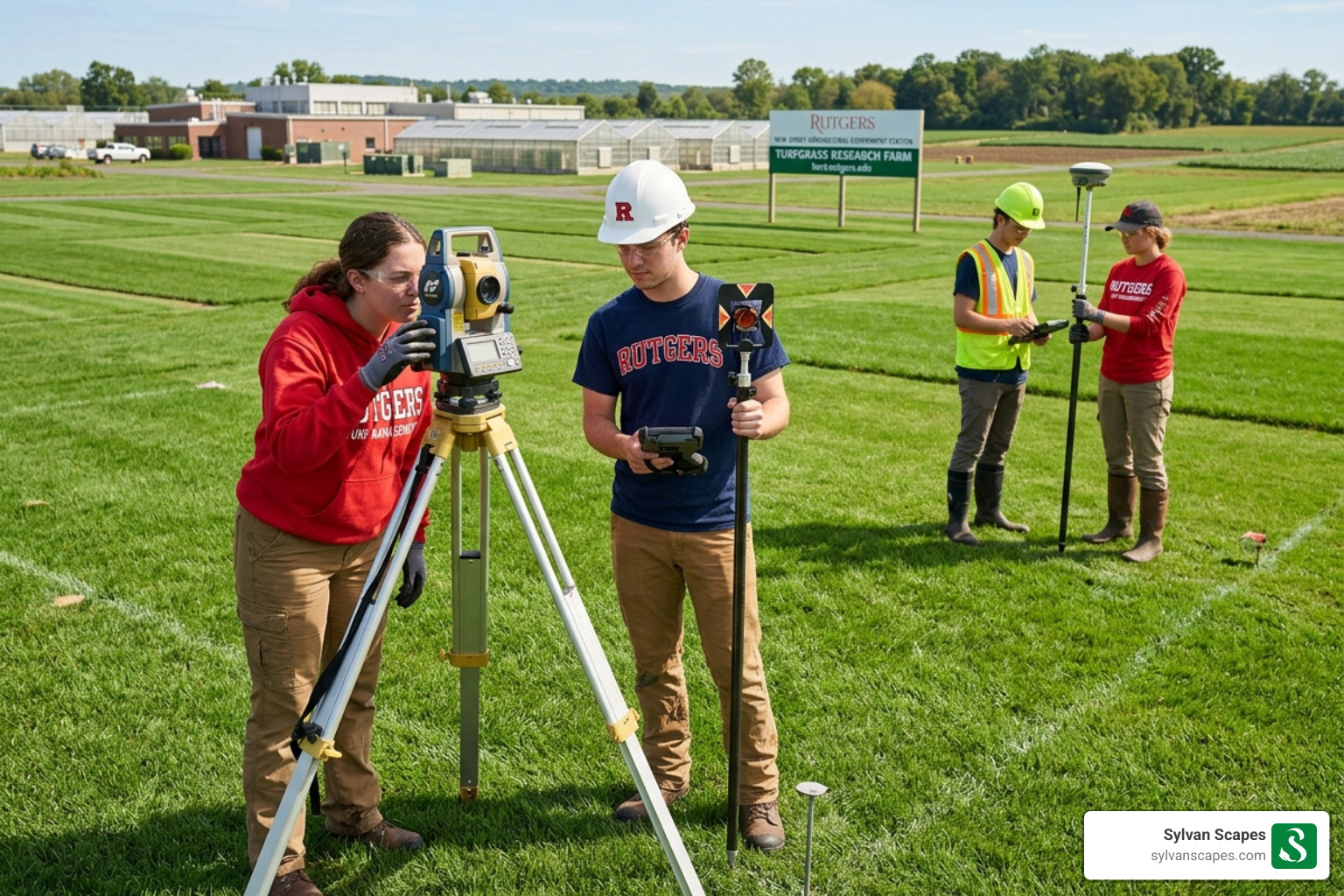
We understand the importance of this kind of training because we perform similar high-level maintenance daily. You can learn more about our professional standards at Staunton Commercial Landscaping Company Turf Maintenance.
Curriculum and Hands-On Training
The curriculum is intense. You aren’t just sitting in a desk; you are in the lab and in the field. Key areas of study include:
- Soil Science: Understanding the physical and chemical properties of the ground beneath the grass.
- Irrigation Technology: Learning how to design and maintain complex watering systems.
- Equipment Calibration: Ensuring that every drop of fertilizer or seed is applied with mathematical precision.
- Disease Identification: Using microscopes to spot pathogens before they ruin a multi-million dollar green.
- Reel Grinding: The art and science of keeping mower blades sharp enough to provide a perfect cut.
The 200-Hour Paid Internship Requirement
One of the most valuable parts of the rutgers turf management program is the 9-month break between the two 10-week sessions. During this time, students are required to complete a 200-hour paid internship.
This isn’t just “busy work.” Students often land internships at world-famous courses like Augusta National or Pine Valley. This allows for real-world application of classroom theories and creates an incredible networking opportunity. Many students receive job offers before they even finish their second session. You can see examples of high-quality turf results in our Turf portfolio.
Costs, Financial Aid, and Career Outcomes
Investing in the Turf Management Degree or Certificate – Rutgers OCPE is a major career move. While there are costs involved, the return on investment (ROI) is historically very high. We’ve seen similar growth in our own team’s expertise, which you can read about here: How Top Turf Lawn Care And Pest Control Beats The Competition 2.
Tuition and Scholarship Opportunities
The cost for the Two-Year Certificate is approximately $6,495 per 10-week session (totaling $12,990 for the full certificate), plus books, fees, and housing. While that might seem steep, the financial support is unparalleled.
- $90,000+ in Annual Aid: The New Jersey turfgrass industry awards over $90,000 in scholarships to Rutgers turf students every year.
- Employer Assistance: Many golf clubs and landscaping companies pay for their employees to attend because the knowledge brought back to the course is so valuable.
- Student Loans: Traditional financial aid and student loans are also available for those who qualify.
Salary Expectations and Alumni Success
The statistics speak for themselves. According to the 2023 GCSAA report, the average base salary for a golf course superintendent with a Rutgers Two-Year Certificate is $107,125.
With over 4,800 graduates since 1962, the Rutgers network is everywhere. There are more than 730 alumni currently serving as head superintendents and another 600+ working as assistant superintendents worldwide. When you graduate from Rutgers, you aren’t just getting a piece of paper; you are joining an elite group of professionals who lead the industry.
| Program Feature | 2-Year Certificate | 3-Week Course | 4-Year Degree |
|---|---|---|---|
| Tuition (Approx) | $12,990 total | ~$1,000 – $1,200 | Standard University Rates |
| Prerequisites | 1 season experience | None | High School/College Entry |
| Format | In-person (Winter) | Online (Live) | In-person |
| Career Path | Superintendent | Entry-level / Sales | Research / Management |
Why Choose the Rutgers Turf Management Program?
Why do people travel from over 20 countries to New Jersey to study grass? The answer lies in the history and resources found at the About the Professional Golf Turf Management School – Rutgers NJAES Office of Continuing Professional Education .
World-Class Faculty and Research Facilities
Rutgers is a world leader in turf research. The Center for Turfgrass Science features more than 25 faculty members across disciplines like breeding, pathology, and soil science.
- Breeding Collection: Rutgers houses the largest collection of cool-season turfgrasses in the entire world.
- Research Farms: The program utilizes a 32-acre dedicated turfgrass research farm (Research Farm #2) where students can see the latest varieties of grass being tested in real-time.
- Multidisciplinary Approach: You aren’t just learning how to mow; you are learning the molecular biology and physiology of the plant.
The Power of the Rutgers Alumni Network
The “Rutgers Mafia” (as it’s affectionately known in the industry) is a real thing. Because there are over 1,300 alumni in leadership positions globally, finding a job or getting technical advice is often just a phone call away.
If a Rutgers graduate in Scotland has a weird fungus growing on their greens, they can reach out to their former professors or classmates in New Jersey for an answer. This lifelong technical support and networking is something you simply cannot find at smaller, less established programs.
Frequently Asked Questions about the Rutgers Turf Management Program
What are the prerequisites for the 2-year certificate?
To be accepted into the Two-Year Professional Certificate program, you need:
- A high school diploma or GED.
- At least one full season of work experience on the grounds staff of a golf course, sports field, or similar turf facility.
- A letter of intent and two letters of recommendation from supervisors.
Is the Rutgers turf management program available online?
Yes and no. The 3-Week Preparatory Course is fully online via live Zoom sessions. However, the Two-Year Certificate and the Four-Year Degree are primarily in-person. The hands-on nature of learning how to grind reel blades or identify soil textures really requires you to be there in the lab.
How does Rutgers compare to other turf programs?
While other universities offer turf programs, Rutgers is often cited as the most practical and industry-connected. The “Yankees of turf” moniker comes from their consistent output of top-tier talent. The program’s focus on the “off-season” (winter sessions) also makes it much more accessible for working professionals than a standard year-round academic schedule.
Conclusion
The rutgers turf management program represents the pinnacle of turfgrass education. From the deep scientific research at the Center for Turfgrass Science to the practical, boots-on-the-ground training of the Professional Golf Turf Management School, Rutgers prepares students for the highest levels of the industry.
At Sylvan Scapes, we share that same commitment to excellence and scientific rigor. Whether we are providing grounds maintenance in Staunton or managing complex landscapes in the Shenandoah Valley, we believe that education is the foundation of quality. As an ISA Certified and CTSP-certified company, we apply professional-grade standards to every lawn and tree we touch.
If you are looking for that same level of expertise for your own property, we invite you to learn more about our Staunton Landscaping Company Turf Maintenance services. Whether it’s tree preservation or precision turf care, we bring the “Rutgers-level” of dedication to every project in Albemarle, Augusta, and Rockingham counties.
What Is BrightView Landscape’s Net Worth in 2026?
BrightView landscape net worth is currently estimated at $1.29 billion, based on market capitalization as of February 2026. Here’s a quick snapshot:
| Metric | Value (as of early 2026) |
|---|---|
| Market Cap (Net Worth) | ~$1.29 billion |
| Stock Price | ~$11.46 (NYSE: BV) |
| Shares Outstanding | ~94.2 million |
| Annual Revenue (FY2025) | $2.67 billion |
| Adjusted EBITDA (FY2025) | $352.3 million |
| Total Assets | $3.39 billion |
| Headquarters | Blue Bell, Pennsylvania |
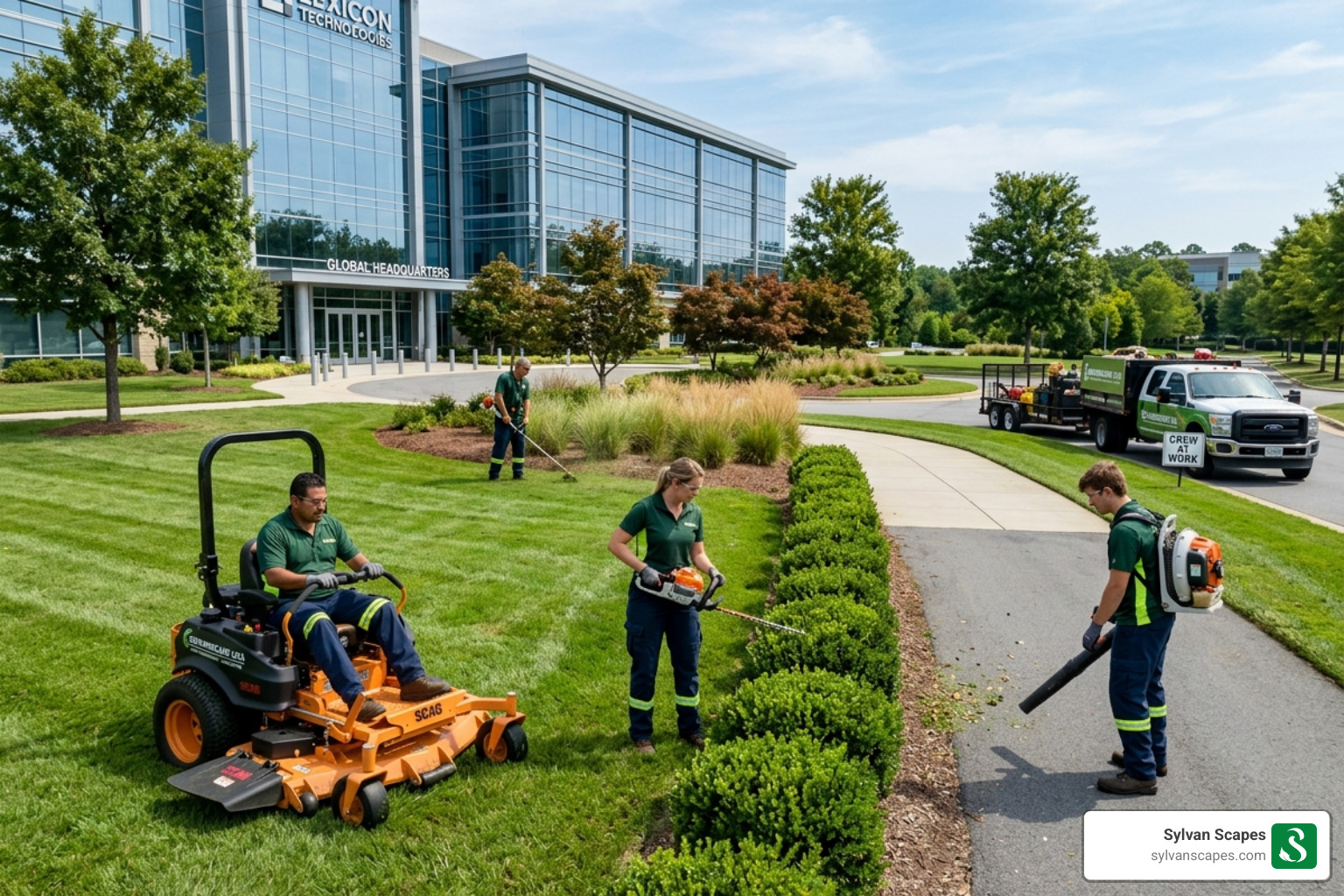
BrightView is the largest commercial landscaping company in the United States. They serve corporate campuses, HOAs, hospitals, schools, golf courses, and even Major League Baseball fields.
Their market cap has shifted significantly over the years – peaking near $2.12 billion after their 2018 IPO and dropping to a low around $640 million in 2022 before recovering. As of April 2026, the company is in a period of improving profitability despite a slow decline in total revenue.
Understanding where a company like BrightView stands financially can help property owners and managers make sense of the broader landscaping industry – from national operators to the local specialists serving your neighborhood.
This article breaks down what drives BrightView’s valuation, how its financial position has changed over time, and what its headquarters and operating footprint say about the scale of the business. Looking at a major public company in this space can also give useful context for broader industry trends such as labor efficiency, route density, recurring maintenance revenue, and the role of acquisitions in building a national service platform.
For readers researching the keyword brightview landscape net worth, the most important takeaway is simple: market cap reflects what investors currently think the company is worth, not just how much revenue it produces or how many assets it owns. That distinction matters when interpreting headlines about company size, debt, and growth.

Analyzing the BrightView Landscape Net Worth in 2026
When we talk about the “net worth” of a public company like BrightView Holdings, Inc. (NYSE: BV), we are usually referring to its market capitalization. This is the total value of all its outstanding shares of stock. As of February 23, 2026, the brightview landscape net worth sat at approximately $1.29 billion.
By April 2026, the valuation remains relatively stable, hovering around that $1.3 billion mark. This number is calculated by taking the current stock price – which has recently traded around $11.46 – and multiplying it by the roughly 94.2 million shares currently held by investors.
It is important to distinguish between market cap and the company’s total assets. While the market values the equity at $1.29 billion, BrightView actually manages a large balance sheet with over $3.39 billion in total assets. This includes vehicles, specialized landscaping equipment, and the goodwill or brand value built up through acquisitions over the decades. Inside BrightView’s financial valuation and operational performance | Landscape Management provides a deeper look into how these operational assets translate into market value.
Another helpful distinction is between market cap and enterprise value. Market cap reflects only the value of the company’s equity. Enterprise value attempts to capture the full value of the operating business by adding debt and subtracting cash. For a company like BrightView, which carries meaningful debt, enterprise value can paint a different picture than market cap alone. That is one reason financial analysts often examine revenue, EBITDA, leverage, and free cash flow alongside stock price.
Historical Trends of BrightView Landscape Net Worth
To understand where BrightView is today, we have to look at where they have been. The company’s financial journey has been a bit of a rollercoaster since its Initial Public Offering (IPO) in June 2018.
- The Peak (2018): Shortly after going public, the brightview landscape net worth reached a high of approximately $2.12 billion.
- The Dip (2022): Like many companies in the service sector, BrightView faced headwinds. By December 30, 2022, the market cap had fallen sharply, landing at just $640.77 million.
- The Recovery (2024-2025): The company saw a resurgence. Between April 2024 and April 2025, the market cap increased by over 20%, rising from roughly $1.09 billion to $1.32 billion.
According to BrightView Holdings Net Worth 2017-2025 | BV – Macrotrends, the long-term trend shows a Compound Annual Growth Rate (CAGR) of -6.73% since 2018. While that may sound weak on the surface, recent strategy has emphasized shedding less profitable work and improving margins rather than pursuing volume at any cost.
Factors Influencing BrightView Landscape Net Worth Today
Several strategic levers are currently moving the needle on the brightview landscape net worth. The company appears to be shifting its focus from raw revenue growth to profitable growth.
- Maintenance vs. Development: A large share of value comes from Maintenance Services – recurring mowing, pruning, irrigation support, and snow removal tied to ongoing contracts. Development Services, which include design and installation work, can produce revenue but are generally more sensitive to shifts in construction demand.
- Share Repurchases: In late 2025, BrightView increased its share repurchase authorization to $150 million. When a company buys back its own stock, it reduces the number of shares outstanding, which can support earnings per share and sometimes help lift valuation.
- Cost Management: By streamlining fleet operations and managing labor and overhead more carefully, BrightView achieved record Adjusted EBITDA even while total revenue slightly declined. That kind of efficiency tends to matter a great deal to investors.
- Debt Reduction: A lower debt load can improve investor confidence because it reduces interest expense and financial risk. As leverage improves, the equity portion of the business can become more attractive in the eyes of the market.
- Contract Quality: Not all revenue is equally valuable. Long-term maintenance contracts with strong renewal rates often deserve a higher valuation multiple than lower-margin, one-time project work. That mix can influence how the market prices the business.
Financial Performance and Balance Sheet Health
While “net worth” is the headline number, the health of the balance sheet tells a more complete story. For the fiscal year ending September 30, 2025, BrightView reported total revenue of approximately $2.67 billion. While this was a slight 3.4% decrease from the previous year, the company’s Adjusted EBITDA actually grew by 8.5% to $352.3 million.
This is a classic example of a company becoming more selective and efficient. It may be doing slightly less total volume, but the work it is keeping appears to be more profitable.
One of the biggest issues affecting the brightview landscape net worth over the last few years has been debt. As of late 2025, the company had total net financial debt of $802.9 million. However, it has been paying this down. Its Net Debt to Adjusted EBITDA ratio – a common measure of leverage – improved significantly to 2.3x. For context, that ratio had previously been as high as 4.8x. Reducing debt lowers interest burden and can improve the value of the equity over time.
Cash flow also matters here. A company can report accounting profits while still struggling operationally if cash collections are weak or capital spending is too high. Investors therefore watch free cash flow, working capital discipline, and capital expenditure needs closely. For a field-service business with vehicles, trailers, handheld equipment, and irrigation tools spread across many branches, managing replacement cycles efficiently can have a real impact on valuation.
Total assets of roughly $3.39 billion also help explain why market cap should not be confused with book value. Assets may include equipment, receivables, acquired intangibles, and goodwill from prior transactions. Some of those assets are highly useful in operations, while others may not translate directly into liquidation value. That is another reason the stock market may value the company far below total assets on the balance sheet.
From a financial-health perspective, BrightView’s 2025 results suggest a business that is focusing more on margin discipline, debt reduction, and contract quality than on pure top-line expansion. For investors, that can be a positive sign if the gains prove sustainable through 2026.
Operational Scale and Headquarters Location
If you ever find yourself just north of Philadelphia, you might pass by the nerve center of a major national landscaping operation. BrightView is headquartered at 980 Jolly Road, Blue Bell, Pennsylvania.
From this central office, they manage a large national footprint that includes:
- 240+ Branches: Spread across the United States.
- 19,000+ Employees: A substantial workforce of landscapers, designers, arborists, and support staff.
- National Reach: They serve a broad mix of commercial and institutional clients, including high-visibility athletic facilities.
This scale is a double-edged sword. On one hand, a national branch network allows the company to pursue large contracts with retailers, healthcare systems, and hospitality groups that operate in many states. On the other hand, managing thousands of employees across different climates, labor markets, and service lines is a significant logistical challenge. BrightView’s Revenue, Number of Employees, Funding, Acquisitions & News – Owler Company Profile highlights that despite a slight drop in headcount recently, revenue per employee remains relatively strong, indicating improved operational efficiency.
Headquarters location can matter more than it first appears. A centralized corporate office supports finance, legal, procurement, fleet oversight, human resources, safety programs, and regional management. In a service business, strong back-office systems are critical because branch-level execution depends on scheduling, routing, equipment replacement, staffing, and customer retention all working together.
BrightView’s broad physical footprint also helps explain part of its valuation. Investors are not only looking at current revenue; they are also pricing in the company’s ability to service national accounts, standardize operations, and maintain recurring contracts across many regions. That operating platform can be valuable when it is run efficiently, even if it also creates complexity.
Frequently Asked Questions about BrightView’s Valuation
What is the current market cap of BrightView?
As of February 2026, the market cap—or brightview landscape net worth—is approximately $1.29 billion. This fluctuates daily based on the stock market performance of the NYSE: BV ticker.
Where is BrightView Holdings located?
The corporate headquarters is located in Blue Bell, Pennsylvania. However, they operate through more than 240 local branches across the country to provide on-the-ground service.
How does BrightView’s revenue compare to its debt?
BrightView generates about $2.67 billion in annual revenue. Their net debt is roughly $802.9 million. While $800 million sounds like a lot of debt, it is considered manageable because it is only about 2.3 times their annual earnings (EBITDA).
Conclusion
The story of the brightview landscape net worth in 2026 is one of transformation. By moving away from a “growth at all costs” mindset and focusing on the “One BrightView” culture of efficiency, the company has stabilized its valuation and prepared for future growth. Their projections for the 2026 fiscal year suggest a return to revenue growth (0-2%) while continuing to expand profit margins.
At Sylvan Scapes, we keep a close eye on these industry leaders because their financial health often dictates trends in technology, labor, and service standards. Whether it’s a national giant or a local team, the goal remains the same: providing dependable, high-quality care for the outdoor spaces that matter most.
If you are looking for that same level of professional expertise right here in the Shenandoah Valley, we are here to help. From our base in Staunton, we provide expert commercial landscaping and grounds maintenance across Albemarle, Augusta, and Rockingham counties. Whether you need a certified arborist for tree preservation or a dedicated team for year-round turf management, our local knowledge and 20+ years of experience ensure your property is in the best hands.
What Is Golf Turf Management — and Why Does It Matter?
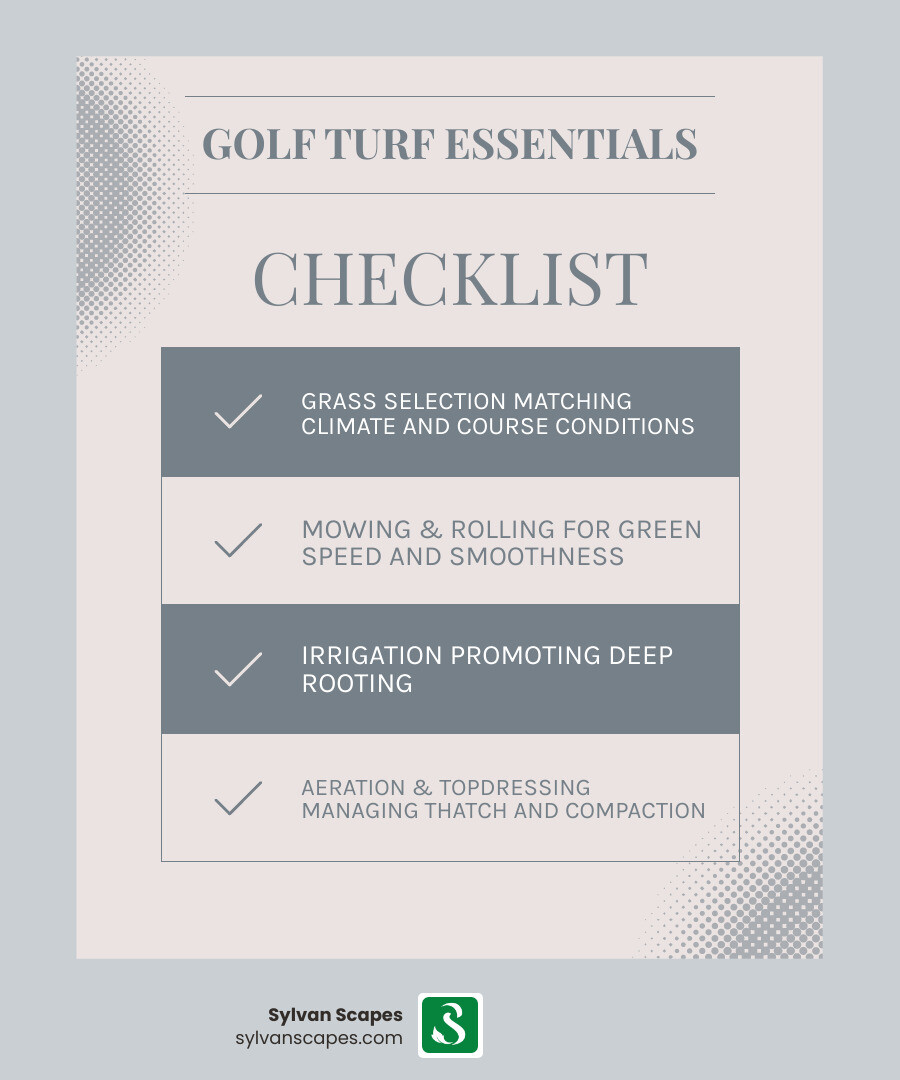
Golf turf management is the science and practice of growing, maintaining, and optimizing turfgrass on golf courses to deliver consistent playability, visual appeal, and long-term turf health.
Here’s a quick breakdown of the core elements:
| Element | What It Covers |
|---|---|
| Grass selection | Matching species to climate and course conditions |
| Mowing & rolling | Controlling green speed, surface smoothness, and plant health |
| Irrigation | Deep rooting through strategic watering schedules |
| Aeration & topdressing | Managing thatch, compaction, and organic matter |
| Pest & disease control | Integrated management to reduce chemical reliance |
| Seasonal planning | Adapting maintenance tasks to spring, summer, fall, and winter |
Golf course greens are the heart of the game. Whether it’s bentgrass in the Northeast or bermudagrass in the South, the quality of the putting surface defines the player experience — and the course’s reputation.
Getting it right takes more than a mowing schedule. It takes agronomic science, the right equipment, and a deep understanding of how soil, climate, water, and plant biology all interact.
I’m Kevin Thompson, founder of Sylvan Scapes and a certified arborist with over two decades of hands-on grounds and turf maintenance experience serving properties across Virginia’s Shenandoah Valley — and the principles behind professional golf turf management directly inform the turf care standards we bring to every commercial and residential property we manage. Whether you’re curious about adapting these techniques to your own lawn or simply want to understand what separates average grass from championship-quality turf, this guide breaks it all down in plain language.
The Science of Golf Turf Management: Grass Types and Climates
When we talk about golf turf management in areas like Staunton, Charlottesville, and throughout Augusta or Albemarle County, we are playing in what experts call the “Transition Zone.” This means our weather is often too hot for some cool-season grasses and too cold for some warm-season ones. Choosing the right grass isn’t just a matter of aesthetics; it’s about survival and performance.
The Heavy Hitters: Common Grass Species
In professional golf, four names come up more than any others:
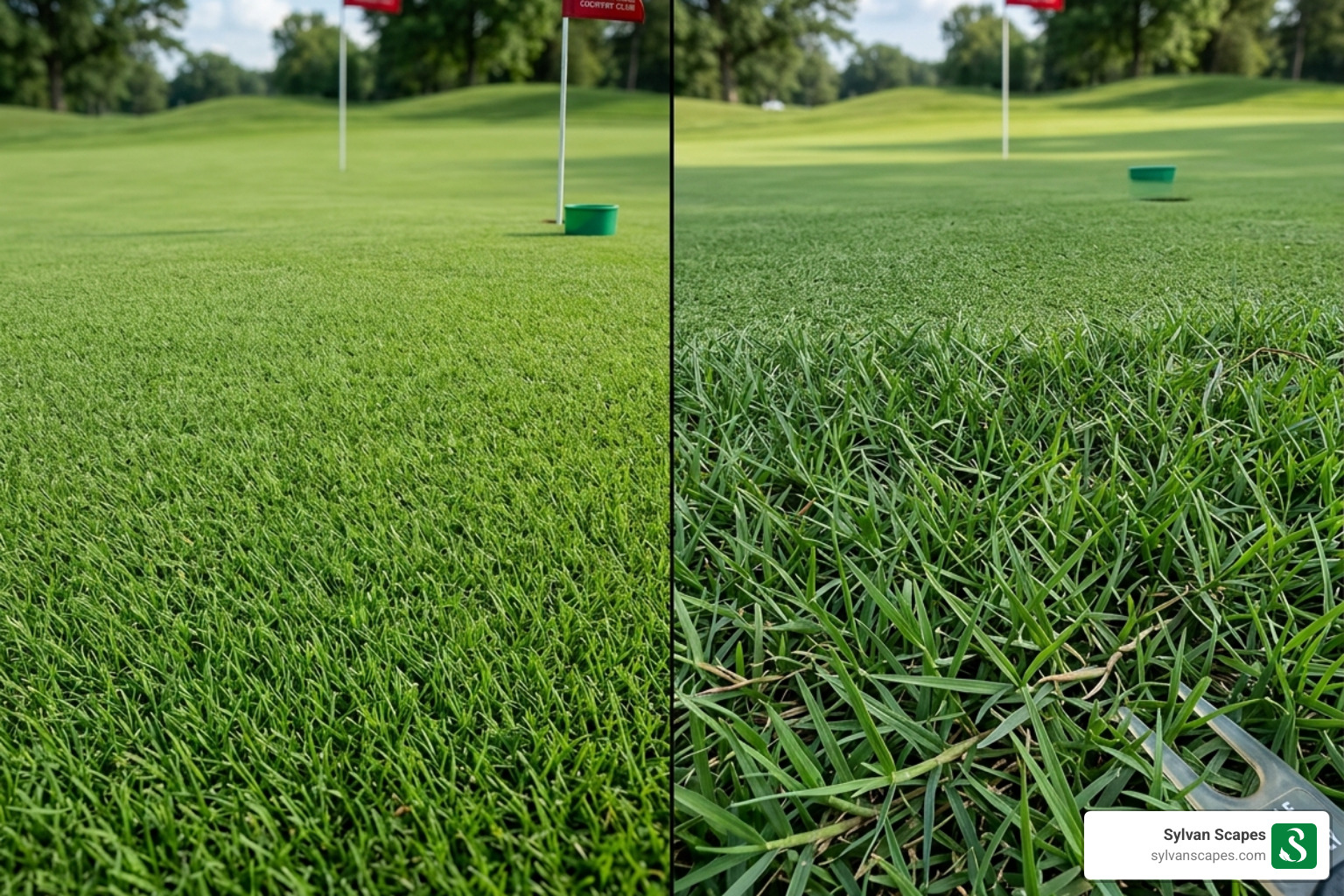
- Creeping Bentgrass: This is the gold standard for putting greens in the North and the Transition Zone. It has a fine texture and can tolerate incredibly low mowing heights. However, it’s a bit of a “diva”—it loves cool nights and can struggle during our humid Virginia summers without careful moisture management.
- Bermudagrass: A warm-season powerhouse. It thrives when the sun is beating down and temperatures soar above 90°F. While it’s incredibly durable for fairways and tees, it goes dormant and turns brown in the winter, which requires “overseeding” if a green look is desired year-round.
- Poa Annua (Annual Bluegrass): Often considered an invasive weed in home lawns, Poa annua is actually managed as a primary putting surface on many historic courses. It provides a very smooth ball roll but is susceptible to disease and heat stress.
- Zoysiagrass: Known for its carpet-like feel, Zoysia is increasingly popular for fairways because it requires less water and nitrogen than other species while providing a fantastic “perched” lie for the golf ball.
Climate Adaptation and Seed Selection
Selecting the right cultivar is a high-stakes decision. Superintendents look at USDA Hardiness Zones and regional performance data to ensure the grass can handle local pests and weather patterns. For those of us in the Shenandoah Valley, we often look to research from programs like the Golf turf | Cornell Turfgrass Program to understand how different varieties hold up against regional challenges.
| Feature | Cool-Season (Bentgrass/Bluegrass) | Warm-Season (Bermuda/Zoysia) |
|---|---|---|
| Ideal Growth Temp | 60°F – 75°F | 80°F – 95°F+ |
| Drought Tolerance | Moderate to Low | High |
| Winter Color | Stays green longer | Goes dormant (brown) |
| Mowing Height | Can be kept extremely low | Varies by species |
Essential Maintenance for High-Performance Greens
If the grass is the canvas, then mowing and irrigation are the brushes. To achieve that lightning-fast green speed golfers crave, golf turf management requires precision that would make a Swiss watchmaker jealous.
Mowing Heights and Green Speed
Green speed is measured using a device called a Stimpmeter—a simple ramp that releases a ball at a consistent velocity. A “fast” green might measure 11 or 12 feet, while daily play usually hovers around 9 or 10.
To get these speeds, mowing heights are pushed to the limit. For daily play, greens are often cut between 0.125″ and 0.140″. During tournaments, that height might drop to a razor-thin 0.100″. However, cutting that low puts immense stress on the plant. To compensate, superintendents often use “rolling” (using a heavy mechanical roller) to smooth the surface and increase speed without having to lower the blades further.
Irrigation Strategies
The goal of watering a golf course isn’t just to keep it green; it’s to keep it healthy. We advocate for “deep and infrequent” watering. By allowing the soil to dry out slightly between sessions, we encourage the roots to grow deeper in search of moisture. This builds a hardy plant that can survive a Virginia heatwave. Many pros now use soil moisture meters to get real-time data, ensuring they only apply water exactly where and when it’s needed. For a deeper dive into these technicalities, the How to Maintain Golf Course Greens: Seed, Divot Repair, and Seasonal Care Guide is an excellent resource.
Daily and Seasonal Golf Turf Management Tasks
Maintaining a golf course is a 365-day-a-year job. While golfers see the mowers every morning, much of the most important work happens behind the scenes or during the “off-season.”
- Daily: This includes mowing, changing hole locations to prevent wear, and the constant battle of divot repair and ball mark restoration.
- Weekly/Monthly: This often involves “topdressing”—applying a thin layer of sand to the greens. This helps dilute thatch (the layer of organic debris between the grass and the soil) and keeps the surface firm and smooth.
- Seasonally: This is when the heavy lifting happens. Core aeration is the process of pulling small “plugs” out of the ground to allow oxygen, water, and nutrients to reach the root zone. While it’s a temporary headache for players, it’s vital for long-term health. We use similar high-end techniques in our Staunton Landscaping Company Turf Maintenance services to ensure local lawns stay vibrant and compacted-free.
Integrated Pest Management and Sustainability
Modern golf turf management has moved far away from the “spray everything” mentality of the past. Today, the focus is on Integrated Pest Management (IPM). This means we use a combination of biological, mechanical, and chemical tools to keep the turf healthy while protecting our local water resources.
Disease and Weed Control
In the Shenandoah Valley, humidity is our biggest enemy. It invites diseases like Dollar Spot (small, silver-dollar-sized bleached spots) and Pythium Blight (which can destroy a green in hours if left unchecked).
By using the research-based tools from the Cornell Turfgrass Program, superintendents can predict disease outbreaks based on weather data and apply preventative treatments only when necessary. This proactive approach is exactly how we handle residential care, as seen in our guide on How Top Turf Lawn Care And Pest Control Beats The Competition.
Advanced Golf Turf Management for Tournaments
Preparing for a tournament is like tuning a race car. It’s a delicate balance of firmness, smoothness, and trueness. If a green is too soft, the ball won’t roll predictably; if it’s too hard, it won’t “hold” a shot.
Superintendents manage “performance ranges” by strictly controlling moisture and organic matter months in advance. The goal is uniformity—every green on the course should play exactly like the one before it. For those interested in the physics of the perfect putt, check out A Practical Guide for Maintaining Green Speed and Firmness – Turfgrass.
Career Paths and Professional Equipment
The people behind the pristine fairways are highly trained professionals. It’s a field that combines biology, chemistry, and business management.
- The Roles: A Golf Course Superintendent is the “CEO” of the outdoor space, often managing budgets in the millions. They are supported by Assistant Superintendents, Equipment Managers, and specialized spray technicians.
- The Rewards: According to industry data, the average base salary for a golf course superintendent is approximately $97,354, with those holding specialized two-year certificates often earning even more.
- The Education: With a job placement rate of over 95%, programs at schools like Penn State and Mississippi State are booming. They focus on everything from soil science to “STEM” applications in turf. You can learn more about these educational pathways through the Sports Fields and Golf Course Turf | Penn State Extension.
Professional equipment is also a major investment. A fleet of reel mowers (which cut like scissors rather than the “chopping” action of a standard rotary mower), aerators, and precision sprayers can easily cost a club hundreds of thousands of dollars.
Frequently Asked Questions about Golf Turf
How can homeowners adapt golf course techniques for residential lawns?
You don’t need a million-dollar budget to have a “golf quality” lawn in Staunton or Charlottesville. The secret lies in the fundamentals:
- Mowing Frequency: Golf courses mow daily; you should aim for every 3-4 days during the peak growing season. Never remove more than one-third of the grass blade at once.
- Sharp Blades: This is non-negotiable. Dull blades tear the grass, leaving it brown and susceptible to disease.
- Deep Watering: Water 1-1.5 inches per week in two deep sessions rather than light daily sprinkling.
- Slow-Release Fertilizer: This prevents “surge growth” and keeps the color consistent.
For those looking to start fresh with a professional surface, we’ve put together a guide on How To Get The Best Sod Installation In Staunton Without Breaking A Sweat. You can also find more tips in the Golf Course Quality Lawn: A Golfer’s Guide | Golf Edge.
What is the difference between core aeration and solid tining?
- Core Aeration: Pulls a physical “plug” of soil and thatch out of the ground. This is best for reducing compaction and managing heavy thatch buildup.
- Solid Tining: Pokes a hole without removing soil. It’s less disruptive to the playing surface and is great for getting oxygen to the roots mid-season without ruining a weekend of golf.
How do you properly repair a ball mark on a green?
Please, for the love of the game, stop “lifting” the turf!
- Insert your ball mark tool at the edge of the depression.
- Push the turf toward the center of the mark.
- Work your way around the circle, pushing inward.
- Gently tamp it down with your putter. Lifting the soil tears the roots and leaves a brown spot that takes weeks to heal. Pushing it inward allows the grass to knit back together almost overnight.
Conclusion
At Sylvan Scapes, we believe that every landscape—whether it’s a championship golf course or a family backyard in Rockingham County—deserves professional-grade care. Golf turf management teaches us that the best results come from a balance of high-tech science and consistent, “boots-on-the-ground” hard work.
By understanding the needs of the plant, the composition of the soil, and the challenges of our Virginia climate, we can create outdoor spaces that are not only beautiful but sustainable and resilient. If you’re ready to take your property’s turf to the next level, our team is here to help with professional Staunton Commercial Landscaping Company Turf Maintenance. Let’s work together to make the Shenandoah Valley a little greener, one acre at a time.
Your Concrete Patio Doesn’t Have to Stay Ugly (or Wet)
Waterproof outdoor flooring is the fastest way to transform a dull, cracked, or moisture-prone concrete patio — no jackhammer, no contractor, no mess.
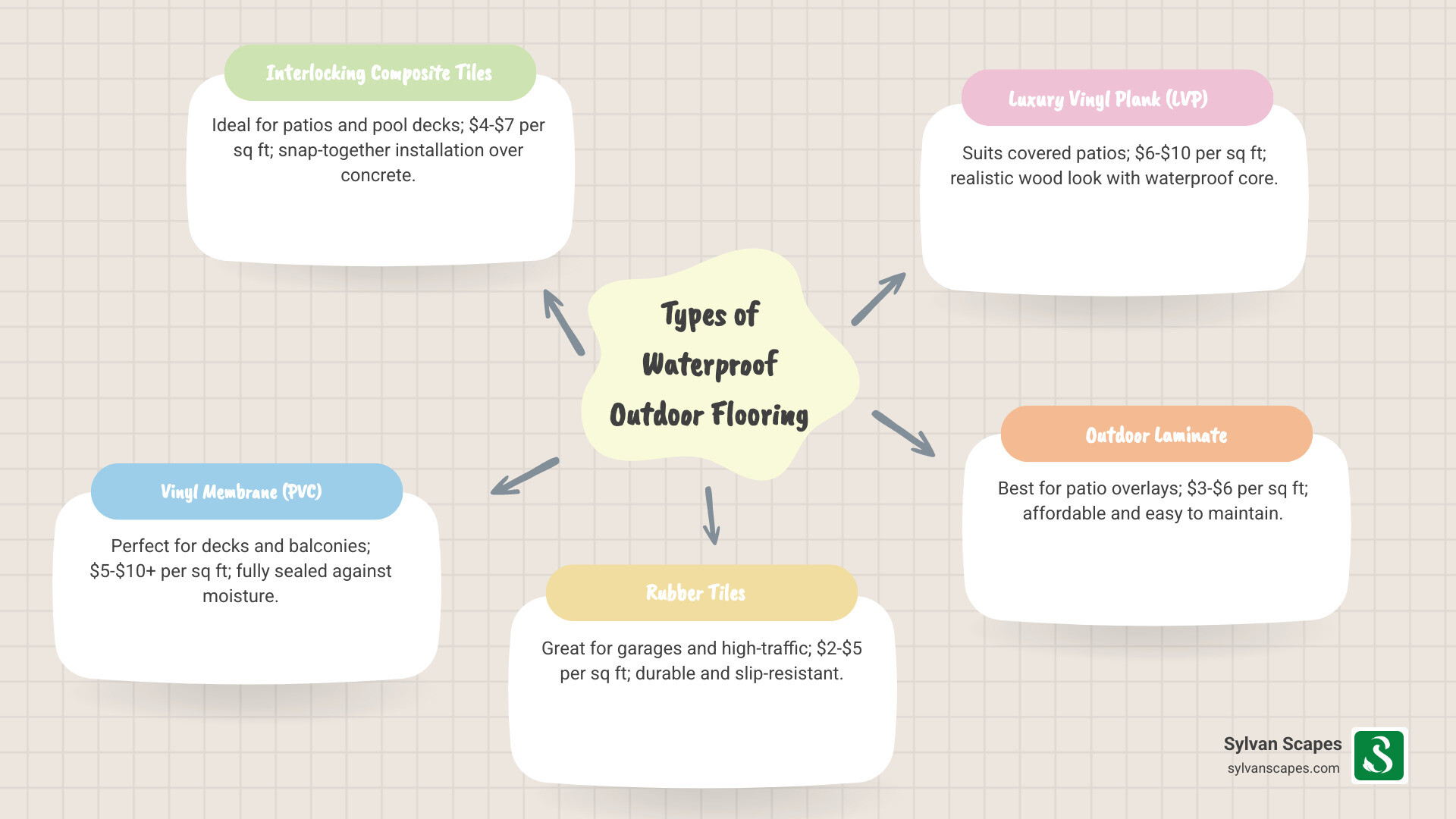
Here are the most popular options, at a glance:
| Flooring Type | Best For | Price Range (per sq ft) |
|---|---|---|
| Interlocking composite tiles | Patios, pool decks | $4 – $7 |
| Vinyl membrane (PVC) | Decks, balconies | $5 – $10+ |
| Rubber tiles | Garages, high-traffic areas | $2 – $5 |
| Luxury vinyl plank (LVP) | Covered patios, basements | $6 – $10 |
| Outdoor laminate | Patio overlays | $3 – $6 |
| Foam/closed-cell mats | Play areas, gyms | $1.78 – $3 |
Most of these install directly over existing concrete — no demolition required. The key is choosing a material that is truly waterproof (repels moisture entirely), not just water-resistant (which may still absorb some over time).
That distinction matters more than most people realize — especially here in Virginia, where freeze-thaw cycles can destroy the wrong flooring within a single winter.
I’m Kevin Thompson, founder of Sylvan Scapes and a licensed hardscape professional serving the Shenandoah Valley — and waterproof outdoor flooring is one of the most common questions I get from homeowners who want a better patio without tearing up what they already have. In the sections below, I’ll walk you through every major option, what it costs, and how to choose the right one for your specific situation.
Essential Guide to Waterproof Outdoor Flooring
When we talk about waterproof outdoor flooring, we aren’t just talking about a rug that dries quickly. We are talking about engineered systems designed to live outside 365 days a year. Whether you are in Staunton, Charlottesville, or anywhere in the Shenandoah Valley, your flooring needs to handle everything from July humidity to January ice.
The Main Material Contenders
There are several heavy hitters in waterproof surfaces. Each has a specific “superpower”:
- PVC and Vinyl Membranes: These are often monolithic or heat-welded systems. Think of them like a high-tech skin for your patio. They are 100% waterproof and often come with impressive warranties, such as 15-year protection against leaks.
- Composite Wood-Plastic (WPC): This is a fan favorite for those who love the look of wood but hate the maintenance. Products like Garvee Waterproof Interwoven Deck Tiles or Helios Composite Deck Tiles use a blend of recycled wood fibers (often bamboo) and plastic to create a rot-proof surface.
- Vulcanized Rubber: Unlike standard rubber, vulcanized rubber is completely non-porous. It won’t soak up water like a sponge, making it ideal for pool surrounds or high-traffic walkways.
- Luxury Vinyl Plank (LVP): While often used indoors, premium LVP like Weathered Oak LVP Flooring from COREtec is 100% waterproof. It features a WPC core that won’t warp or buckle, even if it gets splashed.
- Perforated Tiles: These are the “breathable” kings of the outdoor world. They feature tiny holes or channels that allow water to flow straight through to the concrete beneath and drain away.
- Closed-Cell Foam: If you’re setting up a play area, you need closed-cell foam. Open-cell foam absorbs water and grows mold; closed-cell foam repels it entirely.
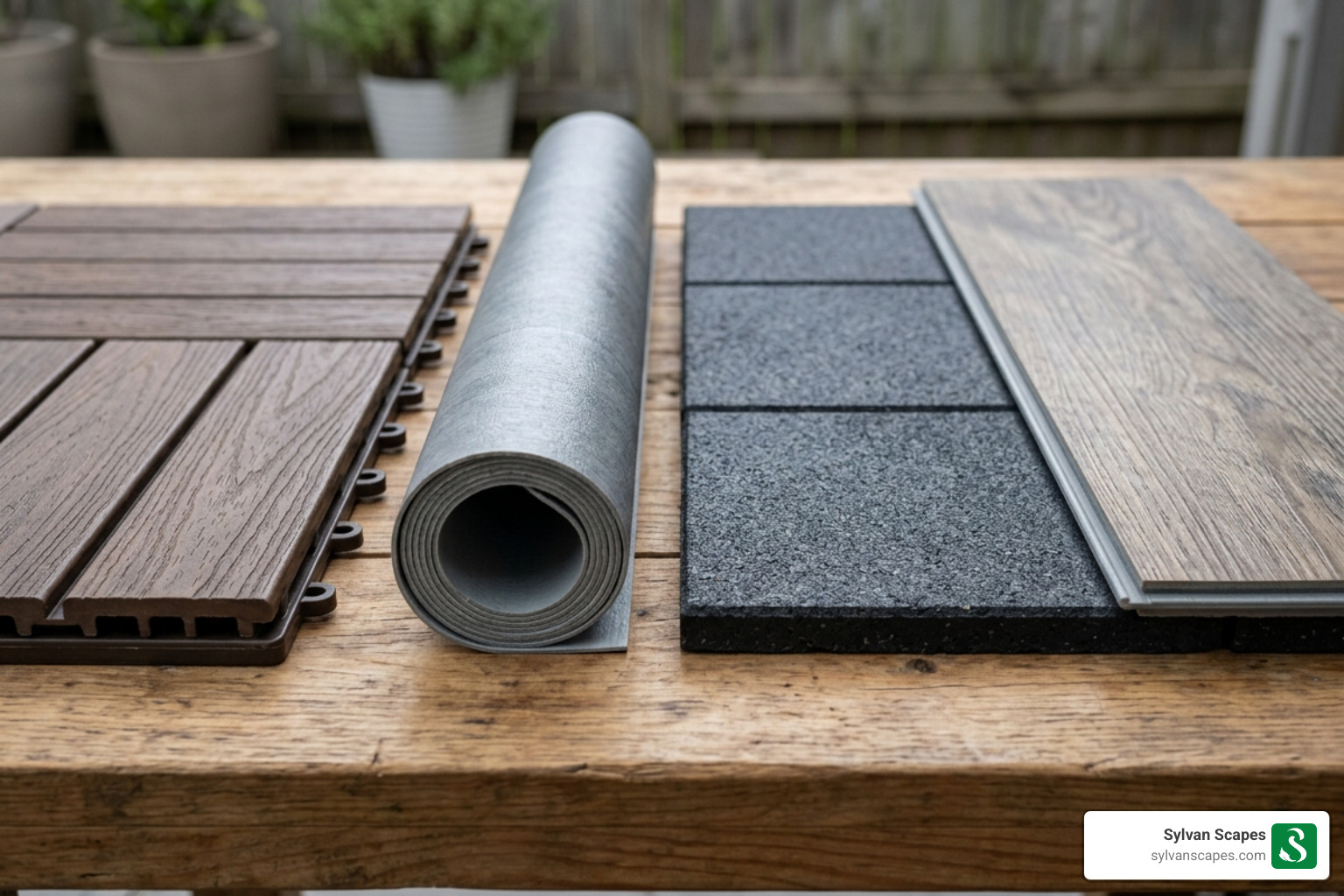
Key Benefits: Why Waterproofing Matters for Your Patio
In our region, moisture is the enemy of longevity. If water gets trapped between your new flooring and your old concrete, you’re essentially creating a petri dish for mold. This is why we emphasize the difference between “water-resistant” and “waterproof.”
Waterproof vs. Water-Resistant
Water-resistant materials might survive a light rain, but they can eventually saturate. Truly waterproof outdoor flooring repels moisture entirely. This is vital for drainage efficiency. Many tiles use a “raised” or “floating” design with pegs on the bottom. This creates an air gap that allows the concrete to breathe and water to flow toward your yard or floor drains.
Safety and Durability
Safety is a huge factor, especially around pools or on stairs. Most waterproof options feature anti-slip textures or “Cool Step” technology that reflects UV rays, so you don’t burn your feet on a hot August afternoon in Albemarle County. Additionally, these materials are built for UV stability, meaning they won’t fade or become brittle after a few seasons in the sun.
Before you commit to a DIY project, it’s worth what to know before calling local paver patio installation companies to ensure your underlying concrete is stable enough to support a new surface.
Comparing Materials for Waterproof Outdoor Flooring
Choosing the right material often comes down to how you use the space. Are you hosting fancy dinner parties in Charlottesville, or is your patio a high-speed zone for kids and dogs in Rockingham County?
Composite and Recycled Bamboo
Composite tiles, like those made from recycled bamboo and glue, are incredibly dense. They can support significant weight—sometimes over 1,600 lbs per square foot! They offer a realistic wood-grain aesthetic without the splinters. Many of these are “interwoven,” meaning the slats run in different directions for a high-end look.
Interlocking vs. Glue-Down
- Interlocking/Floating Systems: These are the DIYer’s dream. Tiles like those from IKEA (RUNNEN or ALTAPPEN) or Greatmats simply snap together. No glue, no nails. This is perfect for concrete patios because the floor “floats” above the surface, allowing for natural expansion and contraction.
- Glue-Down/Membranes: Systems like Tufdek or monolithic coatings are more permanent. They are hermetically sealed to the concrete, which is great for preventing any moisture from ever touching the subfloor, but they usually require professional installation.
If you are looking for a more permanent structural change, you might explore our Hardscapes portfolio to see how professional stone or paver work compares to modular overlays.
Installation Tips for Waterproof Outdoor Flooring
The beauty of most waterproof outdoor flooring is the “snap-lock” mechanism. However, even the best tiles will fail if the groundwork isn’t right.
- Surface Prep: Your concrete doesn’t have to be pretty, but it must be level. Large cracks or dips can cause tiles to “un-snap” when you walk on them.
- Expansion Gaps: Even plastic and composite expand when they get hot. Always leave a small gap (usually about 1/2″ to 3/4″) around the perimeter of your house or walls.
- Drainage Channels: Ensure your tiles are laid so that the built-in drainage channels align with the natural slope of your patio.
- Perimeter Edging: Most systems offer transition strips or “reducer” edges. These provide a finished look and prevent tripping hazards at the edge of the patio.
For those in Augusta County looking for a professional touch, laying the groundwork for hiring reliable paver patio contractors can save you a lot of headaches during the preparation phase. And if the DIY route feels overwhelming, finding the right hardscape installers without losing your marbles is the first step toward a stress-free renovation.
Cost Analysis and Long-Term Durability
How much should you expect to invest? Based on current market data, here is the breakdown:
- Entry-Level ($1.78 – $3.50/sq ft): This includes basic plastic tiles (like ALTAPPEN) or foam mats. Great for a quick balcony refresh or a temporary play area.
- Mid-Range ($4.00 – $7.00/sq ft): This is where you find high-quality composite tiles and perforated patio tiles. These often come with 10-to-20-year warranties and are built for the freeze-thaw cycles we see in the Shenandoah Valley.
- Premium ($8.00 – $15.00+/sq ft): This includes professional-grade vinyl membranes (like Tufdek) or high-end waterproof hardwood like Ollie from Stuga. These products often feature UV-cured finishes and lifetime residential warranties.
Maintenance Routines
One of the biggest selling points for waterproof outdoor flooring is the lack of maintenance. Unlike wood, which needs annual staining, these materials usually just need a quick spray with a hose or a scrub with a mild soapy solution. For composite tiles, using distilled water or a splash of vinegar can help prevent hard water stains from our local Virginia well water.
Frequently Asked Questions about Patio Resurfacing
What is the difference between waterproof and water-resistant outdoor flooring?
Waterproof materials (like PVC, vulcanized rubber, or closed-cell foam) are entirely impervious to water. Water-resistant materials (like some laminates or unvulcanized rubber) can withstand moisture for a time but may eventually absorb water, leading to swelling or mold if they don’t dry out quickly.
Can I install waterproof tiles over an uneven concrete patio?
You can, but within limits. Most interlocking tiles are slightly flexible and can handle minor imperfections. However, if your concrete has significant “heaving” or deep pits, the tiles may not stay locked. In those cases, a self-leveling compound or a professional assessment is recommended.
Which waterproof flooring is best for high-traffic pool areas?
Perforated tiles or vulcanized rubber are the gold standard here. They provide excellent slip resistance even when soaking wet, and the perforated design ensures that water doesn’t puddle, reducing the risk of slips and falls. If you want a wood look, Outdoor Laminate Floor from Clearhalo offers a slip-resistant surface that handles splashes well.
Conclusion
Transforming your outdoor space doesn’t have to involve a construction crew and a jackhammer. With the right waterproof outdoor flooring, you can turn a cracked concrete slab into a beautiful, functional extension of your home in a single weekend.
At Sylvan Scapes, we believe your landscape should be as durable as it is beautiful. Whether you are looking for a DIY-friendly tile system or a complete professional hardscape overhaul in Staunton or Charlottesville, we are here to help you navigate the options. As a Staunton hardscape company with over two decades of experience in the Valley, we know exactly what materials will stand up to our local weather.
Ready to take your patio to the next level? From certified arborist services to expert patio design, we’ve got you covered. Let’s build something that lasts.
Why Your Lawn Struggles in Staunton (And What to Do About It)
Staunton residential turf care is uniquely challenging because the city sits in a climate transition zone — too warm for purely cool-season grasses, too cool for purely warm-season grasses to thrive year-round.
Here’s a quick snapshot of what Staunton homeowners need to know:
| Key Factor | What You Need to Know |
|---|---|
| Best grass types | Bermudagrass (35%), Tall Fescue (25%), Centipedegrass (11%) |
| Mowing frequency | Biweekly (47%), Weekly (24%), Monthly (29%) |
| Ideal cutting height | 2-3 inches (preferred by 78% of Staunton homeowners) |
| Average lawn care cost | $602/year total; $267 for mowing service |
| Most neglected practices | Only 15% fertilize, 9% aerate — both are critical here |
Most Staunton yards aren’t struggling because of bad luck. They’re struggling because generic lawn care advice doesn’t account for the Shenandoah Valley’s specific soil, rainfall patterns, and temperature swings.
This guide covers exactly what works — and what doesn’t — for lawns in this region.
I’m Kevin Thompson, founder of Sylvan Scapes and an ISA Certified Arborist with over two decades of hands-on grounds maintenance experience across Augusta, Albemarle, and Rockingham Counties. I’ve built our approach to staunton residential turf care around what actually produces results in this specific climate, not what looks good on a generic lawn care checklist.
Understanding the Staunton Transition Zone
Living in the Shenandoah Valley means we reside in what agronomists call the “transition zone.” This is a geographic belt where the humid subtropical climate of the South meets the humid continental climate of the North. For staunton residential turf care, this means we have a bit of a “Goldilocks” problem: it’s often too hot in the summer for Northern grasses like Kentucky Bluegrass, yet too cold in the winter for Southern grasses like St. Augustine to survive without significant stress.
To manage a lawn here successfully, you have to understand which “team” your grass plays for. In Staunton, the breakdown of popular grass types reflects this tug-of-war:
| Grass Type | Popularity in Staunton | Type | Pros | Cons |
|---|---|---|---|---|
| Bermudagrass | 35% | Warm-Season | Extremely drought-tolerant; stands up to heavy foot traffic. | Turns brown (dormant) at the first frost; needs full sun. |
| Tall Fescue | 25% | Cool-Season | Stays green longer into winter; handles shade better than Bermuda. | Can struggle in 90°F+ heat; requires overseeding to stay thick. |
| Centipedegrass | 11% | Warm-Season | “Lazy man’s grass”—slow growing and requires less fertilizer. | Sensitive to iron deficiencies and cold snaps. |
The remaining percentage of lawns in our area often feature Perennial Ryegrass or Zoysiagrass. Because our soil types in Augusta County often lean toward heavy clay or rocky limestone bases, drainage and pH balance become massive factors in turf health. If you aren’t sure what you’re growing, you might be fertilizing at the wrong time—feeding a grass that’s trying to go sleep, or starving one that’s ready to sprint.
Essential Staunton Residential Turf Care Practices
Maintaining a high-quality lawn isn’t just about how much you do; it’s about the precision of your habits. In Staunton, we see a wide variety of maintenance schedules. Statistics show that 47% of residents opt for biweekly cuts, while 24% stick to a weekly routine. However, the most successful lawns are usually those mowed based on growth rate rather than the calendar.
The Golden Rule of Mowing Height
One of the most interesting local stats is that 78% of Staunton residents prefer a short grass height of 2-3 inches. While this looks “neat,” we often advise homeowners to stay on the higher end of that range, especially for Tall Fescue. Keeping your grass at 3 inches provides shade to the soil, which reduces water evaporation and prevents weed seeds from germinating.
If you have Bermudagrass, you can get away with a shorter 1.5 to 2.5-inch height, but remember: the shorter you cut, the more frequently you must mow. You should never remove more than one-third of the grass blade in a single cutting. If you’ve missed a week and the grass is shaggy, don’t scalp it! Take it down in stages to avoid shocking the plant.
Watering and Weeds
In the Shenandoah Valley, our rainfall can be unpredictable. Effective staunton residential turf care requires deep, infrequent watering rather than daily light sprinkles. Aim for about one inch of water per week, delivered in the early morning hours to prevent fungal diseases.
When it comes to identifying weeds, Staunton residents frequently battle Crabgrass, Henbit, and Broadleaf Plantain. A thick, healthy turf is your best defense against these invaders. When your grass is dense, weeds simply don’t have the “real estate” to move in. You can see examples of well-maintained, weed-free properties in our Portfolio Turf section.
Seasonal Staunton Residential Turf Care Schedules
Your lawn’s needs change as the Blue Ridge Mountains change colors. Here is how to time your efforts:
- Spring Recovery: This is the time for pre-emergent weed control. As the soil warms up, we want to stop crabgrass before it starts. For cool-season lawns, it’s a secondary growth spurt; for warm-season lawns like Bermuda, it’s the “green-up” phase.
- Summer Dormancy: In July and August, many Tall Fescue lawns will naturally go dormant to protect themselves from the heat. Don’t over-fertilize during this time! You’ll only stress the grass. Focus on hydration and pest monitoring.
- Fall Growth: This is the “Super Bowl” of staunton residential turf care. For 25% of our local lawns (the Fescues), fall is the time for repair, aeration, and heavy nutrient loading.
- Winter Preparation: Before the snow hits, ensure your last mow is slightly shorter to prevent “snow mold” and clear all leaves. Leaves left on the turf will block sunlight and trap moisture, effectively suffocating your grass by spring.
Advanced Maintenance: Aeration, Overseeding, and Fertilization
If you want a lawn that looks like a professional ballpark, you have to look beneath the surface. Currently, only about 9% of Staunton lawns are aerated annually, and only 15% receive regular fertilization. This is a missed opportunity for the other 85% of homeowners.
Why Aeration is Non-Negotiable
Our Virginia clay is notorious for compacting. When soil compacts, air, water, and nutrients can’t reach the roots. Aeration involves pulling small “plugs” of soil out of the ground. This allows the lawn to “breathe” and creates the perfect environment for overseeding.
For most Staunton residents, we recommend core aeration in the fall. This process also helps with erosion control, as it allows rainwater to soak into the ground rather than sheeting off the surface and taking your topsoil with it.
Nutrient Management
Fertilization isn’t just about making the grass green; it’s about building a robust root system. A professional Staunton Landscaping Company Turf Maintenance program will typically involve a soil test first. Why? Because Augusta County soil can be acidic. If your pH is off, you can throw all the fertilizer you want at the lawn, and the grass won’t be able to “eat” it. We often apply lime to balance the acidity, ensuring your 15% fertilization investment actually yields results.
Professional vs. DIY: Costs and Benefits in Augusta County
Many homeowners enjoy the “Saturday morning ritual” of pushing a mower. Others find it a grueling chore that eats up precious weekend time. Let’s look at the numbers for Staunton:
- Average Annual Professional Cost: $602
- Average Mowing Service: $267
- DIY Hidden Costs: Mower purchase ($300-$600), fuel, blades, fertilizer spreaders, aeration rentals ($70/day), and—most importantly—your time.
Why Professional Staunton Residential Turf Care Wins
While DIY is certainly possible, professional residential services offer several advantages that go beyond just “saving time”:
- Expert Knowledge: We know the difference between a fungal spot and a nitrogen burn. Misdiagnosing a lawn issue can lead to expensive mistakes.
- Commercial Equipment: Our mowers provide a cleaner cut with sharper blades, and our aerators penetrate deeper than most consumer-grade rentals.
- Consistency: 47% of Staunton lawns are mowed biweekly, but during the heavy growth of May, a lawn might need a cut every 5 days. Professionals can adjust to the “flush” of growth.
- Property Value: A lush lawn provides an immediate boost to curb appeal. Whether you are in a historic Staunton district or a new development, a well-kept yard reflects the care put into the entire home.
- Licensed Application: Professionals have access to higher-grade fertilizers and weed controls that aren’t always available at big-box retailers. Plus, we are trained in the safe, environmentally responsible application of these products.
For those managing larger properties or business fronts, we also provide specialized Staunton Commercial Landscaping Company Turf Maintenance to ensure your business makes the right first impression.
Frequently Asked Questions about Staunton Turf
What is the best grass for Staunton, VA?
Because we are in the transition zone, there isn’t one “perfect” grass. However, Tall Fescue is generally the most versatile for residential yards because it stays green for the majority of the year and handles our cold winters well. If your yard gets punishing, all-day sun and you don’t mind the lawn going brown in winter, Bermudagrass is an incredibly tough, low-maintenance alternative.
How often should I water my lawn in the Shenandoah Valley?
Most lawns need about 1 inch of water per week. In Staunton, we often get enough rain in the spring and fall to cover this. During the heat of July, you should water deeply twice a week (about 0.5 inches each time) in the early morning. Avoid watering at night, as the lingering moisture can lead to “brown patch” and other fungal issues common in our humid summers.
When is the best time to aerate and seed in Staunton?
For the 25% of residents with Tall Fescue, the absolute best time is late August through September. This allows the new seeds to germinate and establish roots before the first frost. For Bermudagrass (the 35% majority), aeration should actually be done in the late spring or early summer when the grass is in its most active growth phase.
Conclusion
Achieving a magazine-worthy lawn in the Shenandoah Valley doesn’t require “secrets”—it requires a strategy tailored to our unique climate. From choosing between Bermudagrass and Tall Fescue to timing your aeration perfectly, every decision impacts the health of your turf.
At Sylvan Scapes, we’ve been serving Staunton and the surrounding counties since 2003. As an ISA Certified Arborist-led company, we look at your landscape as a whole ecosystem, ensuring your turf, trees, and shrubs thrive together. Whether you need a one-time renovation or a recurring maintenance plan, we bring professional-grade expertise to every blade of grass.
Ready to stop guessing and start growing? Schedule your professional grounds maintenance today and let us take the “work” out of your yard work.
Why Drought Tolerant Turf Albemarle Homeowners Choose Matters This Summer
Drought tolerant turf Albemarle homeowners need most comes down to a short list of proven grass varieties:
| Grass Type | Season | Drought Tolerance | Water Savings vs. Standard |
|---|---|---|---|
| Tall Fescue | Cool-season | Medium-High | Moderate |
| TifTuf Bermuda | Warm-season | Very High | Up to 38% less |
| Zoysiagrass | Warm-season | High | ~30% less |
| Common Bermuda | Warm-season | High | ~30% less |
Albemarle County sits squarely in Virginia’s turfgrass transition zone — hot, dry summers and cold winters make it tough on almost every grass species. The average suburban home here already sends at least 30% of its water use outside, and that number can spike to 70% in summer. Half of that water can be lost to evaporation before it ever reaches a root.
When the Rivanna Water and Sewer Authority declares a drought watch — which has happened in recent years — homeowners with the wrong grass are caught scrambling. The right turf choice makes a real difference, both in your water bill and in how your lawn looks in August.
I’m Kevin Thompson, founder of Sylvan Scapes and an ISA Certified Arborist serving Albemarle, Augusta, and Rockingham Counties since 2003 — and helping clients choose and maintain drought tolerant turf Albemarle properties demand is a regular part of what we do. Read on for everything you need to make a smart, water-wise decision for your lawn.
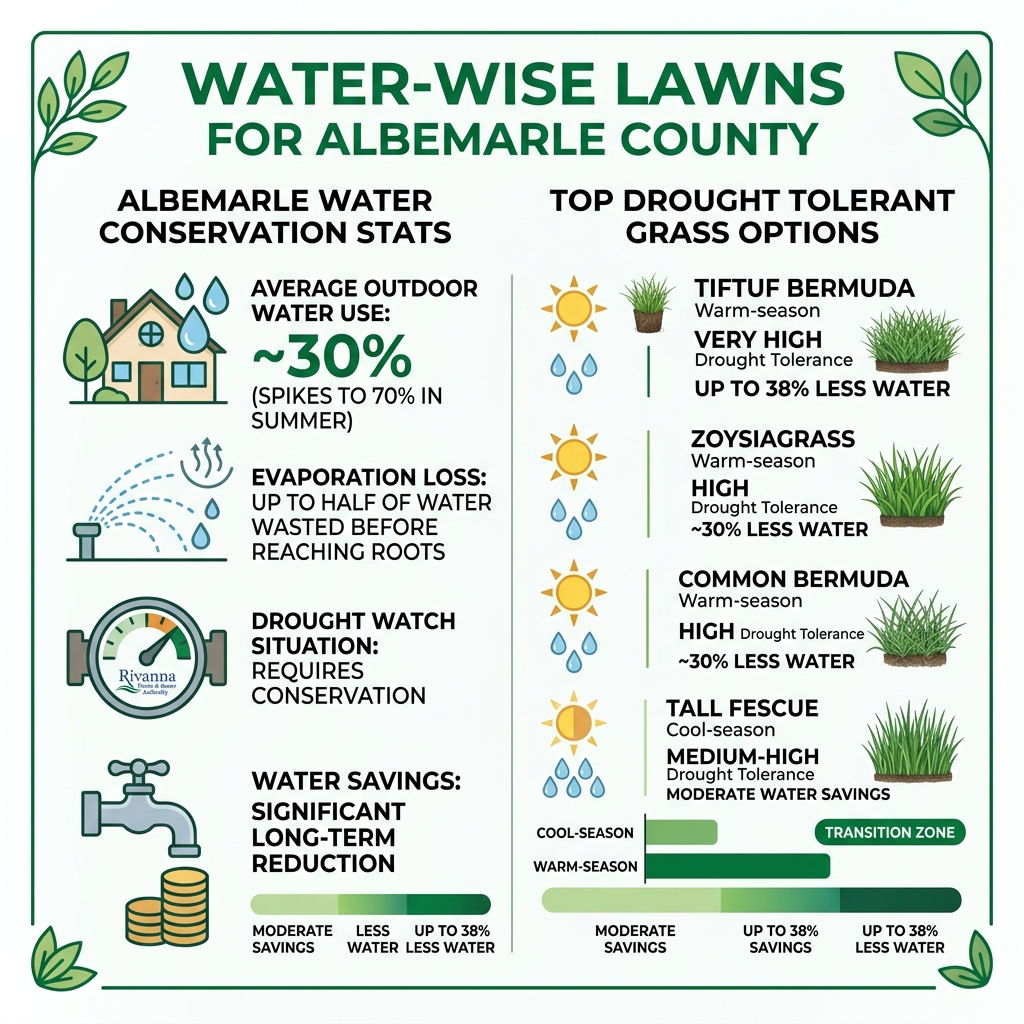
Top Varieties for Drought Tolerant Turf Albemarle
Living in the “transition zone” means we are too far south for some cool-season grasses to thrive without a struggle, and just far enough north that warm-season grasses go dormant (turn brown) during our chilly winters. However, when the mercury hits 95 degrees in July, the “drought tolerance” of your lawn becomes the only thing that matters.
When we talk about drought tolerant turf Albemarle residents can rely on, we are looking for plants that either have massive root systems to find deep water or a biological “pause button” that lets them survive on very little.
| Feature | Cool-Season (e.g., Tall Fescue) | Warm-Season (e.g., Bermuda, Zoysia) |
|---|---|---|
| Active Growth | Spring & Fall | Summer |
| Water Needs | ~1 inch per week | ~0.7 inches per week (30% less) |
| Dormancy | Browns in extreme heat/drought | Browns in winter/first frost |
| Root Depth | Up to 2-3 feet | Can reach 6 feet (Bermuda) |
Selecting Heat Resistant Grass
If you are looking for the best “all-rounder” for our area, Tall Fescue is usually the winner. It is a cool-season grass, but it’s the “tough guy” of the group. Unlike Kentucky Bluegrass, which might check out early when things get dry, Tall Fescue develops deep roots that can tap into moisture deep in our Virginia clay.
However, if you really want to save on your water bill, you might look at warm-season options. According to the May Lawn Care – Piedmont Master Gardeners, Virginia’s climate can be harsh on grass in both seasons, but warm-season grasses like Bermuda and Zoysia are becoming more popular in Albemarle because they thrive in the heat that wilts everything else.
- Tall Fescue: Great for year-round green (mostly), but needs more water in July.
- Bermuda Grass: Loves the sun, spreads quickly to fill in bare spots, and is incredibly hard to kill once established.
- Zoysiagrass: Thicker and more carpet-like than Bermuda, handles a bit more shade, and feels great underfoot.
Performance of Warm-Season Cultivars
In recent years, turf science has given us some “super-grasses.” One of the most impressive is TifTuf Bermuda | Shade & Drought Tolerant Bermuda Grass. This variety was bred specifically to use 38% less water than other Bermuda varieties. In university trials, it stayed green long after other grasses turned brown. It’s essentially the “camel” of the grass world.
Another exciting newcomer is Lobo Zoysia. Often called a “unicorn” grass, it combines the aggressive growth of Bermuda with the beauty of Zoysia. It establishes much faster than older Zoysia varieties, meaning you aren’t waiting three years for a full lawn. These warm-season cultivars are game-changers for those looking for drought tolerant turf Albemarle landscapes can sustain with minimal irrigation.
Establishing Your Water-Wise Lawn
You can buy the most expensive, drought-resistant seed in the world, but if you toss it onto hard-packed clay, you’re just feeding the birds. Proper establishment is 90% of the battle.
At Sylvan Scapes, we’ve seen that the most successful lawns start with a clean slate. You can see some of our local transformations in our Portfolio Entries Turf. The process starts with removing weed competition and ensuring the soil can actually “breathe.”
Establishing Drought Tolerant Turf Albemarle
Before you plant a single seed or lay a piece of sod, you must know what’s happening underground. Most soil in Albemarle County is naturally acidic. If your pH is off, your grass can’t “eat” the nutrients in the soil, no matter how much fertilizer you apply.
We always recommend starting with a test from the Virginia Tech Soil Testing Lab. They will give you a detailed report on your nutrient levels and, most importantly, your pH. For a healthy, drought-resistant lawn, we usually aim for a pH of around 6.5. To get there, we often need to apply lime to neutralize the acidity. This simple step makes the grass much more resilient when the summer heat hits.
Seeding vs Sodding Processes
Should you seed or sod? It depends on your timeline and budget.
Seeding is more cost-effective but requires patience. For drought tolerant turf Albemarle projects, we recommend using a high-quality, certified seed. Look for the “Blue Tag” on seed bags, which indicates it has been certified by the Virginia Crop Improvement Association (VCIA). This ensures you aren’t accidentally planting a bunch of weeds. After seeding, we use straw mulch or erosion matting to keep the moisture in and the birds out.
Sodding gives you an “instant lawn.” It’s great for steep hills where seed might wash away. The key with sod is “contact.” You want that sod pressed firmly against the prepared soil so the roots can dive deep immediately. Regardless of the method, the Extension publication site reminds us that soil preparation for both methods is virtually identical—you can’t skip the hard work of grading and tilling just because you’re using sod.
Maintenance and Conservation Strategies
Once your lawn is established, the goal is to “train” it to be tough. If you water your grass for five minutes every day, the roots will stay right at the surface because that’s where the water is. When a drought hits, those shallow roots dry out in hours.
Cultural Practices for Resilience
The secret to a drought-hardy lawn is “Deep and Infrequent” watering. We want to apply about an inch of water in one or two sittings per week. This forces the roots to grow deep into the soil to find the moisture as the surface dries out.
Mowing also plays a huge role. We follow the 1/3 Rule: never remove more than one-third of the grass blade at a time. For Tall Fescue, we recommend keeping it high—around 3 to 4 inches. Taller grass shades the soil, which keeps it cooler and reduces evaporation. As Shawn Askew notes in the Virginia Cooperative Extension publication on mowing, higher mowing heights directly correlate to deeper root systems.
Other essential practices include:
- Core Aeration: This involves pulling small plugs of soil out of the ground. It breaks up compaction and allows water and air to reach the roots. We often do this in the fall for fescue lawns.
- Dethatching: If the “thatch” (dead grass material) gets too thick, it can act like a waterproof roof, preventing rain from reaching the soil.
- Sharpening Blades: Dull blades tear the grass, causing it to lose more moisture through the “wound.”
For ongoing care, our Staunton Landscaping Company Turf Maintenance team can help set up a schedule that prioritizes health over just “looking green” temporarily.
Smart Irrigation and RWSA Guidelines
In Albemarle, we have to be mindful of the Rivanna Water and Sewer Authority (RWSA) guidelines. During a Drought Watch, it’s not just about saving money; it’s about protecting our local water supply.
One of the best ways to conserve is by using Rain Barrels. They capture free water from your roof that you can use for flower beds or small turf areas. For your main lawn, consider “Smart Irrigation” controllers that check the local weather and skip watering if rain is in the forecast.
Not sure how much your sprinklers are putting out? Use the “Tuna Can Test.” Place a few empty tuna cans around your yard while the sprinklers are running. Once they have an inch of water in them, you know exactly how long you need to run your system to hit that weekly goal.
Frequently Asked Questions
How much water does a lawn in Albemarle really need?
Most grass varieties in Virginia need approximately 1 inch of water per week during the growing season. If you step on the grass and it springs back, it doesn’t need water. If your footprints stay visible, it’s thirsty! During a severe drought, you can let cool-season grasses go dormant—they only need about 1/4 inch of water every two weeks just to keep the “crown” of the plant alive.
When is the best time to water to avoid evaporation?
The “Sweet Spot” is between 4:00 AM and 8:00 AM. The air is cool, the wind is usually calm, and the water has time to soak into the soil before the sun starts baking it away. Watering at night (after 10:00 PM) is okay, but it can sometimes lead to fungal issues because the grass stays wet for too long.
What is the ideal mowing height for drought resistance?
For Tall Fescue, keep it at 3 to 4 inches. For warm-season grasses like Bermuda, you can go lower (1 to 2 inches), but even then, keeping it on the higher end of its recommended range during a heatwave will help protect the soil from sun-scald and moisture loss.
Conclusion
Choosing the right drought tolerant turf Albemarle homeowners can rely on is an investment in the future of your property and our local environment. By selecting varieties like TifTuf Bermuda or deep-rooted Tall Fescue, and following smart cultural practices like core aeration and proper mowing, you can have a beautiful lawn that doesn’t “break the bank” or the water meter.
At Sylvan Scapes, we are committed to helping our neighbors in Staunton, Charlottesville, and throughout Albemarle County create sustainable, resilient landscapes. Whether you need an ISA Certified Arborist to check your trees or a team to renovate your struggling lawn, we are here to help.
Ready to transform your landscape into a water-wise oasis? Contact us today for a Long-Term Benefits of Drought Tolerant Turf Albemarle consultation and let’s get started on a lawn that’s thirsty no more!
Finding Reliable Arborist Services in Augusta County, VA
Arborist services augusta county homeowners and property managers need most often include:
| Service | Typical Cost Range |
|---|---|
| Tree removal | $169 – $706+ |
| Tree trimming & pruning | $174 – $639 |
| Stump grinding | $113 – $376 |
| Emergency tree services | 1.5x – 3.5x standard rates |
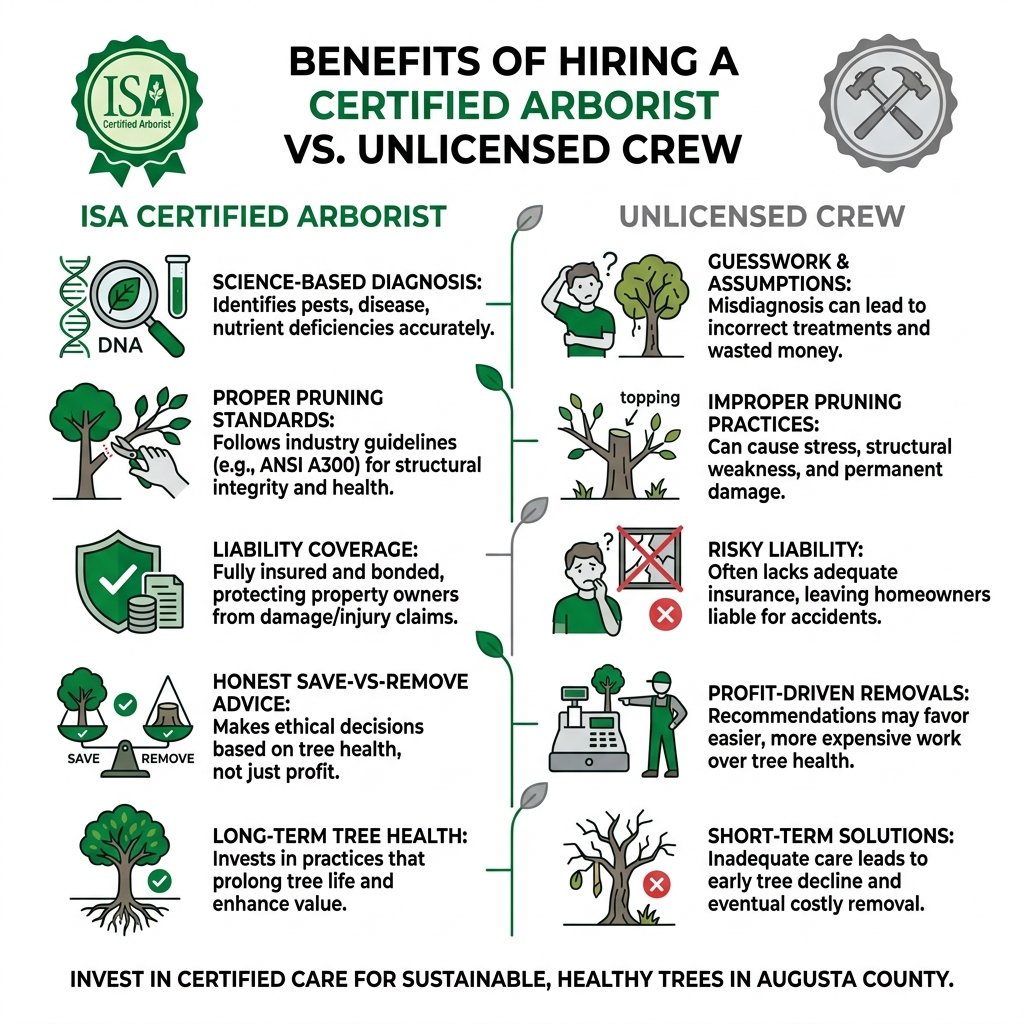
Quick answer: The most trusted arborist services in Augusta County cover tree removal, pruning, stump grinding, storm damage cleanup, and tree health assessments. Always look for an ISA Certified Arborist — they use science-based methods to keep your trees safe and healthy, not just a crew with a chainsaw.
Augusta County is the second-largest county in Virginia by area. That means a lot of trees — many of them old, large, and close to homes, driveways, and power lines. Whether you’re in Staunton, Waynesboro, Fishersville, or a rural stretch of the Valley, a tree that looks fine from the outside can be quietly failing on the inside.
The problem most homeowners run into isn’t finding someone to cut a tree. It’s finding someone who actually knows whether the tree needs to come down — or whether it can be saved.
That’s exactly where a certified arborist makes the difference.
I’m Kevin Thompson, founder of Sylvan Scapes and an ISA Certified Arborist with over two decades providing arborist services across Augusta County and surrounding areas. Since starting with a single truck in 2003, I’ve personally evaluated thousands of trees for homeowners and commercial property managers throughout the Shenandoah Valley — and I still meet every new client on-site before any work begins.
Essential Arborist Services Augusta County Residents Rely On
When we talk about arborist services augusta county residents need, we aren’t just talking about cutting wood. Professional arboriculture is a blend of biology, physics, and heavy-duty engineering. In our region, the landscape ranges from tight residential lots in Staunton to sprawling estates in Fishersville, each requiring a tailored approach.
The core services we provide focus on the entire lifecycle of the tree. This includes:
- Precision Pruning: This isn’t just “giving the tree a haircut.” It involves strategic cuts to improve structure and health.
- Tree Removal: Sometimes a tree is too far gone or poses a direct threat to a structure. We handle the removal from canopy to ground.
- Stump Grinding: After a tree is gone, the stump remains a tripping hazard and a magnet for pests like termites. We grind these down so you can reclaim your lawn.
- Land Clearing: For new construction or property expansion, we clear brush and trees efficiently.
- Debris Hauling: We don’t believe in leaving a mess. Part of a professional service is ensuring every limb and leaf is chipped or hauled away.
To get a better sense of what goes into these tasks, you can find more info about tree specialist services on our blog, where we dive into the “why” behind our methods.
Specialized Tree Removal and Crane Services
In Augusta County, we deal with some massive specimens—think century-old Oaks and towering Maples. When these trees become hazardous due to rot or storm damage, a standard bucket truck often isn’t enough.
This is where specialized equipment like a 27.5-ton swing cab crane comes into play. Using a crane allows us to lift large sections of a tree directly over a house or fence without them ever touching the ground. This “zero-impact” removal is the safest way to handle high-risk jobs. We also utilize NCCCO certified operators to ensure the highest level of technical precision.
For trees tucked into backyard corners where a truck can’t reach, we use “spider lifts.” These amazing machines can fold up to fit through a standard 36-inch garden gate but can extend over 100 feet into the air. It’s like giving an arborist a mechanical set of wings.
Precision Pruning and Trimming for Tree Health
Pruning is perhaps the most misunderstood of all arborist services augusta county homeowners request. Many people think “topping” a tree is a good way to manage size, but in reality, topping is incredibly damaging. It leaves the tree vulnerable to disease and creates weak “sucker” growth that is more likely to break in a storm.
Instead, we follow ANSI A300 standards, which are the industry “gold standard” for tree care. Our methods include:
- Canopy Thinning: Removing selective branches to increase light penetration and air movement.
- Crown Cleaning: Removing dead, diseased, or broken branches.
- Limb Reduction: Shortening heavy limbs to reduce the leverage they exert on the trunk, preventing splits.
- Clearance Pruning: Raising the canopy so branches don’t scrape your roof or block your driveway.
Why Hire an ISA Certified Arborist for Your Property?
You wouldn’t hire a plumber to fix your electrical panel, and you shouldn’t hire a general landscaper to diagnose a 60-foot tree. An ISA (International Society of Arboriculture) Certified Arborist has spent years studying tree biology, soil science, and pest management.
We provide science-based care. When we look at a tree, we aren’t just looking for what to cut; we’re looking at the root flare, the leaf color, and the integrity of the “included bark” in the crotches of the limbs. This expertise allows us to offer more info about arborist consultations that focus on preservation rather than just removal.
Hiring a certified professional also protects you legally. We carry comprehensive liability and workers’ compensation insurance. If an uninsured “guy with a chainsaw” gets hurt on your property, you could be held liable. With a professional team, that risk is eliminated.
Identifying Signs Your Tree Needs Professional Arborist Services Augusta County
How do you know when to call us? Trees often “talk” to us through physical symptoms. Keep an eye out for:
- Deadwood: Large branches with no leaves or peeling bark.
- Fungal Growth: Mushrooms growing at the base of the trunk or on the bark (this often indicates internal rot).
- Structural Cracks: Deep splits in the trunk or where major limbs attach.
- Pest Infestation: Holes in the bark or sawdust-like “frass” at the base.
- Invasive Species: We are currently seeing high numbers of Emerald Ash Borer and Spotted Lanternfly in the Shenandoah Valley. If you see these, act fast.
If you suspect a pest or disease issue, you can consult the Virginia Department of Forestry for a deep dive into common Virginia threats.
The Benefits of Routine Tree Health Assessments
The best way to save money on tree care is to catch problems early. A routine health assessment is like a physical for your trees. We check the soil pH—as Augusta County soil can vary wildly—and look for nutrient deficiencies.
Routine assessments provide:
- Risk Mitigation: Identifying a weak limb before it falls on your car.
- Property Value: Healthy, mature trees can add up to 20% to your home’s resale value.
- Peace of Mind: Knowing your family is safe during the next Shenandoah windstorm.
Understanding the Cost of Tree Care in the Shenandoah Valley
Budgeting for tree work shouldn’t be a guessing game. While every job is unique, we can look at local averages to set expectations.
Several factors influence the final quote:
- Tree Size: Height and canopy spread.
- Location: Is it in an open field or hanging over a glass sunroom?
- Equipment Access: Can we get a bucket truck to it, or do we need to climb and rig every limb?
- Condition: Dead trees are often more dangerous and expensive to remove because they are unpredictable.
We always provide a transparent, written quote. We also offer various cleanup levels—from “down only” (where we leave the wood for you) to “full service” (where we rake the last leaf and grind the stump).
Emergency Arborist Services Augusta County and Storm Damage Response
When a storm rolls through the Blue Ridge, our phones start ringing. High winds and heavy ice are common in the Valley, and they can bring down even healthy-looking limbs.
We offer 24-hour emergency response for hazardous situations. If a tree is on your house, blocking your driveway, or touching electrical wires, do not attempt to handle it yourself. Power lines are particularly deadly; always assume they are live. Our team is trained to work safely around utilities and can rapidly mobilize to secure your property.
Advanced Equipment and Safety Standards
Safety isn’t just a buzzword for us; it’s a daily practice. We adhere to the Z133 safety standards, which govern the arboriculture industry. This includes:
- Weekly Safety Meetings: We review recent jobs and safety protocols.
- Personal Protective Equipment (PPE): Chainsaw chaps, helmets, and eye protection are non-negotiable.
- Whole Tree Chippers: These machines can process trunks up to 21 inches in diameter, keeping the job site clear and safe.
- Rigging Systems: We use high-tensile ropes and pulleys to “lower” limbs slowly rather than letting them drop.
Frequently Asked Questions about Augusta County Tree Care
What areas of Augusta County are served by local arborists?
We serve the entire county and the independent cities within it. This includes:
- Staunton & Waynesboro: High-density residential and historic districts.
- Fishersville & Verona: Growing suburban areas with many young and middle-aged trees.
- Stuarts Draft & Churchville: Rural and agricultural properties with large specimen trees.
- Weyers Cave & Greenville: Open landscapes requiring windbreak maintenance and large-scale removals.
Why choose local tree services over out-of-area companies?
While larger out-of-area companies have big marketing budgets, they often lack specific knowledge of the Shenandoah Valley’s unique ecosystem. Local arborists understand our soil types (from heavy clay to limestone-rich earth) and our specific weather patterns.
Choosing a locally owned company means your money stays in the community, and you get a level of personalized service that a corporate office in another state simply can’t provide. We treat your property like it’s our own backyard.
How do I get a free estimate for tree work?
Getting an estimate should be easy and educational. When you contact us for a quote, we don’t just email you a number. We perform an on-site evaluation where we walk the property with you.
During this evaluation, we provide “save-vs-remove” advice. If a tree can be saved with a simple cabling system or a round of fertilization, we will tell you. We believe in building long-term relationships with our clients, not just making a quick buck on a removal.
Conclusion
Your trees are an investment in your property’s beauty, safety, and value. Whether you need a hazardous limb removed or a young sapling pruned for future growth, choosing the right arborist services augusta county is the most important step.
At Sylvan Scapes, we bring over 20 years of experience and ISA Certification to every job. We are proud to be a CTSP-certified company serving Staunton and the broader Shenandoah Valley since 2003. From residential backyards to large-scale commercial arborist services, our goal is always the same: leave your property better than we found it.
Ready to give your trees the expert care they deserve? Contact us today for a free consultation and let’s keep the Shenandoah Valley beautiful, one tree at a time.
Staunton’s Trees Deserve More Than a Chainsaw and a Pickup Truck
Professional arborist Staunton VA services give homeowners and property managers access to certified tree care experts — not just laborers. Here’s a quick look at what that means for you:
Top reasons to hire a professional arborist in Staunton, VA:
- Safe removal of large, damaged, or awkwardly placed trees
- Precision pruning that protects tree health and structure
- Tree health assessments to catch disease and pest problems early
- Storm damage response with emergency cleanup and hazard limb removal
- Expert advice on whether a tree should be saved or removed
Staunton’s older neighborhoods and historic streets are lined with mature trees — oaks, maples, and other hardwoods that have been growing for decades. That’s a real asset. But older trees also come with real risks: hidden decay, structural failure, disease spread, and storm vulnerability. Getting the wrong crew involved can cost you more than the tree itself.
The difference between a professional arborist and a general tree cutter comes down to training, certification, and judgment. One knows why a cut is made. The other just makes it.
I’m Kevin Thompson, founder of Sylvan Scapes and an ISA Certified Arborist with over 20 years serving Staunton and the surrounding counties as a professional arborist in Staunton, VA. I’ve seen what happens when trees are mismanaged — and what’s possible when they’re cared for properly.
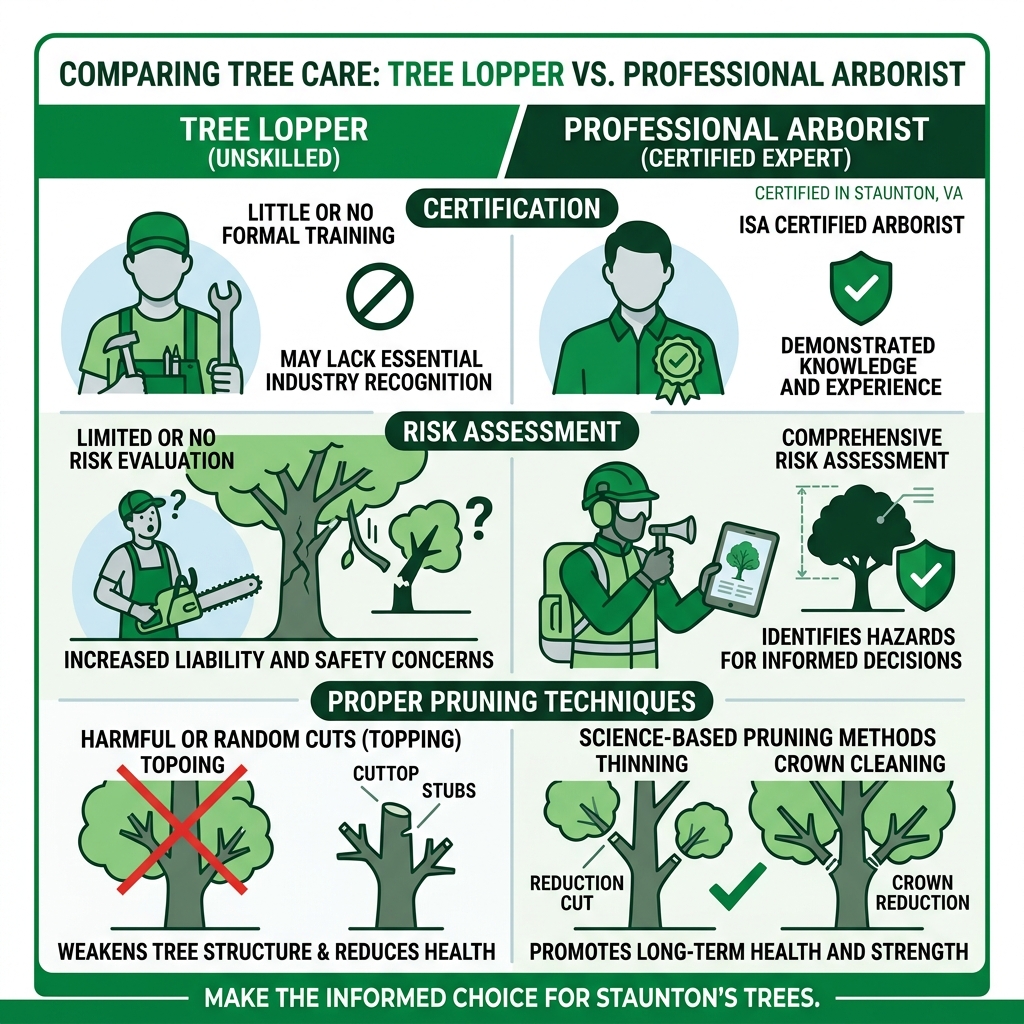
Why Hire a Professional Arborist in Staunton, VA?

In a historic city like Staunton, where the charm of the past intertwines with the beauty of nature, quality tree care is essential. It isn’t just about making the yard look tidy; it’s about preserving the health of our urban canopy and ensuring the safety of our community. When you hire a professional arborist in Staunton, VA, you are investing in the longevity of your landscape.
Arborists are trained to identify hazards that the untrained eye might miss. A tree might look perfectly green on the outside while the interior is hollowed out by decay. By identifying these risks early, we can implement sustainable practices that stabilize the tree or, if necessary, remove it before it falls on a roof or a power line. This proactive approach builds landscape resilience and significantly boosts property value. For those looking for the gold standard in tree care, the International Society Of Arboriculture provides the framework for these professional standards.
The Value of ISA Certification for a Professional Arborist in Staunton, VA
Not all tree services are created equal. An ISA Certified Arborist has passed a comprehensive exam covering all aspects of tree care, from biology and diagnosis to safe work practices. This isn’t a “one and done” certificate; it requires ongoing continuing education to stay current with the latest science-based care techniques.
When we step onto a property, we aren’t just looking for what to cut. We are looking at the soil, the species, and the structural integrity of the specimen. This level of industry accreditation ensures that your trees receive treatments backed by research, not guesswork. If you want to see how this expertise translates to real-world results, you can learn more about our specific approach as a Staunton Arborist.
Safety Standards and Insurance Requirements
Tree work is inherently dangerous. It involves heavy machinery, high altitudes, and unpredictable weights. A professional arborist in Staunton, VA must strictly adhere to ANSI Z133 safety standards. These are the industry-accepted safety requirements for arboricultural operations.
At Sylvan Scapes, we prioritize risk mitigation through:
- Weekly safety meetings: We review recent jobs and reinforce best practices.
- OSHA compliance: Ensuring every team member has the right protective gear and training.
- Comprehensive Insurance: We carry both liability protection and workers’ compensation.
Without these, a homeowner could be held legally responsible for an accident occurring on their property. Always ask for proof of insurance before any equipment is unloaded.
Essential Tree Care Services for Augusta County Homeowners
Maintaining a beautiful property in Augusta County requires a mix of art and science. Whether you are dealing with nutrient competition between trees or simply want to improve your home’s aesthetic preservation, a professional team offers a suite of services tailored to the Shenandoah Valley.
| Service Type | Primary Goal | Best For… |
|---|---|---|
| Maintenance Pruning | Health & Structure | Young trees and established hardwoods |
| Technical Removal | Safety & Space | Dead, dying, or hazardous trees in tight spots |
| Health Assessment | Diagnosis & Prevention | Trees showing yellowing leaves or fungal growth |
For a deeper dive into these options, visit Your Tree Specialist Category on our site.
Precision Pruning by a Professional Arborist in Staunton, VA
Pruning is more than just “trimming.” It is a surgical process designed to improve the tree’s health. We focus on techniques like crown reduction to manage the size of a tree without stressing it, and deadwooding to remove brittle branches that could fall during a storm.
Proper pruning allows for better sunlight penetration and air circulation, which reduces the risk of fungal diseases. It also maintains the structural integrity of the tree, ensuring it can withstand the heavy ice loads we often see in Virginia winters. You can see the results of these techniques in our Portfolio Item Ridgewood Avenue Arbor Cleanup.
Advanced Equipment for Safe Tree Removal
Sometimes, a tree simply has to go. Whether it’s been struck by lightning or is encroaching on a foundation, removal in Staunton’s tight residential lots requires specialized equipment. We utilize:
- 75-foot bucket trucks for reaching high canopies safely.
- Spider lifts that can fit through a standard 36-inch backyard gate but reach over 100 feet high.
- Crane operations for “zero-impact” removals where we lift pieces of the tree over the house rather than dropping them on the lawn.
Our team includes NCCCO certified crane operation expertise, ensuring that even the most massive removals are handled with absolute control.
Common Tree Challenges in the Shenandoah Valley
Staunton residents deal with a unique “subtropical” climate—hot, humid summers and winters that can swing from mild to freezing in a matter of hours. This environment, while great for growth, also invites specific stressors. Between tight property lines in the historic district and the need for urban infrastructure protection, managing local trees is a constant balancing act.
Identifying Local Pests and Diseases
Our region is susceptible to various pests and diseases that can quickly devastate a landscape if left unchecked. A professional arborist in Staunton, VA is trained to spot the early signs of:
- Emerald Ash Borer: A major threat to our local Ash trees.
- Anthracnose and Leaf Spot: Common during our humid, rainy springs.
- Root Rot: Often caused by poor drainage or compacted soil near driveways.
We address these through biological soil regeneration—improving the “living” part of the soil to help the tree defend itself—and targeted fungicidal treatments. A regular tree health assessment is the best way to catch these issues before they become terminal.
Emergency Storm Damage and Response
When an ice storm hits Augusta County, the weight on tree limbs can be astronomical. High winds and saturated soil often lead to uprooted trees or “hazard limbs” hanging precariously over sheds and power lines.
We provide emergency storm damage response to stabilize these situations. This includes emergency pruning to remove broken hangers and 24/7 cleanup to clear driveways and homes. If you’re curious about how we handle these high-pressure situations, check out our Portfolio Entries Arbor.
Choosing the Right Tree Service: Costs and Expertise
One of the most common questions we hear is, “How much is this going to cost?” The truth is that every tree is different. When we provide an itemized estimate, we look at several factors:
- Tree Size: Larger trees require more time, more people, and heavier equipment.
- Accessibility: Can we get a truck right to the tree, or do we need to use ropes, harnesses, and a spider lift to navigate a tight backyard?
- Project Scope: Are we just felling the tree, or are we performing a full “turnkey” service including stump grinding and debris hauling?
We believe in transparency. A site assessment allows us to walk the property with you, discuss your goals, and provide a quote that reflects the actual work required—no hidden fees. You can see examples of our site-specific work at Portfolio Item Ridgewood Avenue Arbor Cleanup 4.
Frequently Asked Questions about Staunton Tree Care
How much does professional tree removal cost in Staunton?
Pricing varies widely based on the height of the tree and its proximity to structures. A small tree in an open field might cost a few hundred dollars, while a massive, decaying oak overhanging a historic home requires a crane and a large crew, which increases the cost. Stump grinding is usually an additional option that homeowners choose to clear the way for new landscaping.
Why is regular tree maintenance important for Virginia landscapes?
Regular maintenance is like a wellness check for your property. By pruning deadwood and managing pests early, you prevent expensive emergency removals later. It also builds storm resistance; a well-pruned tree allows wind to pass through the canopy rather than acting like a sail and pulling the tree over. Plus, healthy trees significantly enhance curb appeal and property value.
What should I look for in a reliable arborist service?
Always check for:
- ISA Certification: This proves they have the technical knowledge.
- Proof of Insurance: Liability and workers’ comp are non-negotiable.
- Specialized Equipment: Ensure they have the tools (like cranes or lifts) to do the job safely.
- Local Reviews: Look for a long-standing reputation in the Staunton and Augusta County area.
- Written Contracts: Never rely on a handshake; get the scope of work in writing.
Conclusion
At Sylvan Scapes, we’ve been more than just a tree service since 2003—we’ve been partners in preserving the Shenandoah Valley’s natural beauty. As a CTSP-certified company with an ISA Certified Arborist at the helm, we bring a level of safety and science-based expertise that is rare in the industry.
Whether you need a complex removal, precision pruning, or a long-term plan for tree preservation, we serve Staunton, Charlottesville, and the surrounding counties with a commitment to excellence. For our business neighbors, we also offer specialized Staunton Commercial Arborist services to keep your grounds safe and professional.
Don’t wait for the next big storm to wonder about the health of your trees. Reach out to us today, and let’s ensure your landscape remains a safe and beautiful asset for seasons to come.