How to get the best sod installation in Staunton without breaking a sweat
Selecting Grass Types and Timing for Staunton
Turf sod installation Staunton is one of the fastest ways to go from a patchy, bare yard to a thick, green lawn — often in a single day.
Here’s a quick overview of what successful sod installation in Staunton involves:
| Step | What to Do |
|---|---|
| 1. Choose your grass | Tall Fescue or Zoysia for Staunton’s transition zone climate |
| 2. Time it right | Install cool-season sod in Sept–Oct or April–May |
| 3. Prep the soil | Test pH, till 3–4 inches, remove rocks, grade for drainage |
| 4. Lay the sod | Stagger seams like brickwork, roll for soil contact |
| 5. Water immediately | 1 inch per day for the first two weeks |
| 6. Budget correctly | Expect $376–$736 average installed cost in Staunton |
Staunton is home to roughly 25,000 residents nestled in the Shenandoah Valley — a region where a well-kept lawn isn’t just nice to have, it’s part of the landscape’s identity. Whether you’re dealing with a bare new-construction lot, a lawn that lost the battle to weeds, or simply want to boost curb appeal fast, sod gives you instant results that seeding simply can’t match.
But getting it right takes more than rolling out grass and hoping for rain. Soil prep, timing, grass variety, and proper watering all determine whether your new lawn thrives or struggles within its first season.
I’m Kevin Thompson, founder of Sylvan Scapes and an ISA Certified Arborist who has been working the soil of Augusta County since 2003 — including overseeing turf sod installation Staunton projects for residential and commercial clients across the Shenandoah Valley. In this guide, I’ll walk you through everything you need to know to get a beautiful, lasting lawn without the guesswork.
Staunton sits in what we call a “transition zone.” This means our humid subtropical climate features hot, sticky summers and winters that can get quite chilly. Because we are caught between the North and the South, choosing the right grass is the most critical decision you’ll make. If you pick a grass that can’t handle a Shenandoah Valley August or a January freeze, your investment literally goes out the window.
When we look at Staunton Landscaping Ideas Gallery, we see a mix of textures and colors, but the foundation is always the turf. In our region, you essentially have two paths: cool-season grasses or warm-season varieties.
Cool-Season vs. Warm-Season Varieties
Tall Fescue: This is the “Old Reliable” of Staunton. It stays green for most of the year and handles our clay-heavy soil better than most. It has a deep root system that helps it survive summer dry spells, though it might need a little extra drink when the Valley heat peaks in July.
Kentucky Bluegrass: Known for its stunning deep blue-green color and soft texture, Bluegrass is a favorite for high-end residential lawns. However, it can be a bit more “needy” than Fescue, requiring more water and maintenance to keep it looking like a golf course.
Bermuda and Zoysia: These are warm-season grasses. They love the heat and are incredibly durable. If you have kids or dogs running around, these are tough to beat. The trade-down? They go dormant and turn a tan/brown color as soon as the first hard frost hits Staunton, usually staying that way until late spring.
The Best Months for Installation
Timing is everything. You wouldn’t wear a parka in July, and you shouldn’t lay cool-season sod in the middle of a heatwave.
For Tall Fescue and Kentucky Bluegrass, September and October are the “Golden Months.” The soil is still warm from summer, but the air is cooling down, which encourages rapid root growth without the stress of extreme heat. April and May are your second-best windows.
For warm-season grasses like Zoysia or Bermuda, you want to install them in late spring or early summer so they can establish themselves during their peak growing season. We generally advise against installing sod in November; with average Staunton lows hitting 32°F, the grass often can’t “knit” into the soil before the ground freezes. For long-term success, check out our guide on Staunton Landscaping Company Turf Maintenance to see how seasonal timing affects your lawn’s health.
The Step-by-Step Process for Turf Sod Installation Staunton
Getting a “magazine-ready” lawn isn’t just about the grass; it’s about the dirt underneath. We often tell clients that 90% of a successful turf sod installation Staunton happens before the first piece of grass even touches the ground.
Preparing Your Soil for Turf Sod Installation Staunton
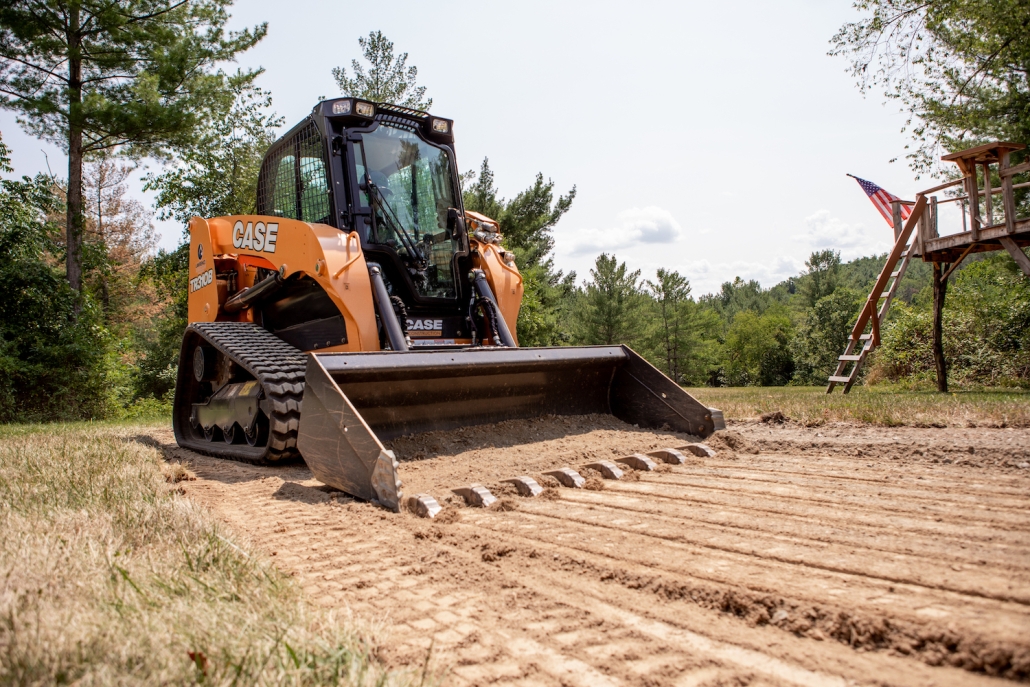
First, we have to clear the canvas. This means removing every bit of existing weed, old grass, and debris. We’ve seen projects where people try to lay sod over old weeds—don’t do it! The weeds will just grow through the seams.
- Soil Testing & pH Adjustment: Most soil in the Shenandoah Valley is naturally acidic. We recommend a soil test to see exactly what nutrients are missing. Often, we need a lime application to balance the pH, which ensures the grass can actually “eat” the fertilizer you give it.
- Core Aeration & Rototilling: If your soil is hard as a rock (common in our clay-rich area), the roots won’t be able to penetrate. We rototill the top 3–4 inches to loosen things up. If you’re looking for inspiration on how we’ve transformed local yards, browse our Portfolio Entries Turf.
- Grading: This is where we prevent future headaches. We smooth the area with a metal rake and ensure the ground slopes away from your home’s foundation. This prevents “puddling” and drainage issues that can rot your new sod’s roots.
Laying and Finishing the Sod
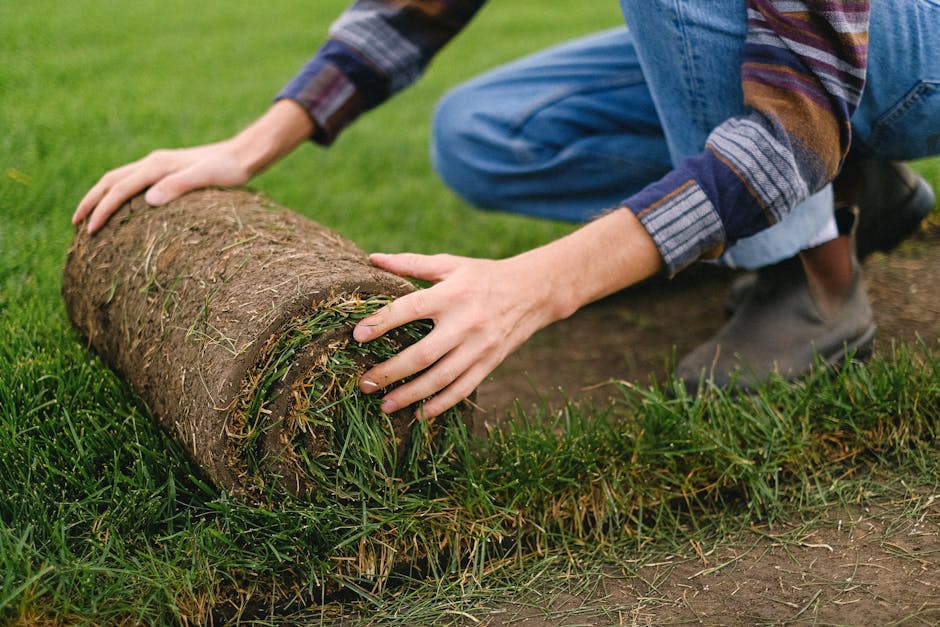
Once the soil is prepped and lightly dampened, it’s time for the “instant” part of the transformation. We source high-quality, non-netted sod from local farms to ensure it’s harvested fresh—usually within 24 hours of being laid.
- The Straight Edge Start: We always start along a straight edge, like a driveway or a sidewalk.
- The Brick Pattern: Just like a brick wall, we stagger the seams. This prevents long, straight lines where water could wash away soil or where the sod might pull apart.
- Tight Joints: We push the edges of the sod together firmly but never overlap them. Overlapping creates bumps; gaps create weed havens.
- Rolling: After the sod is down, we use a water-filled roller to press the grass into the soil. This eliminates air pockets—the number one killer of new sod. If the roots aren’t touching the dirt, they can’t grow.
Budgeting: Costs and Professional vs. DIY Factors
Let’s talk numbers. While sod is more expensive than seed, the “instant” value and the fact that you aren’t fighting birds and washouts for six months makes it a smart investment for many Staunton homeowners.
On average, a professional turf sod installation Staunton ranges from $376 to $736 for smaller projects, but the price scales based on your yard’s size and the grass type you choose.
| Area Size | Grass Type | Estimated Cost (Staunton) |
|---|---|---|
| 500 sq ft | Bermuda | $335 – $435 |
| 500 sq ft | Kentucky Bluegrass | $185 – $360 |
| 500 sq ft | Zoysia | $285 – $460 |
| 2000 sq ft | Tall Fescue | $1,210 – $1,710 |
| 2000 sq ft | Bermuda | $1,310 – $1,710 |
Additional factors that can impact your quote include:
- Regrading: ~$0.55 per sq ft
- Topsoil Addition: ~$0.25 per sq ft
- Sod Removal (Old Grass): ~$0.45 per sq ft
For businesses, we provide specialized pricing through our Staunton Commercial Landscaping Company Turf Maintenance services, which often involve larger-scale “Big Roll” installations.
Evaluating DIY vs. Professional Turf Sod Installation Staunton
Can you do this yourself? Absolutely. But it is back-breaking work. A single pallet of sod can weigh between 1,500 and 3,000 pounds depending on moisture. If you’re doing a 2,000 sq ft yard, you’re moving four pallets of weight by hand.
DIY Pros: You save on labor costs. You can get a pallet from a sod farm for as low as $160. DIY Cons: You have to rent equipment (tillers, rollers), arrange delivery or have a heavy-duty truck, and you don’t get a warranty. If the sod dies because of a mistake in prep, you’re out of luck.
Hiring a professional team like ours means we handle the heavy lifting, the specialized tools, and the precision grading. We also bring the expertise of an ISA Certified Arborist to ensure the turf integrates perfectly with your existing trees and landscape. You can learn more about the Benefits of Professional Lawn Care Services to see how we beat the “DIY stress.”
Post-Installation Care and Maintenance
Congratulations, you have a green lawn! Now, don’t let it die. The first 14 days are the most critical period in the life of your turf.
Watering and Mowing Guidelines
Watering: You need to water immediately—within 15 minutes of the first roll being laid. For the first two weeks, your goal is to keep the sod and the soil underneath soaking wet. We recommend 1 inch of water per day, which usually means running a sprinkler for about 30 minutes in each spot, twice a day (morning and late afternoon). After two weeks, you can taper off to every other day, and eventually to twice a week.
Mowing: Resist the urge to mow too soon! Wait until the grass is about 3–4 inches tall and, most importantly, make sure it has “knitted” to the ground. If you can tug on the grass and the whole piece lifts up, it’s not ready. When you do mow, use a sharp blade and never take off more than one-third of the grass height at once.
Long-Term Health and Fertilization
To keep that Staunton green vibrant, you’ll need a consistent plan:
- Starter Fertilizer: We apply this at half-rate during installation to give the roots a boost.
- Grub Prevention: In late May or June, we recommend a preventative treatment to stop pests from eating your new roots.
- Weed Control: Once established, a seasonal program will keep invasive species like wiregrass from moving in.
- Seasonal Clean-ups: Keeping leaves off your new sod in the fall is vital so the grass doesn’t “smother” and die over the winter.
Frequently Asked Questions about Staunton Sod
How much does a pallet of sod cover in Staunton?
Most pallets in our region cover 500 square feet, though some farms use 400 or 450 sq ft pallets. Always verify the square footage with your supplier before ordering!
What is the average cost of sod installation in Staunton?
For a standard residential project, expect to pay between $376 and $736 for basic areas. For a full yard (around 2,000 sq ft), the cost typically ranges from $1,200 to $1,800 depending on the grass variety and the amount of site preparation needed.
Can I install sod in the winter in Virginia?
Technically, you can lay sod as long as the ground isn’t frozen, but we don’t recommend it. In Staunton, November through February is risky because the grass goes dormant and won’t grow the roots it needs to survive the drying winter winds. It’s better to wait for the spring thaw.
Conclusion
A beautiful lawn is an investment in your home’s value and your own peace of mind. At Sylvan Scapes, we’ve spent two decades perfecting the art of turf sod installation Staunton. From the initial soil test to the final roll of the drum, we treat your yard like it’s our own.
As a CTSP-certified company with an ISA Certified Arborist on staff, we don’t just “lay grass”—we build sustainable, healthy outdoor environments that thrive in the unique climate of the Shenandoah Valley. Whether you are in Staunton, Charlottesville, or anywhere in Augusta County, we are here to help you get that dream lawn without breaking a sweat.
Ready to transform your yard? Get a Staunton Landscaping Company Free Estimate today and let us handle the heavy lifting!