Stop Dreaming and Start Digging with These Simple Garden Designs
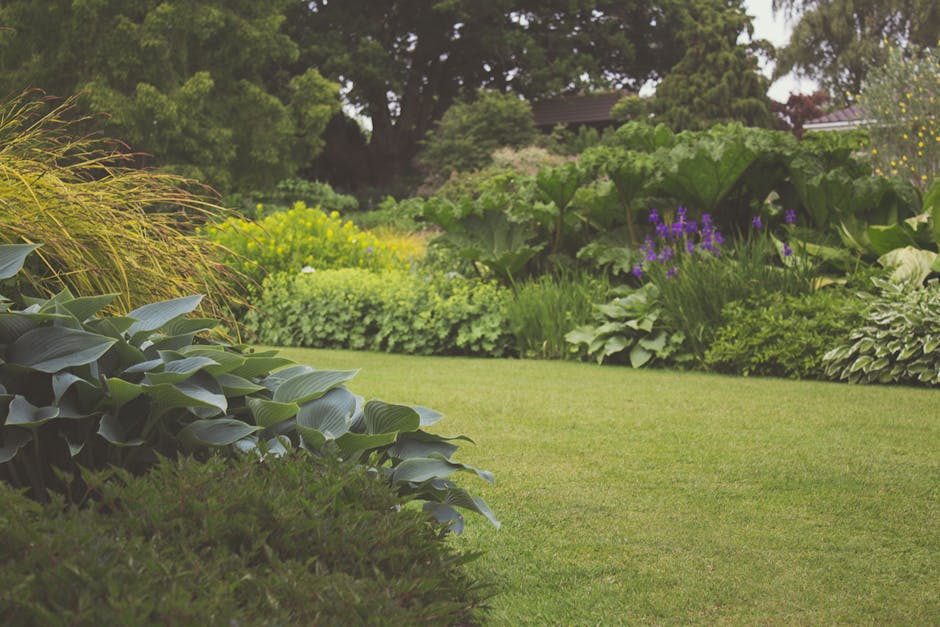
You Don’t Need a Big Budget — or a Big Yard — to Get a Beautiful Landscape
Simple landscape design images are one of the fastest ways to go from “I don’t know where to start” to a clear plan for your outdoor space.
Here are the most common simple landscape styles worth exploring:
| Style | Key Feature | Best For |
|---|---|---|
| Minimalist gravel courtyard | Pea gravel + stone pavers | Low-maintenance front yards |
| Defined garden beds | Metal edging + repeated plantings | Curb appeal on a budget |
| Vertical backyard | Pergola + climbing plants | Small or narrow spaces |
| Woodland no-lawn | Native shrubs + mulch paths | Shaded or sloped yards |
| Raised bed garden | Untreated lumber + organic soil | Edible or tidy kitchen gardens |
Most people spend too much time picking plants and not enough time thinking about layout. The strongest designs start with structure — paths, edges, outdoor zones — and let the plants fill in from there.
That principle holds whether you have a quarter-acre in Staunton or a compact backyard in Waynesboro.
I’m Kevin Thompson, founder of Sylvan Scapes and an ISA Certified Arborist with over two decades of hands-on landscaping experience across the Shenandoah Valley — and simple landscape design images are something I reference constantly when walking properties with clients to help them see what’s possible before a single shovel hits the ground. Read on for the ideas that actually work in our Virginia climate.
Core Principles of Simple Landscape Design Images
When we look at simple landscape design images, the most successful ones share a common thread: they don’t try to do too much. In professional landscaping, we call this “restraint.” It is the difference between a yard that feels like a chaotic collection of plants and one that feels like a cohesive retreat.
Minimalism and Functionality
The core of a simple design is minimalism. This doesn’t mean your yard has to look like a barren desert. Instead, it means every element has a purpose. We often encourage homeowners to start by identifying their top priorities. Do you need a spot for the kids to play, or are you dreaming of a quiet corner for morning coffee? By focusing on functionality first, we can create a layout that serves your life rather than just your eyes.
The Power of Negative Space
One of the biggest mistakes we see in DIY projects is the “filling the void” trap. People see an empty patch of grass and feel compelled to put a shrub in it. In professional Residential Category designs, we use negative space—like a clean sweep of lawn or a tidy gravel courtyard—to give the eye a place to rest. This makes the features you do include, like a beautiful specimen tree or a stone walkway, stand out even more.
Sustainable Practices and Planning
Sustainability isn’t just a buzzword; it’s a way to keep your maintenance hours low. We often look at a Case study of a simple sustainable garden to show how mapping out sun patterns and water runoff before you plant can save you thousands of dollars in the long run. In the Shenandoah Valley, we have to account for our specific soil types and seasonal changes. A simple, sustainable garden uses plants that actually want to be here, rather than fighting against the local environment.

Low-Maintenance Hardscapes and Permeable Materials
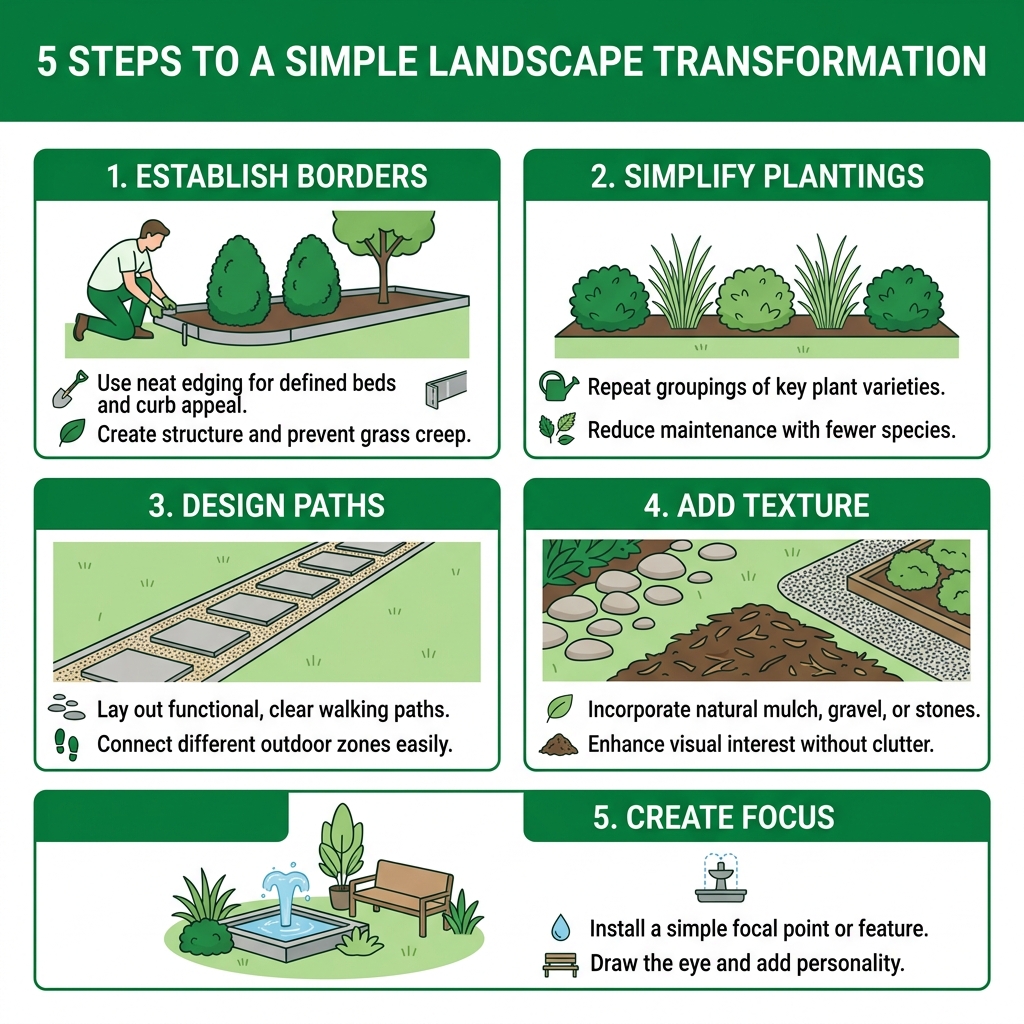
Hardscaping is the “skeleton” of your yard. If you get the hardscape right, the rest of the design falls into place. When browsing simple landscape design images, you’ll notice that many modern, professional-looking yards have replaced large, thirsty lawns with permeable materials.
Why Permeable Surfaces Matter
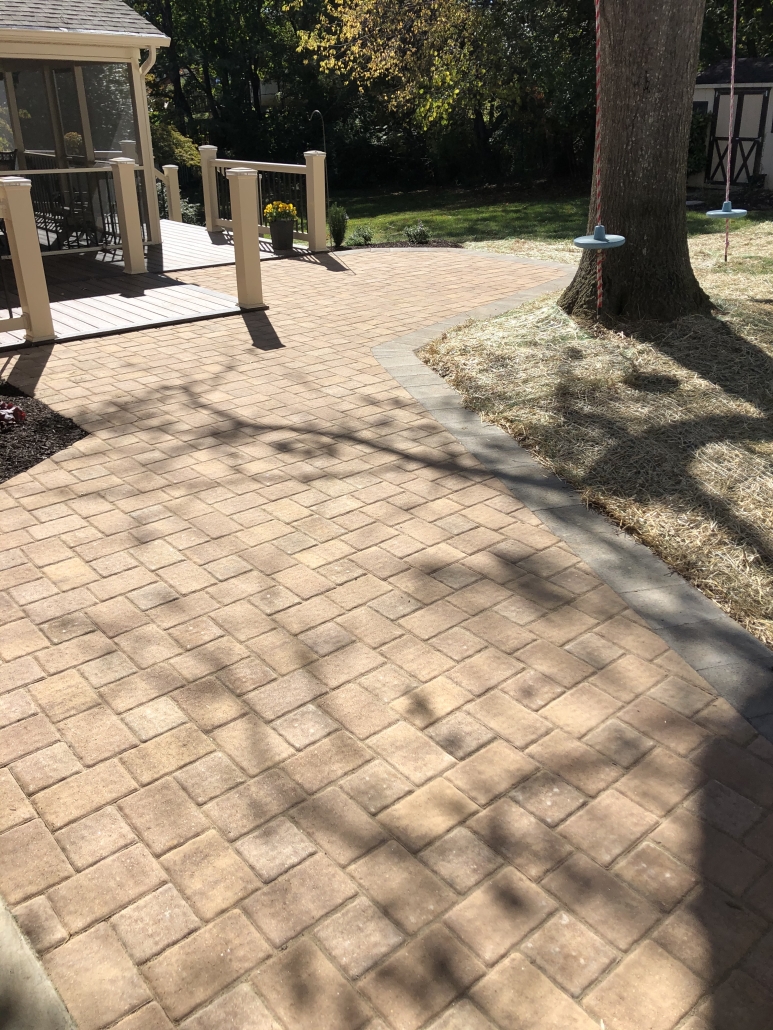
Permeable materials like pea gravel, decomposed granite, and sand-set pavers allow rainwater to soak back into the ground rather than running off into the street. This is crucial because urban and suburban areas can be up to 90% more flood-prone than natural land due to non-porous surfaces like concrete.
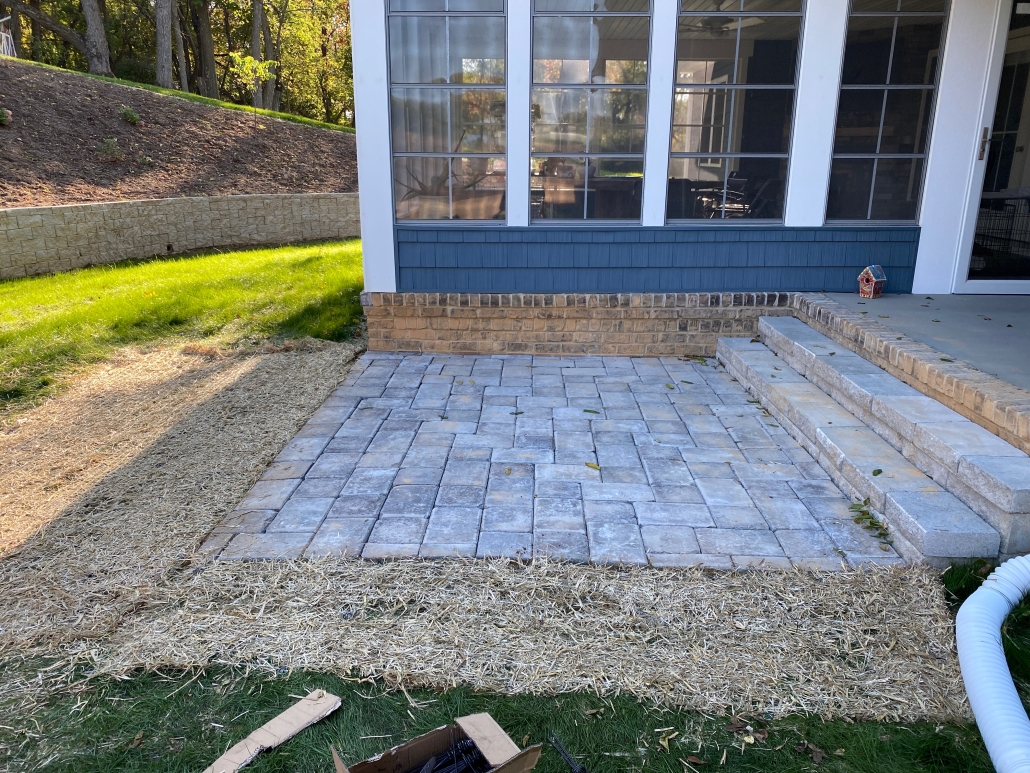
We often point clients toward our Portfolio Entries Hardscapes to show how a gravel patio can look just as high-end as poured concrete but with better drainage and a much lower price tag.
Comparing Your Options
If you’re deciding between a traditional slab and a more modern permeable approach, consider this comparison:
| Feature | Poured Concrete | Permeable Pea Gravel |
|---|---|---|
| Installation Cost | High (requires forms & pro labor) | Low to Moderate |
| DIY Friendliness | Low | High |
| Drainage | Poor (runoff issues) | Excellent |
| Maintenance | Crack repair & sealing | Occasional raking/weeding |
| Visual Style | Industrial/Solid | Textural/Natural |
The Secret to Professional Edges
The difference between a “home-made” look and a professional finish often comes down to the edging. We highly recommend metal edging over plastic. Metal provides a slim, nearly invisible line that keeps gravel in its place and creates those crisp, clean curves you see in high-end simple landscape design images. It doesn’t heave out of the ground during our Virginia winters like plastic does, and it gives your garden beds a permanent, structured look.
Smart Plant Selection for the Shenandoah Valley
Choosing the right plants is where many homeowners get overwhelmed. With thousands of options at the nursery, it’s easy to end up with one of everything. To achieve a professional look, we follow the “Rule of Repetition.”
The Power of Plant Repetition
Instead of buying twenty different plants, buy five varieties and plant them in groups. This creates a sense of rhythm and harmony. When you look at our Staunton Landscaping Ideas Gallery, you’ll see that we often use the same ornamental grass or perennial flower in multiple spots throughout the yard. This ties the whole design together and, as a bonus, makes maintenance much easier because you only have to learn the care needs of a few species.
Climate-Appropriate Choices
In Albemarle and Augusta counties, we need plants that can handle humid summers and chilly winters. We often recommend “no-fuss” varieties that offer year-round interest. For example, the Great Plant Picks: Japanese Cedar (Cryptomeria) is a fantastic evergreen that provides structure and privacy without requiring constant pruning.
Using Specimen Plants in Simple Landscape Design Images
A “specimen” plant is the star of the show. In a simple design, you might have a sea of low-maintenance groundcover with one spectacular specimen plant as the focal point.
- Japanese Maples: Varieties like ‘Crimson Queen’ or ‘Butterfly’ offer stunning leaf shapes and colors. They grow slowly, meaning they won’t outgrow their space in a few years.
- Heuchera (Coral Bells): These are the “secret weapon” of simple designs. They come in colors ranging from lime green to deep purple. We’ve found that darker varieties, like ‘Caramel’, can actually handle quite a bit of sun in our region, despite being known as shade plants.
- The Odd Number Rule: Always plant in odd numbers—threes, fives, or sevens. For some reason, the human brain finds odd groupings more natural and less “stiff” than even numbers.
Maximizing Small Spaces with Layout and Verticality
Don’t let a small backyard in Rockingham County discourage you. Small spaces are actually some of the most rewarding to design because every square inch counts.
Creating Outdoor Rooms
Think of your yard as an extension of your home’s floor plan. You can use outdoor rugs, groupings of pots, or even a simple change in ground material (like moving from grass to gravel) to define “rooms.” A pergola is a fantastic way to create a ceiling for your outdoor room, making the space feel cozy and organized. You can see examples of these structures in our Portfolio Entries Arbor section.
Thinking Vertically
When you run out of horizontal space, go up! Vertical gardening is a lifesaver for narrow side yards or small patios.
- Treallises: Use them for climbing roses or clematis.
- Retaining Walls: These can double as built-in seating, saving you from having to crowd the yard with extra furniture.
- Hanging Elements: Adding plants to a second-story deck or fence can draw the eye upward, making a small yard feel much taller and more expansive.
Visual Tricks for Simple Landscape Design Images
Professional designers use several “tricks” to manipulate how large a space feels:
- Sightlines: Keep the view from your back door clear to the furthest corner of the yard to maximize the sense of depth.
- Arcs and Curves: Using a sweeping arc for a garden bed or walkway can make a rectangular yard feel more organic and spacious.
- Landscape Lighting: Proper lighting is the ultimate space-expander. By illuminating trees or fences at the edge of your property, you extend the usable space into the evening hours. For some great visual examples, check out Houzz: Outdoor Lighting Inspiration.
Frequently Asked Questions about Simple Landscaping
How do I design a low-maintenance garden?
The key to low maintenance is “right plant, right place.” If you put a sun-loving plant in the shade, it will struggle and require more care. Also, minimize or eliminate the lawn. Lawns are the most high-maintenance part of any yard. Replacing grass with mulch, gravel, or native groundcovers will save you hours of mowing and fertilizing every week.
What are the best plants for small yards in Virginia?
We love using dwarf varieties. Look for “Dwarf” or “Nana” in the plant name. Dwarf blueberries, ‘Little Heath’ Pieris, and compact evergreens provide beauty without taking over the yard. Native Virginia plants like Heuchera, certain ferns, and Oakleaf Hydrangeas are also excellent because they are already adapted to our soil and pests.
How can I make my landscape look professional on a budget?
Focus on the edges and the mulch. A clean, weeded edge and a fresh layer of dark mulch can make even a simple garden look like it was professionally installed. Also, stick to a limited color palette. Using just two or three colors for your flowers and foliage creates a sophisticated, high-end look that “busy” gardens often lack.
Conclusion
Transforming your yard doesn’t have to be an overwhelming project. By focusing on the core principles of layout, choosing a limited palette of hardy plants, and utilizing smart hardscape materials, you can create a space that is both beautiful and easy to manage.
At Sylvan Scapes, we’ve been helping homeowners across the Shenandoah Valley—from Staunton to Charlottesville—achieve their outdoor dreams since 2003. Whether you need an ISA Certified Arborist to evaluate the health of your trees or a Staunton Hardscape Company to install a new permeable patio, we have the expertise to make it happen.
Stop dreaming about those simple landscape design images and start digging. Your perfect outdoor retreat is closer than you think. Contact us today to see how we can bring professional structure and beauty to your home.