The Davey Resource Group Lineman Guide to Keeping the Lights On
What a Utility Telecommunications Lineman Actually Does (And Why It Matters)
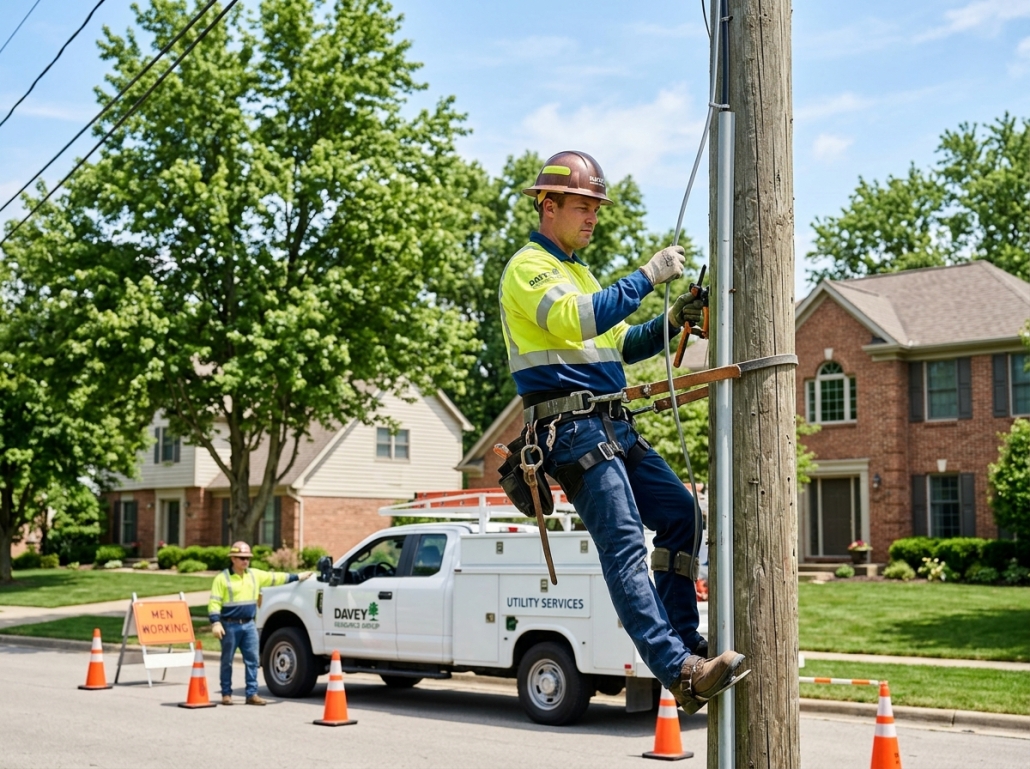
A utility telecommunications lineman is a skilled field technician who installs, maintains, and repairs overhead and underground telecommunications infrastructure – including fiber optic lines, coaxial cable, and strand – on utility poles and aerial spans across multiple states.
Here’s a quick overview of what these roles involve:
| Role | Pay Range | Travel | Key Skills |
|---|---|---|---|
| Telecommunications Lineman (Muncie, IN) | $20-$26/hr | 75% | Pole climbing, bucket truck, fiber/coax |
| Telecommunications Lineman (Pittsburgh, PA) | $23-$27/hr | 75% | CATV lines, aerial plant, engineering plans |
| Fiber Lineman (Ohio, statewide) | $25-$30/hr | Up to 100% | Fiber construction, NESC compliance, GIS |
| Utility Pole Technician (Central U.S.) | Not listed | 75-100% | Pole inspection, steel truss, excavation |
These aren’t just hard hats and climbing boots. Utility linemen handle everything from fiber upgrades and copper wire removal to storm recovery – like restoring service across 86 areas of Hamilton County after tornadoes knocked out connectivity.
The work is demanding, technically complex, and essential to keeping communities connected.
I’m Kevin Thompson, founder of Sylvan Scapes and an ISA Certified Arborist based in Staunton, Virginia – and while my crews focus on trees, not telecom, my years working around utility rights-of-way and infrastructure corridors give me a grounded perspective on what utility telecommunications lineman work really looks like in the field. This guide breaks down everything you need to know, from daily responsibilities and safety protocols to pay, benefits, and career growth.
For readers who want a broader overview of utility line safety standards, the National Electrical Safety Code is a helpful reference point.
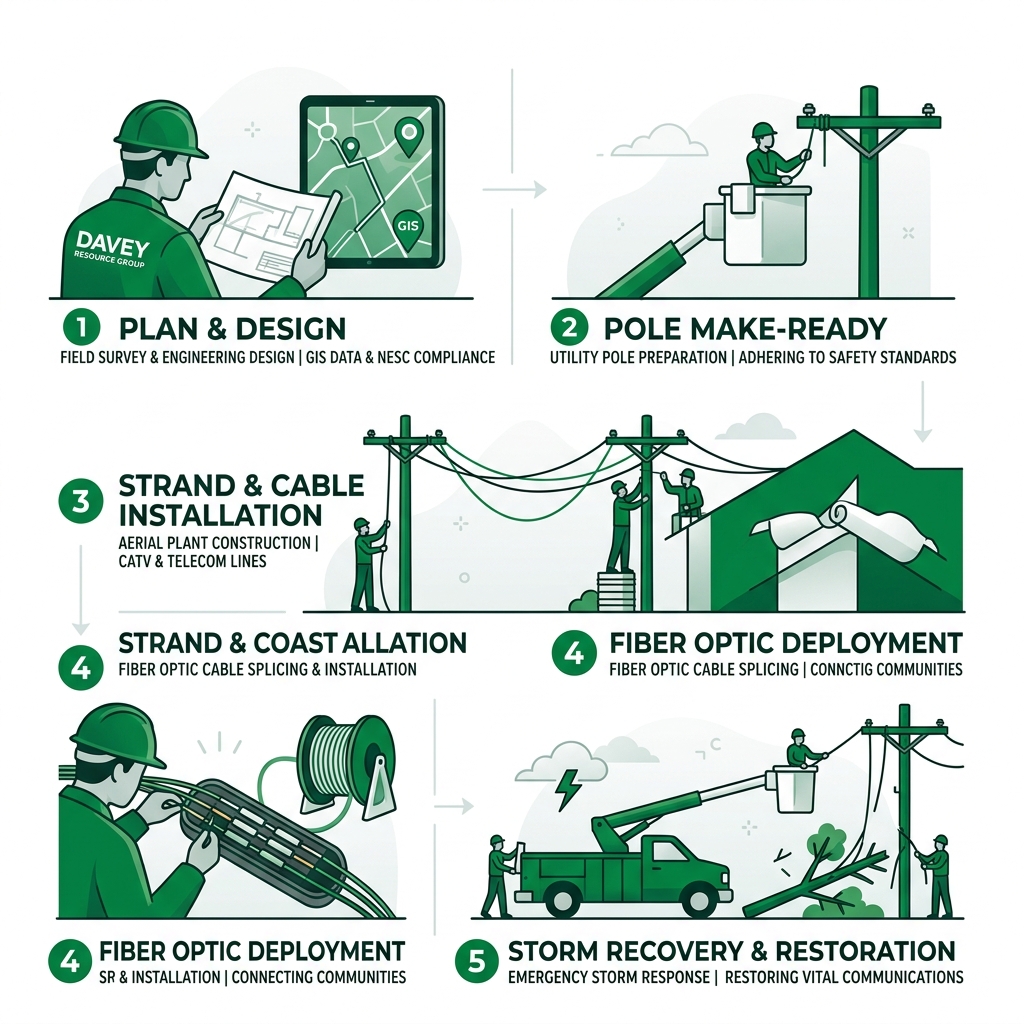
Core Services of a Utility Telecommunications Lineman
When we talk about the utility telecommunications lineman, we are looking at a professional who sits at the intersection of heavy construction and high-tech communication. At Sylvan Scapes, we often see these teams in action while we are managing the vegetation around utility lines in the Shenandoah Valley. Their scope of work is vast, covering everything from the initial installation of macro-sites to the fine-tuning of small cell technology.
The primary mission of utility asset management is to provide end-to-end solutions for the telecommunications and electrical industries. This includes fiber upgrades that bring high-speed internet to rural areas and the complex task of copper wire removal. In many cases, after a fiber upgrade is completed, the utility lineman will remove old copper drop wires from homes and businesses. This doesn’t just save the client money; it reduces the physical load on the utility poles, extending the life of the infrastructure.
Comprehensive Project Management
A major differentiator for top-tier utility firms is their ability to handle project management from the initial design phase through to full implementation. They don’t just show up and climb; they are part of a strategic team that maintains relationships with major carriers to streamline upgrades. This includes traditional macro-site construction as well as modern CRAN and In-building tower solutions.
Infrastructure Reliability and Maintenance
Reliability is the name of the game. A utility lineman or technician often performs massive pole audits to ensure the grid can handle new attachments. For example, specialized teams have collected data on over 13,000 utility poles for joint-use audits to support broadband installation. They also use GIS (Geographic Information System) inventory to map out infrastructure with incredible precision, having surveyed over 11 million feet of lines for fiber route design. These utility infrastructure reliability services are what prevent the “surprise” outages that frustrate homeowners and businesses alike.
Life on the Line: Responsibilities and Daily Operations
What does a typical Tuesday look like for a utility telecommunications lineman? It usually starts early and involves a lot of windshield time. Because utility services cover such a wide area, travel is a core part of the job description. In many roles, there is a 75% to 100% travel expectation. For those working in asset management, this might mean being away from home during the week and returning on weekends, with the company providing lodging and a vehicle.
Daily Tasks for a Utility Telecommunications Lineman
The “office” for these professionals is often a bucket truck or the side of a utility pole at 20+ feet in the air. Daily responsibilities include:
- Installing and maintaining CATV lines: This involves working with strand, coax, and fiber optic cables.
- Troubleshooting: Using tools like voltmeters and signal level meters to find and fix connectivity issues.
- Site Restoration: Ensuring that once the work is done, the area is clean and safe for the public.
- Landowner Interaction: Professionally communicating with property owners to explain what work is being done on their land.
Travel and Field Logistics
Utility service providers take care of their field crews. For roles requiring heavy travel, companies typically provide a company vehicle, a gas card, and cover lodging costs. Additionally, linemen often receive a $35/day meal per diem. The work week is usually a minimum of 40-45 hours, but during storm recovery or major rollouts, those hours can certainly climb.
Safety First: Protocols for High-Risk Utility Work
Safety isn’t just a manual in this industry; it’s a culture. When you’re working around high-voltage lines and climbing poles, there is zero room for error. We follow similar strict protocols at Sylvan Scapes when we are performing technical tree removals near power lines, so we have a deep respect for the industry’s rigorous safety standards.
The utility telecommunications lineman must be an expert in the National Electrical Safety Code (NESC). They are trained to identify NESC violations on existing poles that could lead to fires or outages. Before even touching a pole, they perform “foreign voltage” testing to ensure the structure isn’t energized by a fault.
Advanced Diagnostic Technology
Leading utility firms use cutting-edge tech to stay safe and efficient:
- Infrared Detection: Using FLIR T-640 cameras to find “hot spots” in equipment before they fail.
- Radiofrequency Technology: Identifying problematic circuits using patented RFI technology.
- Resistograph Testing: Using a specialized drill to measure the internal integrity of wood poles.
Rigorous Field Training
New hires don’t just jump into a bucket. They undergo extensive training in climbing gear safety, gaffing techniques, and power tool proficiency. OSHA certification is often a requirement or a highly preferred qualification. Mastering these safety standards early on is essential for long-term career growth in the utility sector.
Career Path: Qualifications and Growth for a Utility Telecommunications Lineman
Becoming a utility telecommunications lineman requires a blend of physical stamina and technical aptitude. This isn’t a desk job. You need to be able to lift 75-80 lbs regularly and be comfortable working at heights.
Key Qualifications:
- Experience: Most Telecommunications Lineman roles prefer at least 2 years of aerial experience.
- CDL Class A: Having a commercial driver’s license often bumps your pay grade significantly (up to the $30/hr range).
- DOT Medical Card: You must be able to pass a physical and drug screen.
- Education: A high school diploma or GED is the standard baseline.
Compensation and Benefits Package
Utility contractors offer competitive pay that reflects the difficulty of the work.
- Hourly Rates: Generally range from $20 to $30 per hour depending on location and experience.
- 401(k): Many companies offer a match of up to 4%.
- Employee Stock Purchase Plan: Some firms offer discounts on company stock, which is a significant perk in employee-owned models.
- Health Insurance: Comprehensive dental, vision, and medical plans.
Professional Development
This industry is known for promoting from within. A ground-level pole technician can work their way up to a Lineman 1, then a crew lead, and eventually into project management or development. The utility asset management sector is constantly expanding, providing a stable environment for long-term career building.
Real-World Impact: Case Studies in Infrastructure Reliability
The work of a utility telecommunications lineman has a tangible impact on the community. Here are a few examples of this expertise in action:
- Tornado Recovery: After devastating tornadoes in Hamilton County, specialized utility teams were on the ground immediately, restoring connectivity to 86 critical areas.
- Broadband Expansion: In the Midwest, crews completed a massive fiber expansion project, clearing vegetation and installing miles of overhead line on a tight schedule.
- Hazard Mitigation: Across multiple states, teams identified and removed hazardous “two-pole” conditions (where a new pole is installed but the old one remains attached), significantly improving public safety.
- Massive Data Collection: By auditing 13,000 poles and surveying 11 million feet of line, they provided the blueprint for modern fiber-to-the-home projects.
Why the Employee-Owned Model Matters in Utility Services
One of the most unique aspects of being a utility telecommunications lineman is that you often aren’t just an employee; you are an owner. Many major utility service providers have been employee-owned for decades, making them some of the largest such companies in the United States.
This model changes the “vibe” on the job site. When the workers own the company, there is a higher level of accountability and an entrepreneurial spirit. It means the person climbing the pole has a direct stake in the company’s safety record and profitability. For the lineman, this translates to long-term stability and a retirement nest egg through employee stock purchase plans and 401(k) matches.
Frequently Asked Questions about Utility Linemen
What is the starting pay for a utility telecommunications lineman?
Starting pay typically ranges from $20 to $25 per hour for those with basic experience. However, if you have a CDL Class A, pay often starts between $25 and $30 per hour.
Do utility companies provide the vehicle and tools for travel-heavy roles?
Yes. For roles requiring significant travel, companies typically provide a company vehicle, a gas card, and cover all lodging expenses. They also provide specialized tools like signal meters and climbing gear, though some linemen prefer to use their own hand tools.
What certifications are most important for new applicants?
An OSHA 10 or 30-hour construction safety certification is highly valued. Additionally, a CDL Class A is one of the most important certifications for increasing your earning potential and responsibilities.
Conclusion
The role of a utility telecommunications lineman is vital to the modern world. Whether they are restoring power after a storm or hanging the fiber that allows a small business to thrive, their work is the backbone of our infrastructure. At Sylvan Scapes, we share that commitment to excellence and safety in everything we do—from tree preservation to commercial grounds maintenance in the Shenandoah Valley.
If you are a business owner or property manager looking for the same level of professional care for your landscape that specialized utility teams bring to the grid, we are here to help. Contact Sylvan Scapes for Commercial Grounds Maintenance today, and let our ISA Certified Arborists ensure your property is safe, beautiful, and built to last.