The Evolution and Structure of Professional Resource and Consulting Services
To understand how large-scale arboricultural and environmental consulting firms operate, it helps to look at how this segment of the industry developed. Some organizations in this space began as internal research and development teams before expanding into dedicated consulting divisions that handle needs far beyond standard residential tree trimming.
Over time, many of these consulting groups sharpened their focus around three core service areas: environmental consulting, utility vegetation management, and utility asset management. That shift reflects a broader industry trend toward specialization, especially as municipalities, utilities, and land developers face stricter regulatory requirements and greater demand for reliable infrastructure data.
One important feature seen in parts of the tree care industry is employee ownership. In employee-owned companies, staff members also have a stake in business performance, which can encourage a strong culture of safety, accountability, and technical precision. Some of the largest firms in this space employ well over a thousand specialists and generate hundreds of millions in annual revenue, illustrating the enormous scale of modern environmental and utility consulting.
At this larger scale, consulting work is often supported by teams of scientists, arborists, utility specialists, GIS technicians, and field inspectors serving federal, state, and local governments, telecommunications organizations, and land developers. These teams may include professionals with credentials such as ISA Certified Arborist designations, Professional Wetland Scientist certifications, and various engineering licenses. For property owners in our region, understanding the dormant season and what it means for your trees is a great starting point for basic care. For more on that topic, see the USDA Forest Service guide to tree care. For large municipal, environmental, or utility projects, however, these consulting-focused organizations are designed to provide high-level data collection, planning, and regulatory guidance.
Comprehensive Environmental and Utility Services
While we at Sylvan Scapes focus on the health and beauty of individual landscapes in the Shenandoah Valley, large environmental and utility consulting firms operate at a scale that helps keep the lights on and the water flowing for entire regions. Their service offerings are typically divided into specialized categories that blend biology, forestry, and engineering.
Environmental Consulting
This division is where the “green” meets the “legal.” If a developer in Albemarle County needs to know whether a tract contains protected wetlands, or if a municipality needs to restore a local stream, environmental consultants step in to provide the required fieldwork, analysis, and permitting support.
- Wetlands and Stream Assessments: This involves water resource determinations and securing the necessary regulatory permits from agencies like the EPA or the Army Corps of Engineers. Consultants conduct detailed field delineations, prepare jurisdictional determination requests, and guide clients through the Section 404 permitting process.
- Stormwater Management and Compliance: Consultants analyze water quality and help implement green infrastructure to manage runoff. This can include designing bioretention facilities, rain gardens, and permeable pavement systems that meet Virginia DEQ standards.
- Ecosystem Restoration: This is not just planting flowers; it is a scientific process of invasive species management and control, often involving native seed installation and long-term monitoring. Restoration ecologists develop planting plans based on reference ecosystems and track success metrics over multiple growing seasons.
- Landscape Architecture: Many consulting firms also employ licensed landscape architects who integrate ecological function with aesthetic design, particularly for public parks, greenways, and campus environments.
- Grant Writing: This is a notable service. Consulting teams may help clients secure funding from private foundations and national competitive grants, which can be vital for cash-strapped local governments.
Utility Asset Management and Line Clearance
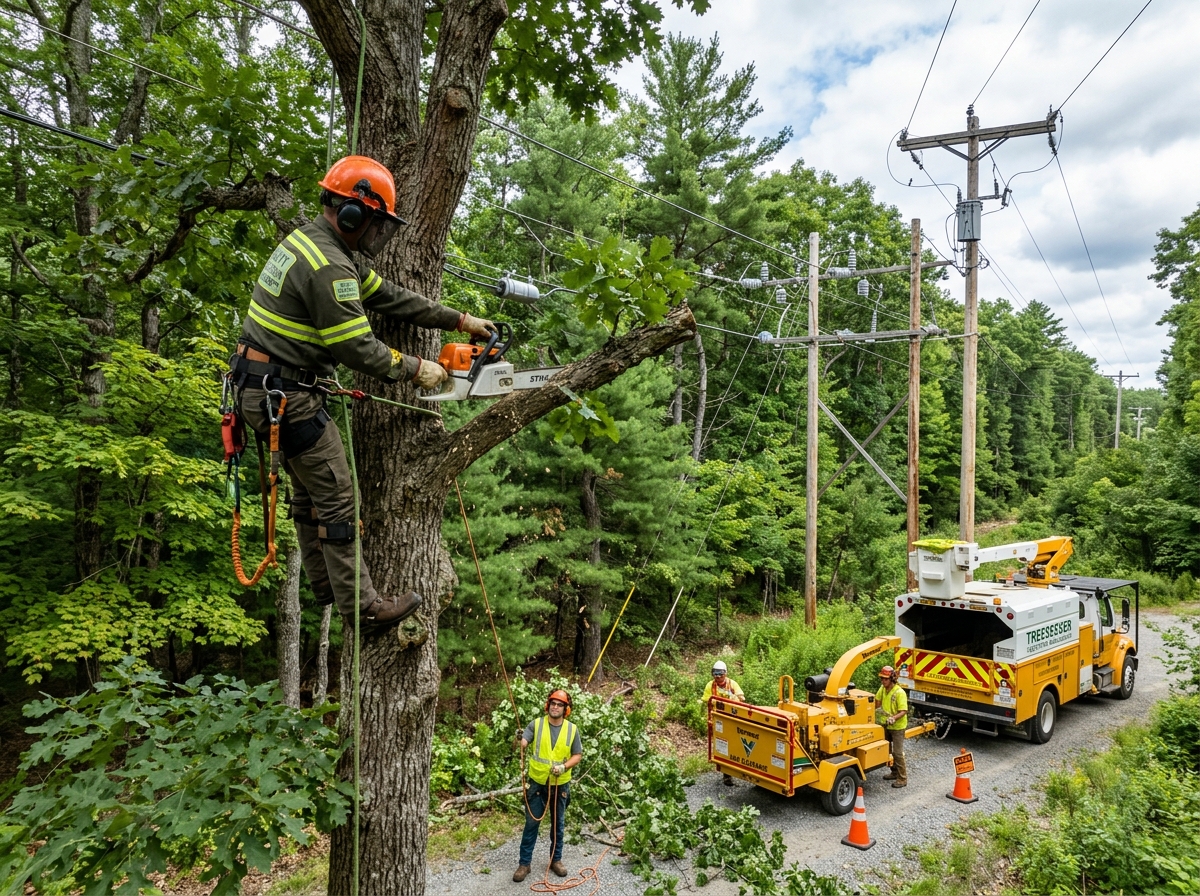
This side of the business is more industrial. If you have seen crews inspecting utility poles or trimming branches away from power lines, that is the heart of utility vegetation management.
- Joint-Use Audits: In telecommunications, multiple companies often share the same pole. Consultants perform audits to manage these shared assets and ensure compliance with National Electrical Safety Code (NESC) standards.
- Pole Inspections: Some firms use advanced diagnostic tools such as resistance drilling devices to determine whether a wooden pole is rotting internally without removing it from service. These tools measure the density of wood fiber and can detect decay that is invisible from the outside.
- Infrared Detection: Thermal imaging can be used to find hot spots in electrical equipment before they cause a fire or an outage.
- Communications Construction: Consulting groups may also manage the physical construction and attachment of fiber optic and broadband infrastructure on utility poles, coordinating between multiple carriers.
- Outage Prevention: By combining GIS inventory with tree risk assessments, utility contractors and consultants help prioritize which trees need to be trimmed first to reduce the chance of storm-related blackouts.
Technology and Innovation in Urban Forestry
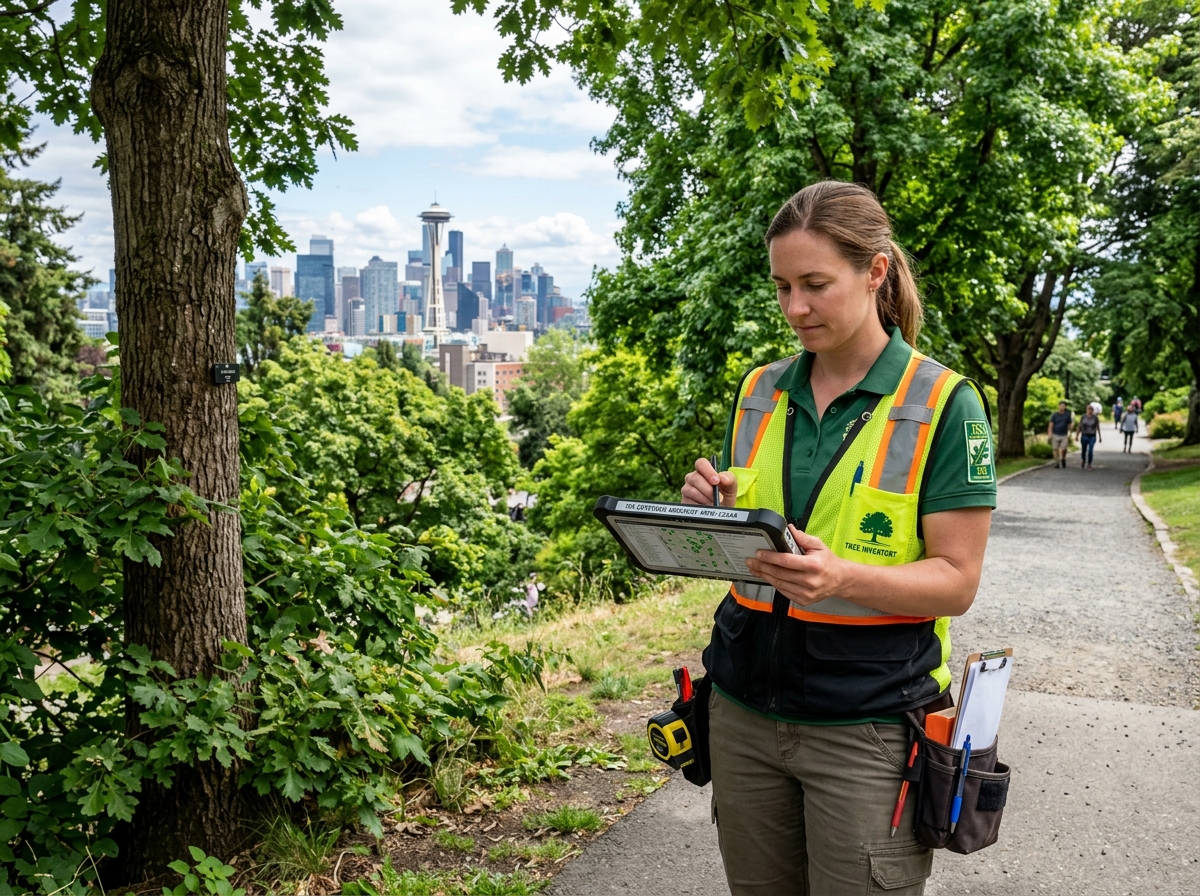
One of the biggest differentiators among modern forestry consultants is how they have moved tree management into the digital age. They do not just look at a tree; they map it, categorize it, and use data to help predict maintenance needs. This is particularly important for municipal planning in areas like Staunton or Charlottesville, where maintaining a healthy urban canopy is a priority.
Many firms now leverage LiDAR (Light Detection and Ranging) and machine learning to create digital tree inventories across entire cities. Instead of relying only on clipboards and visual estimates, they use high-tech sensors to map leaves, branches, trunks, and surrounding conditions across parks and streetscapes.
Traditional vs. Smart Tree Inventories
| Feature | Traditional Inventory | Smart Inventory |
|---|---|---|
| Data Collection | Manual entry, paper or basic GPS | LiDAR, Machine Learning, GIS |
| Speed | Slow, tree-by-tree | Rapid, large-scale scanning |
| Analysis | Basic health assessment | Ecosystem benefit analysis (CO2, Stormwater) |
| Management | Static list | Dynamic software platforms |
| Risk Prediction | Visual inspection only | Data-driven risk modeling |
Managing Canopy with Urban Forestry Software
A key component of this technology shift is urban forestry management software. These platforms allow city managers to see their entire tree population on a screen.
- Inventory Management: They track each tree’s species, size, and health status. Each record can include GPS coordinates, photographs, maintenance history, and scheduled work orders.
- Urban Forest Master Plans: These are long-term roadmaps for how a city should grow and maintain its canopy over the next 20 to 50 years. A master plan typically includes planting goals, species diversity targets, and budget projections.
- Risk Assessments: Consultants may perform advanced risk assessments and, where needed, use tools such as resistance drilling to better understand structural integrity. Level 1, 2, and 3 assessments follow ISA Best Management Practices and help municipalities prioritize hazard mitigation.
- Canopy Analysis: Using aerial imagery and remote sensing data, consultants can measure the percentage of canopy cover across a city and identify neighborhoods that are underserved by tree planting programs.
- Ecosystem Benefits: Modern software can calculate the dollar value of air filtration, carbon storage, and stormwater absorption provided by trees. For example, a single mature oak in Staunton might intercept thousands of gallons of stormwater annually, a value that can be quantified and used to justify urban forestry budgets.
Geographic Presence and Strategic Subsidiaries
While many consulting organizations in this field are headquartered in one state, they often maintain a large footprint through dozens of local offices and project work that reaches across the country. Some of the largest firms operate 25 or more regional offices, enabling them to deploy field crews quickly and maintain familiarity with local regulations and ecosystems.
To bolster their expertise, firms in this sector sometimes acquire or partner with specialized environmental companies. These partners may focus on wetland delineation, stream restoration, archaeological studies, habitat restoration, or invasive plant management. Such acquisitions allow a single organization to cover a remarkably broad range of disciplines under one roof.
By combining these specialties, large consulting groups can offer turn-key solutions. That means a developer or municipality can work with one provider for everything from initial land survey and environmental permitting to final planting and long-term maintenance. For communities in the Shenandoah Valley, this model is especially relevant as local governments increasingly seek comprehensive approaches to managing growth while protecting the region’s natural resources.
Frequently Asked Questions about Large-Scale Environmental and Utility Consulting
What is the relationship between a consulting arm and a parent tree care company?
In some organizations, the consulting division functions as a wholly owned subsidiary of a larger tree care company. While the parent company may focus more heavily on residential and commercial field services, the consulting arm is structured to handle data-heavy, regulatory, municipal, and utility-related work. Many of these consulting divisions trace their origins to internal research and development departments that were eventually spun off into separate business units to better serve specialized markets.
How do consulting firms support municipal grant writing?
With the passage of the Inflation Reduction Act, $1.5 billion was allocated to the U.S. Forest Service for urban forestry. Consulting firms can help cities and non-profits navigate this complex federal funding process by assisting with grant writing, workforce development plans, and the technical data, such as canopy assessments, needed to support an application. This is particularly relevant for Virginia communities that may lack dedicated grant-writing staff but want to take advantage of historic federal investment in urban tree canopy.
What industries do these firms serve?
They are often very diverse. Primary markets commonly include:
- Utilities: Electric, gas, and water companies.
- Telecommunications: Fiber optic and broadband providers.
- Transportation: State DOTs and rail companies.
- Government: Federal, state, and local municipalities.
- Land Developers: Commercial and residential builders.
- Facility Managers: Large campus or corporate grounds.
How does this type of consulting differ from local tree care?
Local tree care companies like Sylvan Scapes focus on the health and maintenance of individual trees and landscapes for homeowners, HOAs, and businesses. Large-scale consulting firms, by contrast, typically work on infrastructure-level projects such as city-wide tree inventories, utility corridor management, and environmental impact assessments. Both types of service are essential, but they operate at very different scales and serve different client needs.
Conclusion
Large-scale environmental and utility consulting shows just how far arboriculture and natural resource management have evolved. From advanced pole inspection tools to LiDAR-based canopy mapping, this side of the industry provides the big-picture data that helps modern infrastructure run smoothly while protecting natural resources.
Here in the Shenandoah Valley, Sylvan Scapes remains focused on the needs of local property owners, HOAs, businesses, and municipalities that want expert care for their own landscapes and trees. Since 2003, our team of ISA Certified Arborists has served Staunton, Charlottesville, and the surrounding region with personalized service built around safety, science-backed recommendations, and long-term landscape health.
Whether you need a health analysis for a prized oak or expert commercial grounds maintenance in Staunton, we are here to help. If you are in Albemarle, Augusta, or Rockingham County, Sylvan Scapes can help keep your corner of the Virginia landscape healthy and vibrant for generations to come.