Best Patio Flooring Over Concrete: No Jackhammer Required
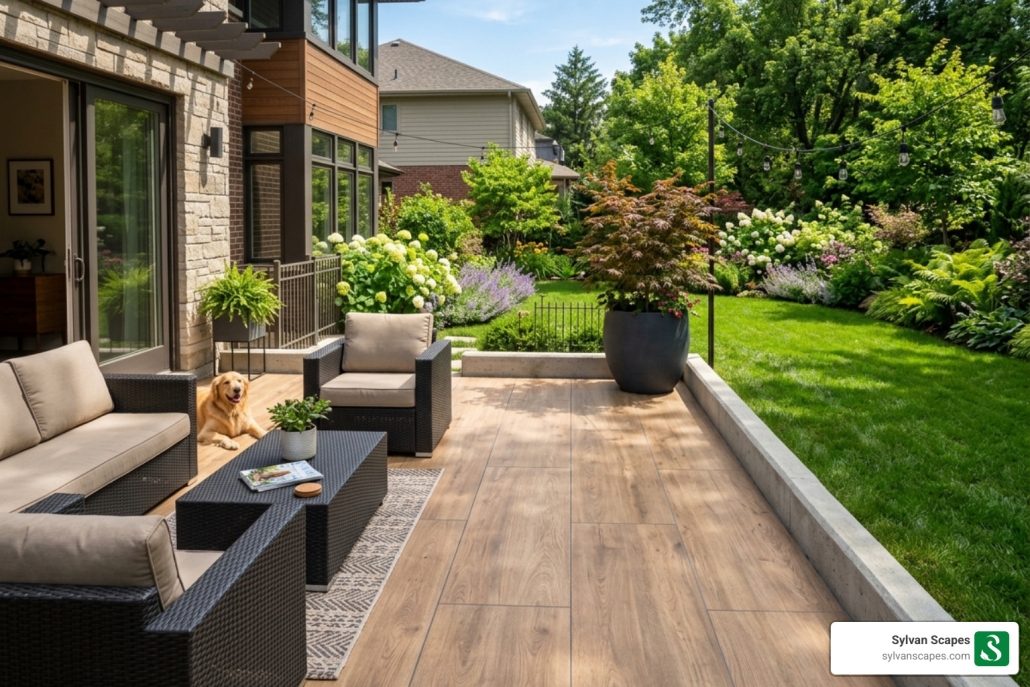
Your Concrete Patio Doesn’t Have to Stay Ugly (or Wet)
Waterproof outdoor flooring is the fastest way to transform a dull, cracked, or moisture-prone concrete patio — no jackhammer, no contractor, no mess.
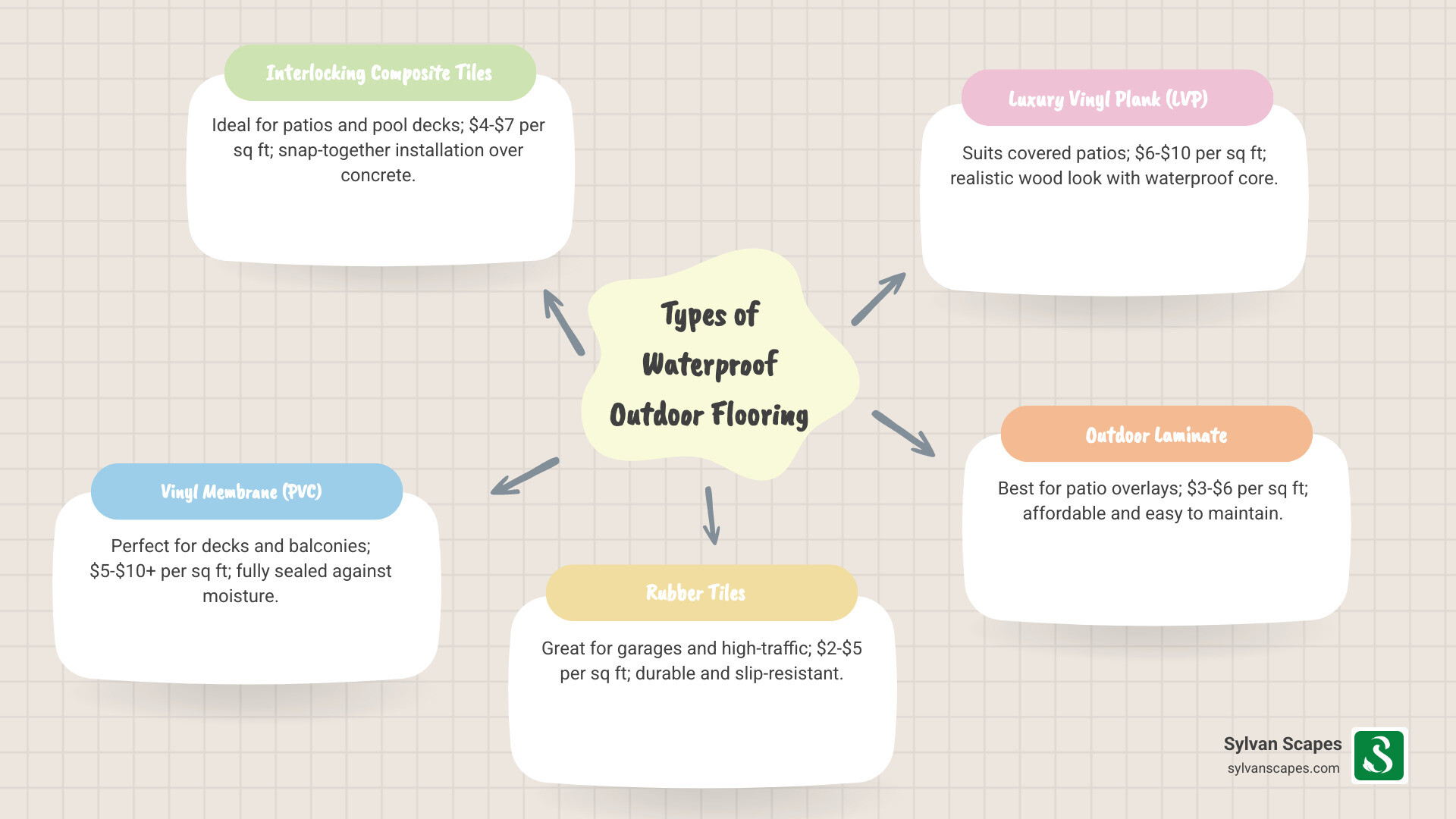
Here are the most popular options, at a glance:
| Flooring Type | Best For | Price Range (per sq ft) |
|---|---|---|
| Interlocking composite tiles | Patios, pool decks | $4 – $7 |
| Vinyl membrane (PVC) | Decks, balconies | $5 – $10+ |
| Rubber tiles | Garages, high-traffic areas | $2 – $5 |
| Luxury vinyl plank (LVP) | Covered patios, basements | $6 – $10 |
| Outdoor laminate | Patio overlays | $3 – $6 |
| Foam/closed-cell mats | Play areas, gyms | $1.78 – $3 |
Most of these install directly over existing concrete — no demolition required. The key is choosing a material that is truly waterproof (repels moisture entirely), not just water-resistant (which may still absorb some over time).
That distinction matters more than most people realize — especially here in Virginia, where freeze-thaw cycles can destroy the wrong flooring within a single winter.
I’m Kevin Thompson, founder of Sylvan Scapes and a licensed hardscape professional serving the Shenandoah Valley — and waterproof outdoor flooring is one of the most common questions I get from homeowners who want a better patio without tearing up what they already have. In the sections below, I’ll walk you through every major option, what it costs, and how to choose the right one for your specific situation.
Essential Guide to Waterproof Outdoor Flooring
When we talk about waterproof outdoor flooring, we aren’t just talking about a rug that dries quickly. We are talking about engineered systems designed to live outside 365 days a year. Whether you are in Staunton, Charlottesville, or anywhere in the Shenandoah Valley, your flooring needs to handle everything from July humidity to January ice.
The Main Material Contenders
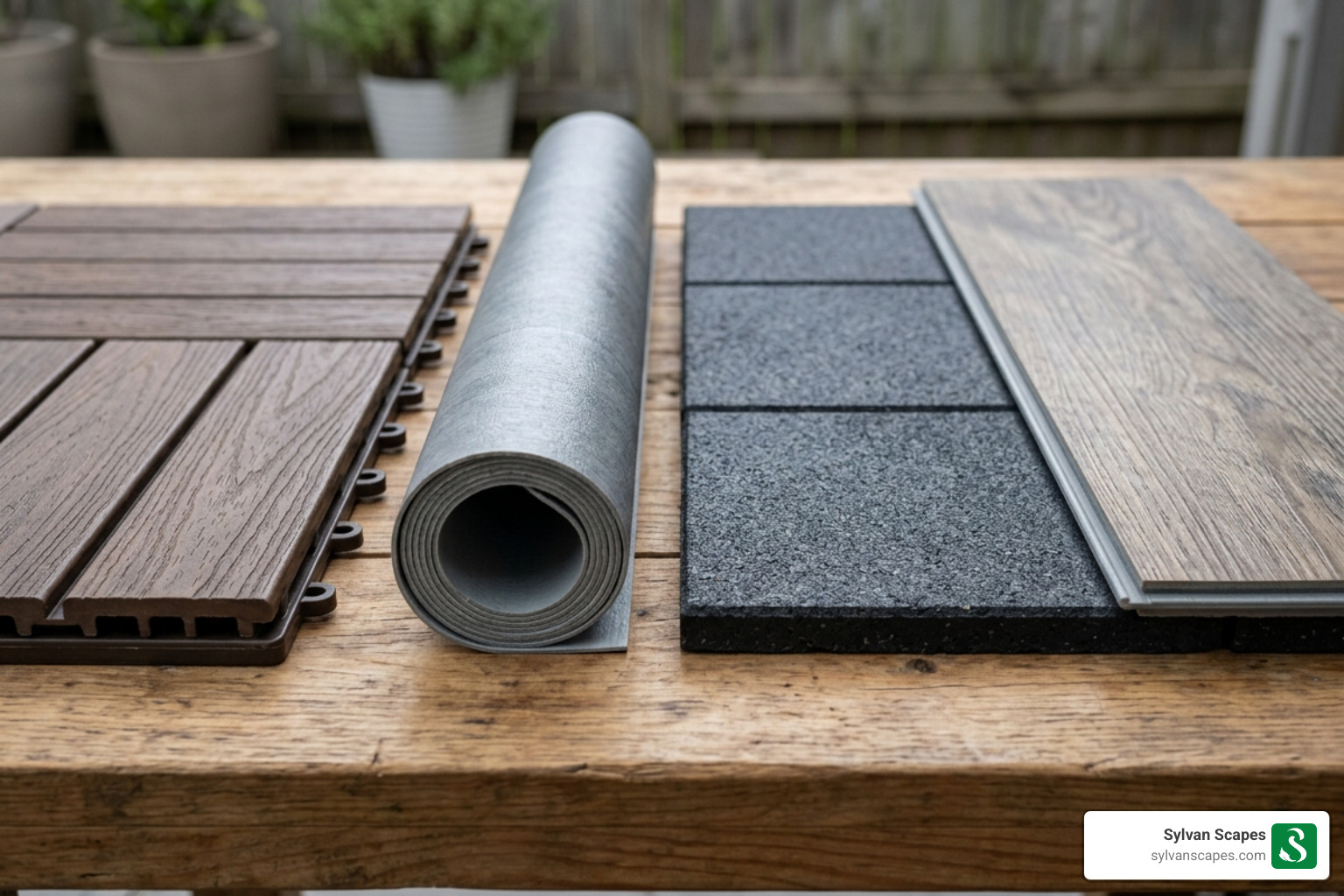
There are several heavy hitters in waterproof surfaces. Each has a specific “superpower”:
- PVC and Vinyl Membranes: These are often monolithic or heat-welded systems. Think of them like a high-tech skin for your patio. They are 100% waterproof and often come with impressive warranties, such as 15-year protection against leaks.
- Composite Wood-Plastic (WPC): This is a fan favorite for those who love the look of wood but hate the maintenance. Products like Garvee Waterproof Interwoven Deck Tiles or Helios Composite Deck Tiles use a blend of recycled wood fibers (often bamboo) and plastic to create a rot-proof surface.
- Vulcanized Rubber: Unlike standard rubber, vulcanized rubber is completely non-porous. It won’t soak up water like a sponge, making it ideal for pool surrounds or high-traffic walkways.
- Luxury Vinyl Plank (LVP): While often used indoors, premium LVP like Weathered Oak LVP Flooring from COREtec is 100% waterproof. It features a WPC core that won’t warp or buckle, even if it gets splashed.
- Perforated Tiles: These are the “breathable” kings of the outdoor world. They feature tiny holes or channels that allow water to flow straight through to the concrete beneath and drain away.
- Closed-Cell Foam: If you’re setting up a play area, you need closed-cell foam. Open-cell foam absorbs water and grows mold; closed-cell foam repels it entirely.
Key Benefits: Why Waterproofing Matters for Your Patio
In our region, moisture is the enemy of longevity. If water gets trapped between your new flooring and your old concrete, you’re essentially creating a petri dish for mold. This is why we emphasize the difference between “water-resistant” and “waterproof.”
Waterproof vs. Water-Resistant
Water-resistant materials might survive a light rain, but they can eventually saturate. Truly waterproof outdoor flooring repels moisture entirely. This is vital for drainage efficiency. Many tiles use a “raised” or “floating” design with pegs on the bottom. This creates an air gap that allows the concrete to breathe and water to flow toward your yard or floor drains.
Safety and Durability
Safety is a huge factor, especially around pools or on stairs. Most waterproof options feature anti-slip textures or “Cool Step” technology that reflects UV rays, so you don’t burn your feet on a hot August afternoon in Albemarle County. Additionally, these materials are built for UV stability, meaning they won’t fade or become brittle after a few seasons in the sun.
Before you commit to a DIY project, it’s worth what to know before calling local paver patio installation companies to ensure your underlying concrete is stable enough to support a new surface.
Comparing Materials for Waterproof Outdoor Flooring
Choosing the right material often comes down to how you use the space. Are you hosting fancy dinner parties in Charlottesville, or is your patio a high-speed zone for kids and dogs in Rockingham County?
Composite and Recycled Bamboo
Composite tiles, like those made from recycled bamboo and glue, are incredibly dense. They can support significant weight—sometimes over 1,600 lbs per square foot! They offer a realistic wood-grain aesthetic without the splinters. Many of these are “interwoven,” meaning the slats run in different directions for a high-end look.
Interlocking vs. Glue-Down
- Interlocking/Floating Systems: These are the DIYer’s dream. Tiles like those from IKEA (RUNNEN or ALTAPPEN) or Greatmats simply snap together. No glue, no nails. This is perfect for concrete patios because the floor “floats” above the surface, allowing for natural expansion and contraction.
- Glue-Down/Membranes: Systems like Tufdek or monolithic coatings are more permanent. They are hermetically sealed to the concrete, which is great for preventing any moisture from ever touching the subfloor, but they usually require professional installation.
If you are looking for a more permanent structural change, you might explore our Hardscapes portfolio to see how professional stone or paver work compares to modular overlays.
Installation Tips for Waterproof Outdoor Flooring
The beauty of most waterproof outdoor flooring is the “snap-lock” mechanism. However, even the best tiles will fail if the groundwork isn’t right.
- Surface Prep: Your concrete doesn’t have to be pretty, but it must be level. Large cracks or dips can cause tiles to “un-snap” when you walk on them.
- Expansion Gaps: Even plastic and composite expand when they get hot. Always leave a small gap (usually about 1/2″ to 3/4″) around the perimeter of your house or walls.
- Drainage Channels: Ensure your tiles are laid so that the built-in drainage channels align with the natural slope of your patio.
- Perimeter Edging: Most systems offer transition strips or “reducer” edges. These provide a finished look and prevent tripping hazards at the edge of the patio.
For those in Augusta County looking for a professional touch, laying the groundwork for hiring reliable paver patio contractors can save you a lot of headaches during the preparation phase. And if the DIY route feels overwhelming, finding the right hardscape installers without losing your marbles is the first step toward a stress-free renovation.
Cost Analysis and Long-Term Durability
How much should you expect to invest? Based on current market data, here is the breakdown:
- Entry-Level ($1.78 – $3.50/sq ft): This includes basic plastic tiles (like ALTAPPEN) or foam mats. Great for a quick balcony refresh or a temporary play area.
- Mid-Range ($4.00 – $7.00/sq ft): This is where you find high-quality composite tiles and perforated patio tiles. These often come with 10-to-20-year warranties and are built for the freeze-thaw cycles we see in the Shenandoah Valley.
- Premium ($8.00 – $15.00+/sq ft): This includes professional-grade vinyl membranes (like Tufdek) or high-end waterproof hardwood like Ollie from Stuga. These products often feature UV-cured finishes and lifetime residential warranties.
Maintenance Routines
One of the biggest selling points for waterproof outdoor flooring is the lack of maintenance. Unlike wood, which needs annual staining, these materials usually just need a quick spray with a hose or a scrub with a mild soapy solution. For composite tiles, using distilled water or a splash of vinegar can help prevent hard water stains from our local Virginia well water.
Frequently Asked Questions about Patio Resurfacing
What is the difference between waterproof and water-resistant outdoor flooring?
Waterproof materials (like PVC, vulcanized rubber, or closed-cell foam) are entirely impervious to water. Water-resistant materials (like some laminates or unvulcanized rubber) can withstand moisture for a time but may eventually absorb water, leading to swelling or mold if they don’t dry out quickly.
Can I install waterproof tiles over an uneven concrete patio?
You can, but within limits. Most interlocking tiles are slightly flexible and can handle minor imperfections. However, if your concrete has significant “heaving” or deep pits, the tiles may not stay locked. In those cases, a self-leveling compound or a professional assessment is recommended.
Which waterproof flooring is best for high-traffic pool areas?
Perforated tiles or vulcanized rubber are the gold standard here. They provide excellent slip resistance even when soaking wet, and the perforated design ensures that water doesn’t puddle, reducing the risk of slips and falls. If you want a wood look, Outdoor Laminate Floor from Clearhalo offers a slip-resistant surface that handles splashes well.
Conclusion
Transforming your outdoor space doesn’t have to involve a construction crew and a jackhammer. With the right waterproof outdoor flooring, you can turn a cracked concrete slab into a beautiful, functional extension of your home in a single weekend.
At Sylvan Scapes, we believe your landscape should be as durable as it is beautiful. Whether you are looking for a DIY-friendly tile system or a complete professional hardscape overhaul in Staunton or Charlottesville, we are here to help you navigate the options. As a Staunton hardscape company with over two decades of experience in the Valley, we know exactly what materials will stand up to our local weather.
Ready to take your patio to the next level? From certified arborist services to expert patio design, we’ve got you covered. Let’s build something that lasts.